PM stresses institutional reform as key to double-digit growth
Reports at the June Government meeting showed strong productivity, with new working regulations issued alongside three resolutions aimed at cutting business conditions, advancing decentralisation and simplifying administrative procedures.
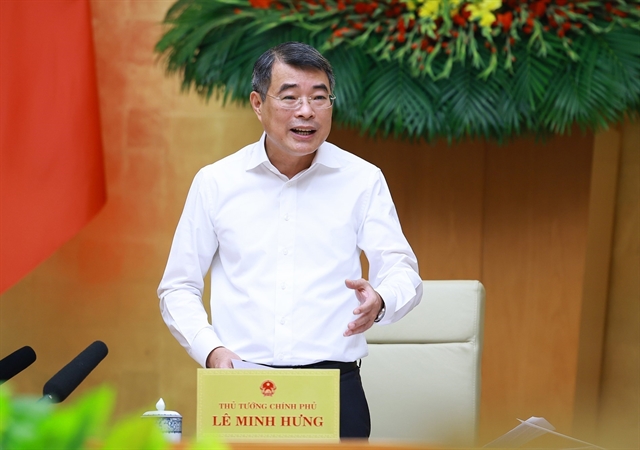
HÀ NỘI — Institutional reform remains a critical task as Việt Nam aims for double-digit economic growth in 2026, Prime Minister Lê Minh Hưng said while chairing the Government’s regular meeting on Wednesday.
He instructed ministries, departments and localities to implement comprehensive measures to boost growth and maintain macro-economic stability, while accelerating reform, public investment disbursement, science, technology, innovation and digital transformation.
The meeting reviewed socio-economic performance in May and the first five months of 2026 and outlined key tasks for June and the following months.
Reports noted that the Government and its units have been productive, with new Government working regulations issued alongside three resolutions on cutting business conditions, decentralisation and simplifying administrative procedures and business requirements.
Macro-economic stability has been largely maintained, with inflation under control. The consumer price index (CPI) rose 0.3 per cent in May compared with April, while average inflation for the first five months stood at 4.31 per cent, close to the annual target of around 4.5 per cent.
State budget revenue was estimated at VNĐ1.34 quadrillion (US$50.8 billion), equivalent to 53 per cent of the annual estimate and up 15.3 per cent year-on-year. Public investment disbursement reached approximately VNĐ219.4 trillion ($8.3 billion), or 21.6 per cent of the annual plan, up VNĐ34.8 trillion ($1.3 billion) from the same period last year.
The industrial production index (IIP) was estimated to have increased by more than 8.7 per cent in May and over 9 per cent in the first five months of the year, the highest level recorded for the same period during 2021-26. Retail sales and consumer service revenue rose by more than 11 per cent, while international arrivals reached nearly 11 million, up almost 15 per cent and marking a record high.
Officials also highlighted continued attention to culture, social welfare and environmental issues, while national defence, security and social order remained stable. Foreign affairs and international integration activities were carried out proactively and effectively.
However, they also pointed out that industrial growth remained below target, consumer demand had not seen a strong recovery and inflationary pressures persisted due to higher energy and input costs. At the same time, public investment disbursement remained slow in many ministries and major projects, and growth in several localities and sectors lagged behind planned scenarios.
Addressing the meeting, PM Hưng stressed that tasks for the remainder of the year would be particularly demanding given the goal of achieving growth above 10 per cent.
Ministries, sectors and localities were therefore instructed to implement coordinated measures to promote growth while maintaining macro-economic stability, controlling inflation and safeguarding major economic balances.
Emphasising that institutional reform remains a central breakthrough task, PM Hưng required ministries and agencies to strengthen discipline in policymaking and in issuing by-law documents, preventing further delays in issuing legal guidance for newly adopted laws and resolutions.
They were also instructed to accelerate implementation of the Government’s 11 resolutions on decentralisation, delegation of authority, administrative reform and reduction of business conditional requirements, while continuing to remove outdated policies to improve the business and investment environment.
Ministries were instructed to complete and submit decrees redefining their functions, responsibilities and organisational structures, continue streamlining administrative apparatuses and eliminate overlaps in state management by June 2026.
The Ministry of Home Affairs was assigned to organise a nationwide conference reviewing one year of implementing the two-tier local government model, while local authorities were asked to improve the quality of commune-level officials and complete job-position standards and criteria for public employees by June.
PM Hưng noted that adjustments to the national master plan for 2021-30, as well as 10 sectoral plans and six socio-economic regional plans, had been approved. All remaining plans within the national planning system must be completed or revised in the second quarter of 2026 to ensure consistency among national, regional and local planning frameworks.
On macro-economic management, the Government leader instructed the State Bank of Việt Nam to operate monetary policy tools proactively and flexibly, manage credit growth appropriately, maintain stable interest rates and exchange rates, ensure banking system liquidity and facilitate access to capital for businesses and individuals.
Meanwhile, the Ministry of Finance was directed to pursue a reasonably expansionary fiscal policy while continuing support measures for businesses and citizens. The ministry was asked to study extending tax, fee and land-rent exemptions, reductions and deferrals through the end of 2026.
Its other tasks include strengthening tax revenue collection, preventing tax evasion and transfer pricing, particularly in cross-border e-commerce, and making better use of untapped revenue sources.
Emphasising the need to accelerate public investment disbursement, PM Hưng instructed the Ministry of Finance to submit a medium-term public investment allocation plan for 2026–30 by June.
Ministries and localities were also ordered to resolve land clearance issues, material shortages and procedural bottlenecks, while conducting regular site inspections and promptly addressing obstacles.
Authorities were also told to reallocate capital and replace underperforming investors, project management boards and officials whose shortcomings have delayed nationally important projects.
For long-delayed projects, PM Hưng called for the swift resolution of land, planning and investment procedure issues so that idle resources can be put to productive use. Localities must regularly update progress on the central steering committee’s database.
He also asked ministries and local governments to review growth scenarios, identify development potential in each sector and locality, and provide targeted support to areas progressing below expectations. — VNS