PM chairs govt' meeting on FTZ, energy hub
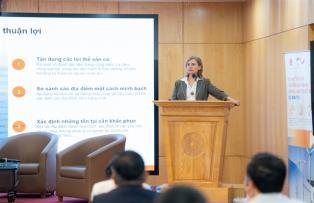
Prime Minister Phạm Minh Chính today chaired a meeting of the Government’s Standing Committee to review the draft plan for establishing free trade zones and mechanisms and policies to develop a national oil refining and energy hub in the Dung Quất Economic Zone in Quảng Ngãi Province.

HÀ NỘI — Prime Minister Phạm Minh Chính on Friday chaired a meeting of the Government’s Standing Committee to review the draft plan for establishing free trade zones and mechanisms and policies to develop a national oil refining and energy hub in the Dung Quất Economic Zone in Quảng Ngãi Province.
Regarding the free trade zone (FTZ) proposal prepared by the Ministry of Finance, the discussion focused on political and legal foundations, practical conditions, development goals, establishment criteria, management models and priority mechanisms for FTZs.
According to reports, the 2021–30 socio-economic development strategy as well as resolutions of the Politburo and the National Assembly all call for breakthrough, competitive and superior policies to pilot free trade zones.
Globally, more than 7,000 special economic zones and FTZs are in operation, playing an increasingly important role in development strategies of emerging economies. FTZs have evolved into multifunctional complexes covering industry, urban development, services, finance, high technology and innovation, designed to maximise resources and attract large-scale investment.
In Việt Nam, the legal framework for FTZs remains incomplete. The National Assembly has recently approved special pilot mechanisms for Đà Nẵng and Hải Phòng, including FTZ-related provisions. Developing a national FTZ framework is therefore considered urgent to provide a political basis and gradually a unified legal foundation for FTZ establishment and operation. Such zones are expected to become new growth drivers and testbeds for institutional and policy innovation aligned with international standards.
The Ministry of Finance expects Việt Nam to establish FTZs in Đà Nẵng, Hải Phòng and HCM City from 2026. By 2030, the country could have six to eight FTZs and similar models in favourable locations. By 2045, eight to ten FTZs are expected to meet international competitiveness standards and contribute an estimated 15 to 20 per cent of GDP. Concluding the discussion, PM Chính praised the preparation work and asked the ministry to incorporate feedback to refine the proposal for submission to higher authorities.
He noted that FTZs are a new undertaking for Việt Nam, requiring feasibility and clear economic impact. The goal, he said, is to test policies and contribute to socio-economic development in both the near and long term, including the country’s two major centennial development targets.
The PM asked for a clear definition of FTZs, identifying both similarities and differences with international trade centres, and applying existing regulations flexibly and creatively. Selection of pilot locations must reflect regional balance and follow the spirit of piloting, limited in number and time-bound for evaluation.
He called for international experience to be adapted to Việt Nam’s conditions to develop competitive, practical and distinctive mechanisms without undermining the overall investment climate. Policies should include general rules and special provisions tailored to each pilot zone.
To ensure effective piloting, PM Chính emphasised planning, infrastructure development, mobilising resources, adopting high technology, smart management and skilled human resources. Social welfare, environmental quality and modern urban standards also need to be ensured. FTZs must operate with streamlined governance, effective decentralisation and strong supervision.
Energy hub
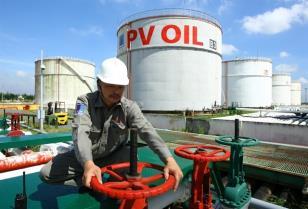
Earlier today, PM Chính chaired a separate meeting on mechanisms to promote the development of the national oil refining and energy centre in the Dung Quất Economic Zone. Dung Quất is home to Việt Nam’s first oil refinery. With its strategic location and developed infrastructure, the zone has become an attractive destination for domestic and foreign investors and has been designated as a multi-sector economic zone centred on oil refining, petrochemicals, heavy industry and supporting industries.
The Politburo’s Resolution 26 on socio-economic development in the North Central and Central Coastal regions sets the task of expanding and building a national refining and energy centre in Dung Quất. After hearing the reports, PM Chính reaffirmed that the Dung Quất refinery, developed and operated by Việt Nam, is performing effectively and is already set for Phase 2 expansion in line with national development needs.
He welcomed the Ministry of Industry and Trade, relevant ministries and Quảng Ngãi authorities for drafting proposed policies, expressing basic agreement with their direction. He requested ministries, localities and Petrovietnam to further review existing and potential new mechanisms, including stronger breakthrough and special policies, before submitting them to competent authorities.
Policies under the National Assembly’s authority must be submitted for review; those under Government authority should be proposed to the Government; and those within ministerial or local authority should be proactively implemented, he said. The PM stressed the need for a comprehensive, feasible plan to develop the Dung Quất centre to meet national energy security needs, accelerate industrial development, ensure rapid and sustainable growth and contribute to Việt Nam’s long-term strategic goals. — VNS