PAN Group, Japanese partner join hands to modernise agriculture
Việt Nam and Japan are expanding agricultural technology cooperation, from crop breeding and biostimulants to biotechnology and automation, to support more sustainable farming.
TOKYO — Việt Nam's PAN Group and Japan's AGRI SMILE have signed a five-year cooperation agreement to develop the market for plant biostimulants in Việt Nam, alongside technology transfer, production and distribution.
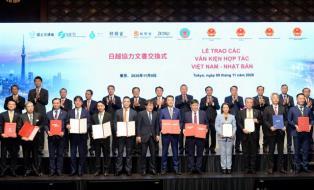
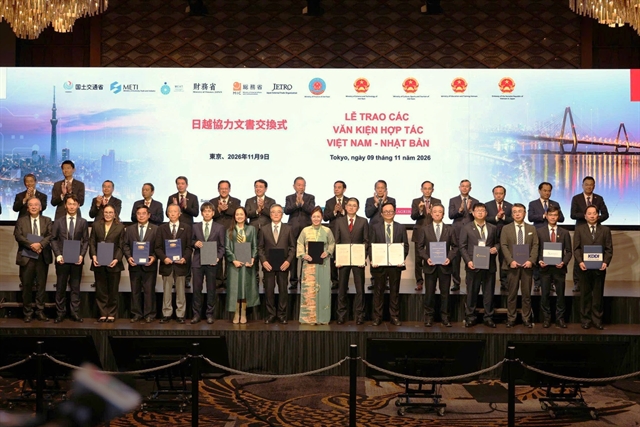
The agreement was signed on November 9 on the sidelines of the Việt Nam-Japan Public-Private Forum on Economic and Science-Technology Cooperation in Tokyo. It builds on a memorandum of understanding signed in 2025 between the two sides.
PAN Group is implementing the partnership through PAN Farm, its agricultural arm comprising Vinaseed and VFC.
The signing ceremony was attended by General Secretary and President Tô Lâm and senior officials from both countries.
The cooperation comes as Việt Nam seeks to modernise agriculture, improve productivity and product quality, and strengthen its response to climate change. Research, technology transfer and the application of advanced technologies are expected to play a greater role in this process, while cooperation with international partners can help build domestic technological capabilities.
The cooperation is in line with the country's policy direction. Resolution No. 19-NQ/TW, issued in June 2022, identifies advanced science and technology as a key driver of agricultural modernisation, while Resolution No. 57-NQ/TW, issued in December 2024, calls for breakthroughs in science, technology, innovation and digital transformation to support national development.
From research to practical application
One of the key challenges for Việt Nam's agricultural sector is turning research findings and technological advances into practical solutions for farmers.
Plant biostimulants are among the technologies being explored to support more sustainable farming. They can improve nutrient-use efficiency and help plants withstand adverse environmental conditions, although their effectiveness needs to be tested across different crops and farming conditions.
In 2025-26, PAN Farm and AGRI SMILE conducted research and field trials on rice, maize and vegetables, according to the companies.
The partnership combines AGRI SMILE's research and technology development capabilities with the production experience, technical networks and market access of Vietnamese companies.
Following the trials, the partners are preparing to introduce VBS-1 to the Vietnamese market, marking the first step towards commercialising plant biostimulants. VFC and AGRI SMILE also plan to expand cooperation in technology transfer, production and distribution.
The partnership highlights the importance of linking research, field testing, production and market development. New technologies need to be adapted to local conditions and assessed for their technical and economic effectiveness before they can be adopted on a wider scale.
For farmers, the practical benefits of new technologies, including more efficient use of agricultural inputs, improved crop quality and lower production costs, will be important factors in determining their wider adoption.
Beyond biostimulants, Vietnamese and Japanese partners are also exploring cooperation in crop breeding, biotechnology, automation and post-harvest technologies.
With support from the Mitsubishi Research Institute (MRI), Vinaseed Research Institute (VRI) has discussed potential cooperation in rice breeding with the Japan International Research Centre for Agricultural Sciences (JIRCAS), according to PAN.
Other areas include developing climate-resilient crop varieties, automating production, improving the processing and preservation of agricultural and aquatic products, and recycling agricultural by-products and waste.
These technologies could help Việt Nam address climate change, meet stricter export standards and reduce emissions. However, their application requires adaptation to local farming conditions, technical training and support for farmers.
Closer cooperation between research institutions, businesses and farming communities will be important to bring research results into practical use and strengthen Việt Nam's domestic agricultural technology capacity. — BIZHUB/VNS