Oil and energy sector set to enter new growth cycle
LNG is seen as a strategic transition fuel, particularly in Asia, where governments are seeking to balance energy security with emissions reduction commitments.
HÀ NỘI — Việt Nam’s oil and energy industry is entering what analysts describe as a new growth cycle, supported by firmer crude prices and strengthening global market fundamentals.
A semi-annual 2026 industry report released by Vietcombank Securities (VCBS) states that global oil and energy markets are showing signs of recovery following a prolonged period of subdued performance.
According to the report, the market is shifting from supply constraints towards modest expansion in both output and consumption. After extended production curbs by OPEC+, additional supply has come from producers including the United States, Brazil and Guyana. Global crude supply is projected to rise by around three million barrels per day in 2025 and a further 2.5 million barrels per day in 2026.
Oil demand growth, while moderate, is forecast at approximately 1.1 million barrels per day in 2026, with Asia accounting for a substantial share of the increase.
In that context, Brent crude prices are expected to fluctuate within a range of US$55–65 per barrel. Analysts say this level would be sufficiently stable to support upstream investment decisions without triggering the extreme volatility seen in previous cycles.
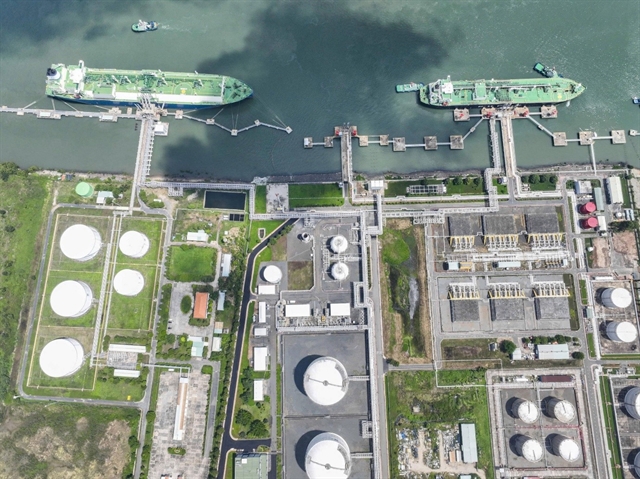
Liquefied natural gas is emerging as a central pillar of the next expansion phase. VCBS forecasts that new liquefaction capacity from major exporters such as the US and Qatar could lift global LNG supply by between 7 and 10 per cent in 2026, with total capacity potentially expanding by up to 50 per cent by 2030.
The report describes LNG as a strategic transition fuel, particularly across Asia, where governments are seeking to balance energy security with emissions reduction commitments.
For Việt Nam, the structural shift carries particular significance. Domestic oil and gas fields are experiencing natural decline, with gas output estimated to fall by about 5 per cent annually. This underscores the need to advance new upstream developments while expanding LNG import infrastructure to secure fuel for gas-fired power generation under the country’s evolving energy mix.
VCBS highlights several large-scale domestic projects moving forward, providing visibility for the next investment cycle. These include the integrated Lot B – Ô Môn gas-to-power chain, the Ô Môn 4 power project, the Nhơn Trạch 3 and 4 LNG-to-power plants and capacity upgrades at Dung Quất Refinery.
At the same time, Petrovietnam has accelerated development at key fields such as Bạch Hổ (BK-24) and Đại Hùng Phase 3, with certain installations reported to have come on stream ahead of schedule.
Policy adjustments are also influencing the outlook. The reduction of LNG import tariffs from 5 per cent to 2 per cent under Decree 73/2025/NĐ-CP is expected to improve the cost competitiveness of LNG-to-power projects and support the expansion of gas-fired generation capacity.
VCBS said such fiscal measures enhance project economics across the midstream and downstream value chain.
From a capital markets perspective, the report identifies improving earnings prospects across upstream services, drilling, gas distribution and refining. Companies including Petrovietnam Technical Services Corporation (PVS), Petrovietnam Drilling and Well Service Corporation (PVD), PV Gas (GAS), Petrolimex (PLX) and Binh Son Refining and Petrochemical JSC (BSR) are cited as potential beneficiaries of renewed sector momentum.
VCBS projects that these stocks could record share price gains of between 6 and 20 per cent over the next 12 to 24 months, reflecting expectations of stronger order backlogs, higher rig utilisation rates, increased throughput volumes, and a more supportive regulatory environment. — BIZHUB/VNS