North Central region targets 10.5% growth, stronger marine economy
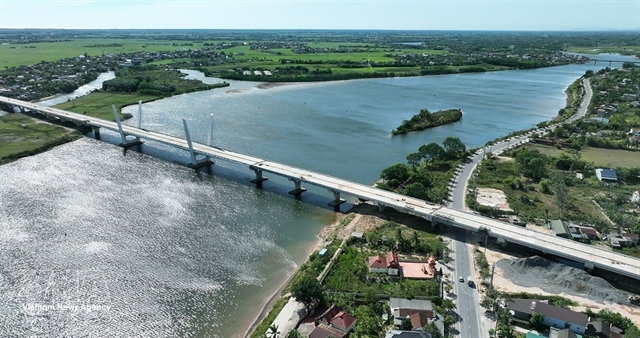
The North Central Region, a strategic bridge between the north and south, plays a key role in marine economic development, regional connectivity and global integration.
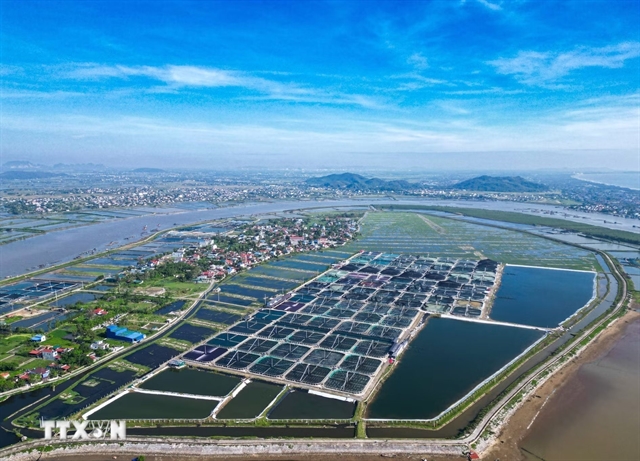
HÀ NỘI — Việt Nam’s north central region is targeting average annual GRDP growth of 10.5 per cent through 2030, with industrial expansion and a stronger marine economy expected to drive its next phase of development.
The region recorded GRDP growth of 8.37 per cent in 2025, contributing 6.47 per cent to national economic growth. Industrial activity has gained momentum in several localities. Hà Tĩnh’s industry and construction sector grew 24.25 per cent in the first half of 2026, while Nghệ An’s industrial production index rose by 23.02 per cent and exports reached US$3.1 billion, up 58.4 per cent.
The growth ambitions are set out in the Politburo’s Resolution No. 27-NQ/TW, dated August 28, 2026, which targets the region to become a 'dynamic, fast and sustainable' growth centre by 2030, with a strong marine economy linked to major industrial and service hubs, coastal economic zones and modern coastal cities.
Following administrative restructuring, the region now comprises Thanh Hóa, Nghệ An, Hà Tĩnh, Quảng Trị and Huế City.
Huế is focusing on services, tourism, culture, health and education while expanding higher-value industries. Quảng Trị has potential in border trade, logistics, industry and services along the East-West Economic Corridor. Thanh Hóa’s Nghi Sơn Economic Zone and Nghệ An’s Southeast Economic Zone remain key industrial platforms.
However, development levels, economic structures and connectivity still vary across the region. The challenge is to better harness local advantages through a unified development space linking industrial, service, urban, port, economic and production areas.
This approach is reflected in the adjusted north central region master plan for 2021-30, with a vision to 2050, approved by the Prime Minister under Decision No. 613/QĐ-TTg dated April 4, 2026.
Building on the plan, Resolution No. 27-NQ/TW calls for reorganising the region’s development space around growth poles, economic corridors and marine economic centres.
By 2030, the region aims to become 'dynamic, fast-growing and sustainable', and a strong regional and international marine economic centre linked to major industrial and service hubs, coastal economic zones and a modern coastal urban system. The strategy also promotes multi-tier, multi-polar development and stronger links among localities and sub-regions.
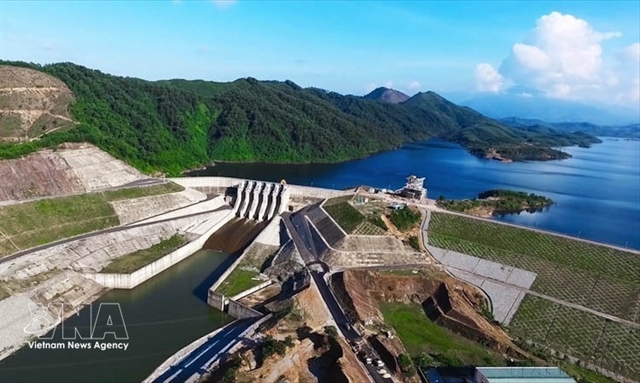
The region targets average annual GRDP growth of 10.5 per cent and GRDP per capita of about $7,000 by 2030. Industry and construction are expected to account for 47.7 per cent of GRDP, services 36.8 per cent and agro-forestry-fisheries 10.8 per cent, while processing and manufacturing and the digital economy are each targeted to contribute 30 per cent.
Other targets include annual labour productivity growth of 8.5 per cent, an urbanisation rate of 47-48 per cent and workers with degrees or certificates accounting for 35-40 per cent of the workforce. The region also aims to reduce multidimensional poverty to 1-1.5 per cent, achieve universal health insurance coverage and raise its human development index to 0.8.
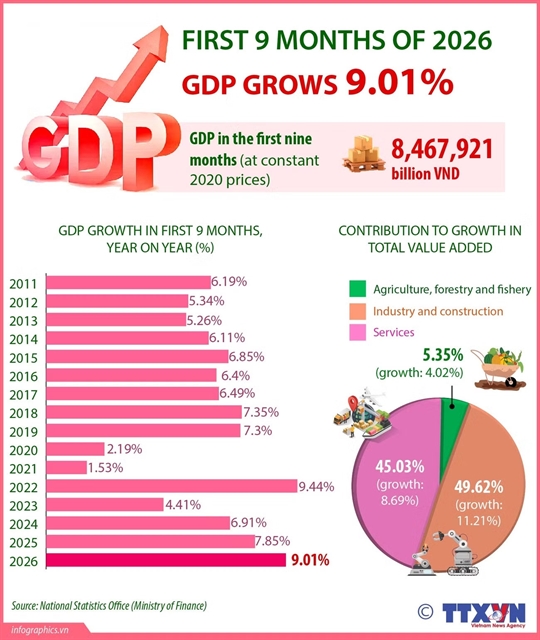
The targets point to a faster shift towards industry, construction and services, with greater emphasis on quality, added value and productivity. Processing and manufacturing will remain key growth drivers, alongside high-tech and high-value industries.
The resolution identifies regional priorities including oil refining and petrochemicals, metallurgy, mechanical engineering, automobiles and supporting industries, agro-forestry-fishery processing and renewable energy. It also promotes the development of liquefied natural gas, data centres and high-tech industries.
The marine economy is another priority, with a focus on ports, coastal economic zones, industrial parks and logistics. Marine, island, ecological, cultural and historical tourism will also be developed towards higher value-added services.
Under this development structure, Huế is expected to become a distinctive hub for culture, tourism, specialised healthcare, science and technology, and quality education. The coastal areas of Thanh Hóa, Nghệ An and Hà Tĩnh are to form a major industrial centre for the region and the country, creating a clearer division of economic roles across the region.
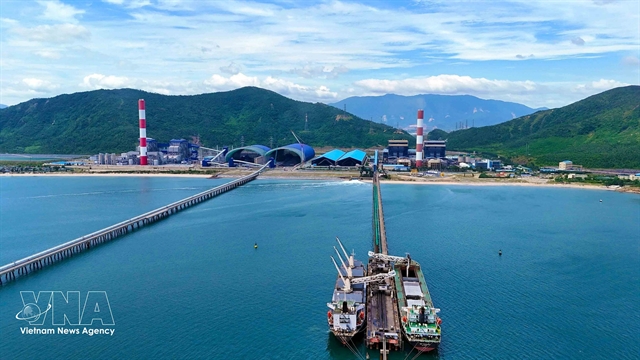
The resolution also envisages developing the Cầu Treo-Vũng Áng economic corridor in Hà Tĩnh, linking localities in Laos with ports in Hà Tĩnh and Quảng Trị. The corridor is expected to strengthen East-West trade links and raise the role of ports and logistics hubs.
Transport infrastructure is central to this strategy. Priorities include completing strategic routes linking economic centres, coastal economic zones and international border gates, including the eastern North-South Expressway, coastal road, Hà Nội-Vientiane Expressway section through Nghệ An and North-South high-speed railway. The resolution also calls for studying a Vientiane-Vũng Áng railway and upgrading Phú Bài Airport in Huế.
These transport links, together with a sustainable, multi-polar and climate-adaptive urban system, are expected to improve connectivity among industrial centres, ports, economic zones, cities and international trade hubs. The resolution identifies Huế as the region’s central urban area and a national-level heritage and cultural city.
With the Party’s strategic direction and the State’s efforts in planning, infrastructure, mechanisms and policies, the region aims to better harness local strengths through closer economic links and move towards becoming a dynamic, sustainable region and a major regional and international marine economic centre. — VNA/VNS