NA deputies call for lower business costs to achieve double-digit growth
During a NA debate on the country's 2026 socio-economic performance and development plans for 2027 on Saturday, deputies said improving access to finance, removing investment bottlenecks and making more efficient use of capital would be essential to sustaining rapid economic expansion.
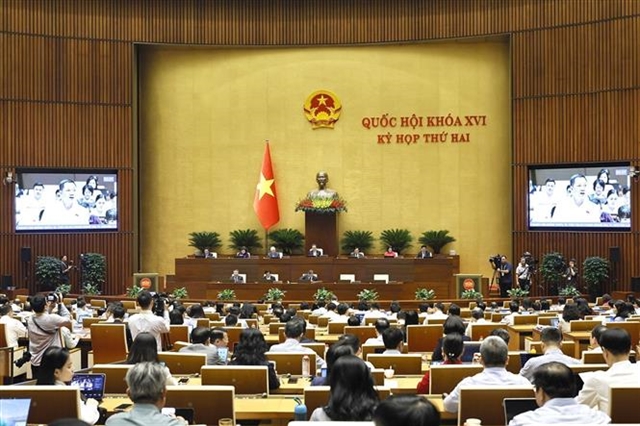
HÀ NỘI — National Assembly (NA) deputies called for lower borrowing costs, cheaper construction materials and energy, and streamlined investment procedures to accelerate production and business to support the country's plan of achieving double-digit growth economic growth while ensuring that growth is high-quality, sustainable and inclusive across localities
During a NA debate on the country's 2026 socio-economic performance and development plans for 2027 on Saturday, deputies said improving access to finance, removing investment bottlenecks and making more efficient use of capital willl be essential to sustaining rapid economic expansion.
Lawmakers also stressed that faster growth should be accompanied by macroeconomic stability, higher productivity and tangible improvements in household incomes.
Deputy Lê Văn Thế of Ninh Bình Province said the priority should not simply be mobilising more capital but ensuring that resources were converted into productive capacity, higher value added and better living standards.
Under the Government's proposed 2027 budget, development investment spending is expected to reach around VNĐ1.76 quadrillion (US$67 billion), nearly 57 per cent higher than the 2026 estimate. Together with bank credit, private investment and foreign direct investment, the planned public investment increase represents a substantial source of funding for economic expansion.
However, Thế called for a shift from assessing investment performance mainly through disbursement rates towards measuring the actual economic and social returns of projects.
Public investment projects should be evaluated based on their contribution to new production capacity, employment and people's living standards, while foreign-invested projects should be assessed on their links with domestic suppliers, technology transfer and the quality of jobs created.
He also urged efforts to tackle administrative delays which is often seen as an often-overlooked cost for businesses.
While borrowing interest is a visible financial burden, the time spent waiting for planning, land, investment and construction approvals also increases operating costs and delays the deployment of capital into production, he said.
Deputy Lê Hữu Trí of Khánh Hòa Province said growth targets should go beyond how fast the economy expands to examine where growth comes from, its quality and sustainability, and how its benefits are translated into income, employment, competitiveness and people's quality of life.
Trí said ambitious growth targets needed to be backed by a thorough assessment of available resources, the economy's capacity to absorb capital and the effectiveness of resource allocation.
He cited the NA's report that GDP grew an estimated 9.01 per cent in the first nine months of 2026. To achieve full-year growth of at least 10 per cent, the economy would need to expand by around 12.5 per cent in the fourth quarter, presenting a considerable challenge.
He called for a stronger shift from growth driven by economic scale towards productivity, technology and domestic value creation.
He proposed strengthening domestic businesses, developing supporting industries, improving localisation, promoting technology transfer and upgrading workforce skills.
He also stressed the need to develop capital markets, improve transparency and discipline in the corporate bond market and expand medium- and long-term funding channels for production, technology, energy, logistics and infrastructure.
Credit costs and access to finance
Deputy Trịnh Xuân An of Đồng Nai province said reducing actual lending rates should be a key government policy priority, particularly as businesses faced substantial financing requirements for infrastructure and other investment projects.
He proposed better liquidity management, lower bank operating costs and greater transparency in preferential lending rates and associated fees to ensure that reductions in funding costs were passed on to borrowers.
Credit guarantee mechanisms should be improved, with lenders making greater use of cash flows, purchase orders and supply chain data when assessing loan applications, he said.
However, lower borrowing costs must be pursued alongside exchange rate stability, inflation control and banking system safety, An stressed.
He also called for the development of long-term funding sources and capital markets to reduce businesses' reliance on bank credit and meet the economy's growing investment requirements.
Deputy Trần Hoàng Ngân of HCM City said restructuring the economy's capital structure was a longstanding challenge that needed to be addressed to support the country's development ambitions for 2026-30.
The economy will need to mobilise a volume of social investment capital twice that of the previous five-year period, while balancing funding sources, maturities and their uses without undermining macroeconomic stability, he said.
Ngân proposed restructuring financial markets so that the stock market could become a major channel for supplying capital to the economy.
Deputy Nguyễn Cao Sơn of Phú Thọ Province proposed that the State Bank of Vietnam direct commercial lenders to extend and broaden debt restructuring arrangements and maintain borrowers' existing debt classifications until the end of 2027 for businesses facing market-related difficulties, provided they had used loans for their intended purposes and presented viable recovery plans.
Preferential credit programmes should also be expanded to cover more small and medium-sized enterprises (SMEs) and buyers and tenants of social housing, he said.
Construction materials and energy pressures
With regard to rising costs, Sơn said sharp increases in material, labour and fuel prices had placed contractors under considerable pressure in the context that major infrastructure projects are being implemented simultaneously.
He proposed a mechanism to adjust construction contract prices for public investment projects signed before July 1, 2026, with the State and contractors sharing the impact of unexpected cost increases.
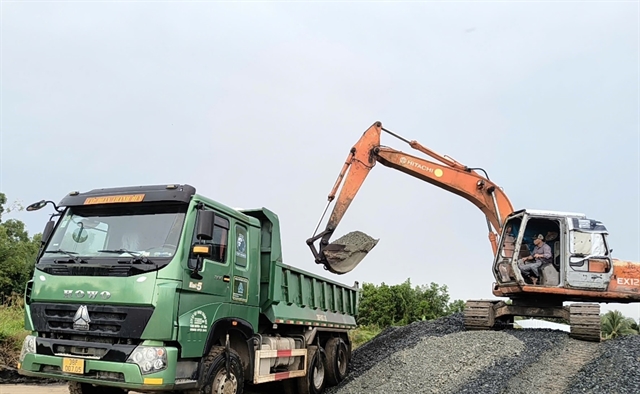
He also urged the Government to resolve outstanding procedures for exploration and mining licences and capacity expansion to tackle shortage for construction materials including, sand, stone and soil used for filling.
Sơn proposed cutting the special consumption tax on petrol to zero per cent under the plan being considered, while extending environmental protection and value-added tax support for diesel fuel in line with measures for petrol to ease cost pressures on manufacturing, transport and construction activities.
He called for priority funding for power projects under the revised National Power Development Plan VIII to improve the power capacity and ensure electricity supply.
Preferential loans should also be considered for imported equipment used in wind, solar and hydropower projects, as prices of such equipment have risen by 20-40 per cent from a year earlier.
He urged authorities to update planning and land-use arrangements, simplify investment procedures for energy projects and establish clear criteria and deadlines for transferring power capacity between localities.
Beyond immediate cost reductions, lawmakers said the country needed to improve the efficiency to translate investment capital into economic output. — VNS