Most fuel prices slightly increase after sharp drop
Domestic retail fuel prices mostly increased slightly from 10pm on March 12 in the latest adjustment by the ministries of Industry and Trade, and Finance, after a sharp drop a day earlier.
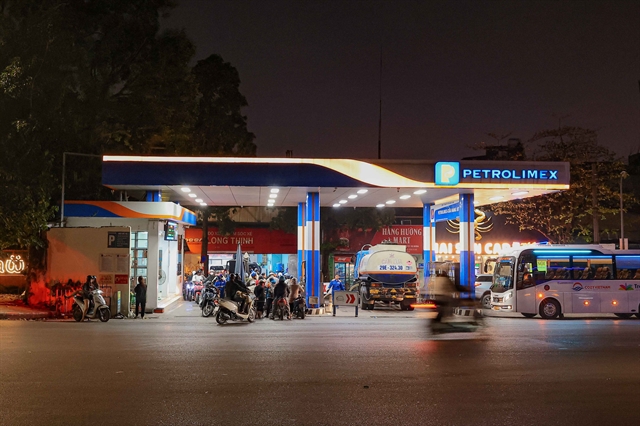
HÀ NỘI — Domestic retail fuel prices mostly increased slightly from 10pm on March 12 in the latest adjustment by the ministries of Industry and Trade, and Finance, after a sharp drop a day earlier.
Specifically, the price of RON 95-III gasoline, the most widely used fuel on the market, rose by VNĐ330 (US$0.013) to VNĐ25,570 per litre.
However, E5 RON 92 gasoline fell by VNĐ450 to VNĐ22,500 per litre.
Diesel rose by VNĐ550 to VNĐ27,020 per litre, while kerosene jumped by VNĐ2,520 to VNĐ26,930 per litre. Mazut decreased by VNĐ340 to VNĐ18,660 per kilogram.
This marks the third consecutive pricing period in which the fuel price stabilation fund was tapped at VNĐ4,000 per litre for RON 95-III gasoline, kerosene and mazut, and VNĐ5,000 per litre for diesel.
In the adjustment a day earlier, domestic fuel prices dropped by around VNĐ4,000 per litre. Since the beginning of the year, gasoline prices have been raised nine times and reduced five times.
Prime Minister Phạm Minh Chính in an official dispatch issued on March 12 warned that ongoing conflicts in the Middle East are significantly affecting global energy supply chains and is expected to remain complicated, posing significant risk of disruptions to energy flows and supply.
The PM asked relevant ministries to increase national petroleum reserves and complete mechanisms for releasing reserves in emergency situations.
Currently, mandatory reserves held by major petroleum traders must ensure sufficiency for 20 days of supply.
At a meeting earlier this week, Deputy Minister of Industry and Trade Nguyễn Sinh Nhật Tân said that Việt Nam has not yet needed to use its national reserves, which are intended only for cases of serious supply shortages caused by import disruptions or significant declines in domestic production.
He stressed that domestic fuel supply is sufficient to meet demand until the end of March.
The Government also cut the most-favoured-nation (MFN) import tariff on gasoline and certain blending components to zero, effective until the end of April, to help stabilise supply and encourage importers to source fuel from markets without free trade agreements with Việt Nam.
The Ministry of Finance has submitted a proposal to reduce the environmental protection tax on fuel to zero. The current tax stands at VNĐ2,000 per litre for gasoline (excluding ethanol) and VNĐ1,000 per litre for oil products, which means, if approved, the reduction could lower fuel prices by around VNĐ1,000-2,000 per litre. — VNS