Ministry seeks to raise domestic ethanol supply to meet up to 70% of demand
The nationwide introduction of E10 gasoline has also created new opportunities for ethanol plants that had struggled in recent years.
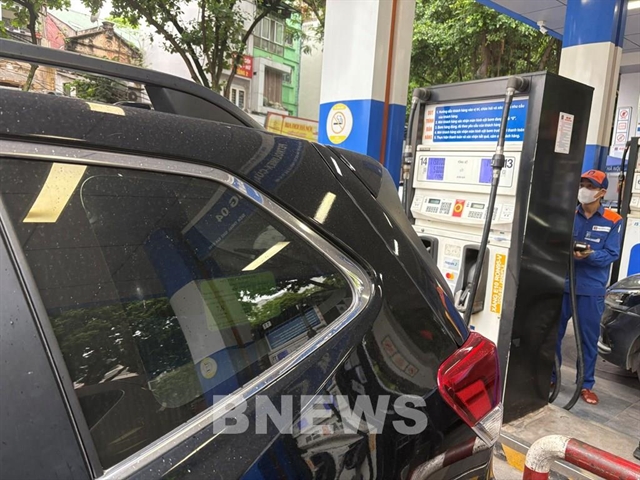
HÀ NỘI — More than a month after E10 gasoline was rolled out nationwide, attention has shifted from consumer acceptance to securing enough ethanol for blending, as domestic production currently meets only a fraction of market demand.
Speaking at the seminar 'E10 – A foundation for the sustainable development of the biofuel market' on Monday, Đỗ Văn Tuấn, chairman of the Vietnam Biofuels Association, said ethanol demand for E10 gasoline blending has reached about 90,000-100,000 cubic metres per month.
Although existing ethanol plants that are ready for operation have a combined design capacity sufficient to meet around 45 per cent of market demand, actual domestic production currently satisfies only about 20 per cent, with the remainder covered by imports.
Tuấn said the gap between design capacity and actual output reflects the industry's inability to fully utilise existing facilities, despite biofuel development plans having been in place for years.
He attributed the situation primarily to the lack of stable and predictable policies rather than a lack of investment interest from businesses.
According to Tuấn, policy stability is essential for encouraging companies to commit capital and expand production.
The nationwide introduction of E10 gasoline has also created new opportunities for ethanol plants that had struggled in recent years.
He said the Dung Quất Ethanol Plant has resumed operations, while the Bình Phước Ethanol Plant is preparing to restart production. Other facilities, including the Đức Giang Ethanol Plant, have undergone restructuring by investors.
However, not all projects are expected to recover. The Phú Thọ Ethanol Plant faces significant challenges because of its geographical location and logistics costs.
Đặng Tất Thành from the Ministry of Industry and Trade's Department of Innovation, Green Transition and Industrial Promotion said authorities would continue to maintain a balance between domestic production and imports in the near term to ensure sufficient ethanol supplies for blending.
In the longer term, however, expanding domestic production capacity has been identified as a priority, he added.
The ministry aims to restart existing plants, expand production capacity and invest in new projects to increase the domestic industry's ability to meet around 50-70 per cent of ethanol demand.
Authorities also plan to develop raw material areas, adopt new technologies and make greater use of agricultural by-products to diversify feedstock sources and strengthen the competitiveness of the biofuel industry.
Thành said ethanol production should move beyond traditional feedstocks such as cassava and corn by adopting next-generation technologies using agricultural residues, including sugarcane bagasse and rice straw, as well as other biological materials.
Meanwhile, Trần Thị Bích Ngọc, head of the Import and Export Tax Division, Department of Tax, Fee and Charge Policy Management and Supervision, Ministry of Finance, said Việt Nam still relies on imported ethanol to meet blending demand, requiring tax policies to balance multiple objectives, including ensuring market supply, supporting domestic producers and complying with international commitments.
She noted that in 2025, the Government issued Decree No 73, reducing the import tariff on ethanol from 10 per cent to 5 per cent.
Biofuel gasoline is currently subject to a special consumption tax of 7 per cent, compared with 10 per cent for mineral gasoline, providing a price advantage to encourage greater use of biofuels.
Businesses investing in the sector also benefit from incentives related to value-added tax, corporate income tax and certain environmental protection tax policies.
Ngọc said the Ministry of Finance would continue coordinating with relevant ministries and agencies to review and improve tax policies for biofuel gasoline in the coming period. — VNS