Ministry proposes 7.8 per cent increase in minimum wage from 2027
Under the draft, the highest monthly minimum wage in Region 1 is expected to reach VNĐ5.7 million (US$220).
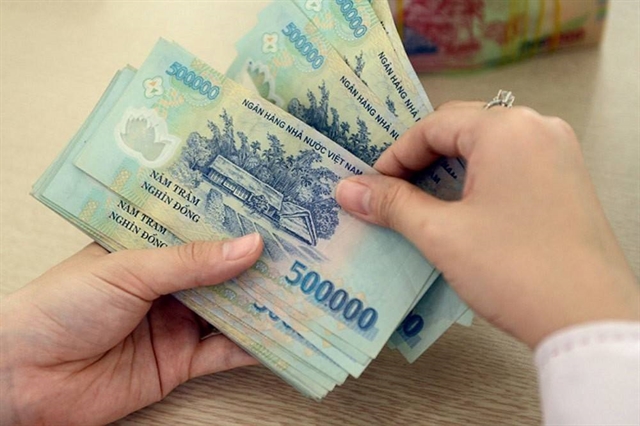
HÀ NỘI — The Ministry of Home Affairs has proposed raising the minimum wage for employees working under labour contracts by an average of 7.8 per cent from January 1, 2027, with the highest monthly minimum wage in Region 1 expected to reach VNĐ5.7 million (US$220).
The ministry has completed a draft Government decree replacing Decree 293/2025/NĐ-CP, which regulates minimum wages for employees working under labour contracts.
It is currently being reviewed by the Ministry of Justice.
Under the draft, the monthly minimum wages in the four regions would be VNĐ5.7 million ($220) in Region 1, VNĐ5.08 million ($195) in Region 2, VNĐ4.45 million ($171) in Region 3 and VNĐ4.04 million ($155) in Region 4.
Proposed increases range from VNĐ310,000 to VNĐ390,000 ($11.93–$15), equivalent to an average increase of 7.8 per cent compared with current minimum wages.
The proposed adjustment would be about 3.7 per cent higher than the minimum living standard for workers through the end of 2027, with the aim of improving workers' living conditions.
The Ministry of Home Affairs said the proposed adjustment seeks to balance the interests of workers and businesses, while both improving workers' living standards and ensuring that enterprises can maintain and expand production and business activities.
According to the proposed draft, hourly minimum wages would be VNĐ27,400 ($1.05) in Region 1, VNĐ24,400 ($0.94) in Region 2, VNĐ21,400 ($0.82) in Region 3 and VNĐ19,400 ($0.75) in Region 4.
Principles for applying the regional classification would also take into account adjustments to the areas covered by each region based on factors including economic growth, changes in infrastructure and labour market development.
Each year, localities would review and assess the areas and minimum wages currently applied.
If adjustments are proposed, local authorities would consult relevant agencies and organisations and submit consolidated proposals to the Ministry of Home Affairs for review and reporting to the Government.
At present, the monthly minimum wage is VNĐ5.31 million ($205) in Region 1, VNĐ4.73 million ($182) in Region 2, VNĐ4.14 million ($160) in Region 3 and VNĐ3.7 million ($142) in Region 4.
The current hourly minimum wages are VNĐ25,500 ($0.98) in Region 1, VNĐ22,700 ($0.87) in Region I2, VNĐ20,000 ($0.77) in Region 3 and VNĐ17,800 ($0.69) in Region 4.
The most recent adjustment to the minimum wage took effect on January 1 under Decree 293/2025/ND-CP stipulating minimum wages for employees working under labour contracts.
According to the Ministry of Home Affairs, the minimum wage adjustment on January 1 was made against a backdrop of continued socio-economic stability and sustained economic growth.
The labour market has shown positive developments. The adjustment options were formulated to balance the interests of employees and businesses, helping improve workers’ living standards while ensuring conditions for enterprises to maintain and expand production and business activities.
Based on a review of the implementation of Decree 293, the Ministry of Home Affairs said that most businesses complied with minimum wage regulations, with their lowest-paid workers earning wages higher than the Government-prescribed minimum.
The adjustment had a positive impact on employees, helping improve their living standards.
On average, the lowest wage paid to employees working a full normal number of days per month was VNĐ600,000 ($23) higher than the Government-prescribed minimum, equivalent to 27–37 per cent depending on the region, and averaging about 32 per cent higher.
Regarding hourly minimum wages, businesses generally assessed that they had little impact on labour relations or market wage levels.
They also did not lead to changes in wage payment policies. Businesses did not switch from monthly to hourly wage payments, or vice versa. — VNS