Milk, soft drinks should not be classified as high-risk goods: VCCI
VCCI argued that processed milk products, vegetable oils and non-alcoholic beverages should be considered low- or medium-risk products due to traceability systems and multi-layered quality controls.
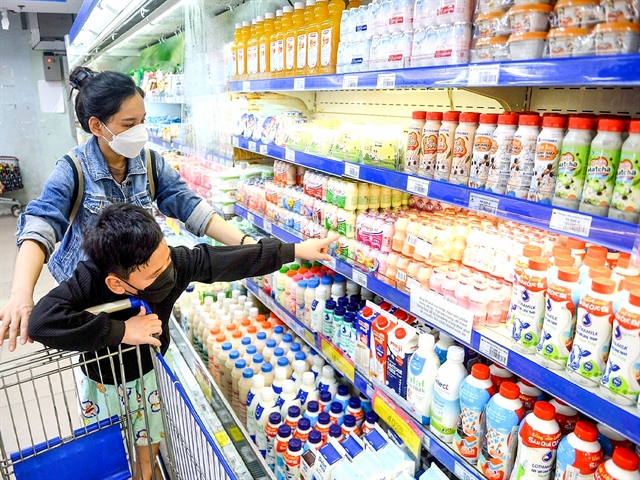
HÀ NỘI — The Việt Nam Chamber of Commerce and Industry (VCCI) has urged the Government not to classify milk, processed foods and non-alcoholic beverages as high-risk goods, saying that the move is inappropriate and could increase compliance costs for companies.
VCCI said in comments on a draft circular issued by the Ministry of Industry and Trade that many businesses were concerned about proposals to place products such as liquid milk, powdered milk, fermented milk, cheese, dairy fats, vegetable oils and soft drinks in the high-risk category.
The proposed classification does not align with risk assessment principles set out in the Law on Product and Goods Quality and Decree No. 37/2026/ND-CP, and is inconsistent with international food safety management practices, according to VCCI.
Most of the products concerned are manufactured through closed industrial processes using pasteurisation, sterilisation and sealed packaging technologies, alongside quality management systems such as HACCP and ISO standards.
These allow risks across the production and distribution chain to be controlled at a high level, while the likelihood of incidents under normal storage and usage conditions remains relatively low.
VCCI argued that processed milk products, vegetable oils and non-alcoholic beverages should be considered low- or medium-risk products due to traceability systems and multi-layered quality controls.
In practice, large-scale food poisoning cases in Việt Nam had mainly been linked to fresh foods, small eateries and street food vendors, while widespread incidents involving industrially processed packaged foods had been rare, the VCCI added.
Businesses said that reclassifying the products as high-risk goods could trigger additional administrative procedures and shift the current regulatory regime from self-declaration to stricter controls, which could increase compliance costs, create overlaps with existing regulations and run counter to the government’s efforts to streamline administrative procedures, improve the business environment and strengthen post-market supervision.
The VCCI urged the drafting agency to remove the products from the medium- and high-risk lists while maintaining the current self-declaration mechanism and carrying out product-specific risk classifications based on scientific evidence, practical data and transparent quantitative methodologies.
Risk management should be based on the potential for direct consequences and the severity of incidents when they occur, the VCCI said. Products capable of causing immediate, widespread and difficult-to-control impacts should be classified in the highest-risk category.
Under the Ministry of Industry and Trade’s draft framework, products and goods would be classified into three risk categories based on the severity of potential harm and the likelihood of incidents occurring.
The high-risk category covers products and goods deemed to pose significant hazards and a high probability of risk, with the potential to cause serious or especially serious consequences if not subject to appropriate management measures.
The medium-risk category includes products and goods assessed as having a moderate level of hazard or likelihood of risk, which could still cause notable impacts without suitable regulatory controls.
The low-risk category applies to products and goods considered to present minimal hazards or a low probability of risk, and which are unlikely to cause significant impacts under normal conditions of control or use. — VNS