Leveraging foreign investment to strengthen domestic capacity, enhance self-reliance: top leader
Việt Nam will pursue a more selective approach to foreign investment under a new Politburo resolution, focusing on projects that strengthen domestic capabilities, accelerate technology transfer and enhance the economy's long-term competitiveness and self-reliance.
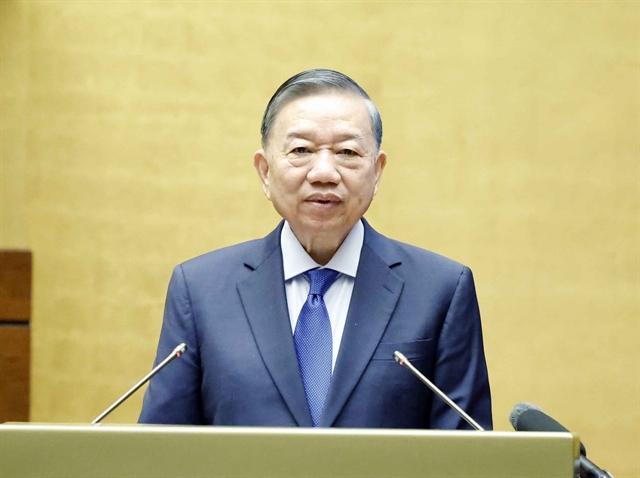
HÀ NỘI — Party General Secretary and State President Tô Lâm on Tuesday emphasised the need for a fundamental shift in Việt Nam’s approach to foreign investment, affirming that the country aims to use external resources to strengthen domestic capabilities and strategic autonomy rather than simply attract capital.
Addressing a national conference in Hà Nội on studying, disseminating and implementing the Politburo’s Resolution No 10-NQ/TW on developing the foreign-invested economic sector, General Secretary and State President Lâm said the resolution marked a major change in development thinking after nearly 40 years of attracting foreign investment.
Việt Nam is no longer asking how to secure more foreign capital, but rather how to effectively utilise international resources to enhance domestic capacity, technological capabilities, competitiveness and economic self-reliance, according to the leader.
Resolution 10 sets more ambitious goals, requiring the development of the foreign-invested sector to go hand in hand with improving the economy’s strategic autonomy, production capacity, technological capability and competitiveness. By 2030, Việt Nam aims to rank among ASEAN’s leading countries in investment and business environment, competitiveness, innovation, public service quality and its ability to receive high-quality foreign investment projects.
He stressed that the implementation of Resolution No 10 must be closely aligned with the 14th National Party Congress Resolution and other key Politburo resolutions, particularly Resolution No 68 on private economic sector development and Resolution No 79 on State-owned economic sector development.
According to the leader, the objective of foreign investment attraction in the current period is to transform external resources into Việt Nam’s own economic capabilities.
This requires creating conditions for domestic private enterprises to participate in, learn from and gradually rise up in global value chains, while the State economic sector should lead investment in foundational and strategic areas to create enabling infrastructure and development space. The three economic sectors must complement one another under a unified development strategy.
He urged ministries, sectors and localities to adopt a new mindset on foreign investment, creating favourable conditions for capable, technology-driven and responsible investors with long-term commitments, while strictly screening out projects involving outdated technologies, excessive energy consumption, inefficient land use, environmental risks, transfer pricing, tax evasion, origin fraud or threats to national defence, security, critical infrastructure and data.
The leader also called for institutional reforms to ensure stability, transparency, predictability and alignment with international practices.
Relevant ministries should review and harmonise regulations on investment, business and markets, while State agencies should shift from administrative management to development facilitation, modern governance and business support. Incentives, he said, should be based on performance and fulfilment of commitments rather than upfront preferences.
He stressed the need to strengthen the domestic industrial ecosystem and foster substantive linkages between foreign-invested enterprises and Vietnamese firms. Alongside attracting multinational corporations, authorities should enhance the capabilities of domestic enterprises so they can become suppliers.
Foreign investors, he said, should also help develop supporting industries, train local suppliers, share standards, transfer knowledge and facilitate deeper participation of Vietnamese firms in global value chains.
The top leader highlighted high-quality human resources as a decisive factor, calling on localities with industrial parks, economic zones and high-tech parks to strengthen cooperation with educational institutions, research centres and businesses to provide demand-driven training. Vietnamese workers should gradually take on technical, managerial, research, design and supply chain management positions within foreign-invested enterprises.
He also underscored the importance of investing in strategic infrastructure and infrastructure for the new economy, saying infrastructure is the foundation of national competitiveness. Localities should avoid fragmented industrial park development lacking connectivity, worker housing, social services, vocational training and linkages with domestic enterprises.
The leader further called for a fundamental overhaul of investment promotion, urging authorities to move away from broad-based outreach towards targeted engagement with strategic corporations, investment funds and partners.
Support should be provided throughout the investment lifecycle, from project preparation to operation and expansion, while post-licensing assistance should help resolve difficulties, encourage reinvestment and retain profits in Việt Nam. He also urged restructuring and strengthening investment promotion agencies at both central and local levels.
He highlighted the need to develop a modern capital market capable of attracting stable, long-term and responsible portfolio investment. Beyond FDI, Resolution 10 also emphasises upgrading the stock market status and developing investment funds, international financial centres and free trade zones, positioning Việt Nam as a regional hub for capital mobilisation, allocation, financial services, technology and innovation, while ensuring financial security, system safety, transparency and effective risk management.
Underscoring that the resolution’s success depends on effective implementation, General Secretary and State President Lâm required each ministry and locality to develop concrete action plans with clearly defined tasks, deadlines and responsibilities.
Localities, he urged, should formulate investment attraction strategies based on their planning, comparative advantages, development conditions and regional connectivity, rather than competing for the same types of projects without regard to planning, infrastructure or resources.
He stressed the importance of comprehensive planning, clear division of responsibilities and effective coordination, with the central government providing strategic direction, institutional improvements, inter-regional coordination, major project screening and oversight, while local authorities remain proactive and innovative without undermining planning, lowering standards or sacrificing long-term interests.
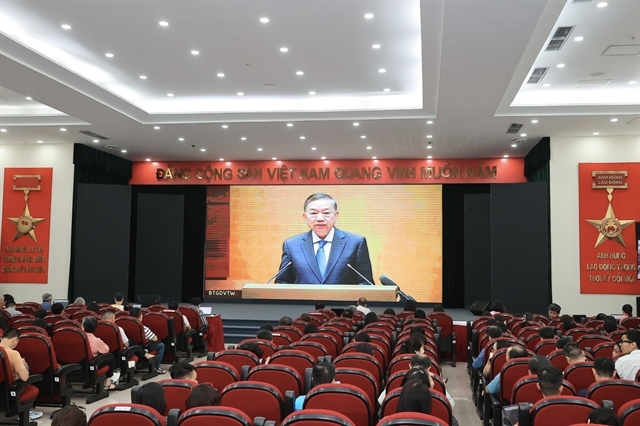
The top leader pointed out the need for the development of evaluation criteria to measure the performance of the foreign-invested sector by industry and locality, along with improved statistical monitoring of foreign investment projects. Assessments of officials, agencies and localities involved in investment attraction should also be based on these criteria.
Concluding his remarks, General Secretary and State President Lâm reaffirmed that Việt Nam was entering a new stage of development with a new mindset, attracting foreign investment selectively rather than at all costs.
He welcomed foreign investors committed to long-term operations in Việt Nam, compliance with Vietnamese law, respect for workers, communities and national interests, as well as technology transfer, workforce development and stronger domestic enterprises.
He stressed that foreign investment should not replace domestic capacity but strengthen it, enhancing national self-reliance and supporting sustainable, inclusive and high-quality growth.
The top leader called on the entire political system, the business community and both domestic and foreign investors to work together to effectively implement Resolution No 10, translating its policies into high-quality projects, stronger enterprises, new value chains, quality jobs and enhanced national capabilities.
Meanwhile, Deputy Prime Minister Phạm Gia Túc said Resolution No 10 broadened Việt Nam's approach beyond traditional FDI attraction to encompass the development of the entire foreign-invested economic sector, including direct and indirect investment, capital markets, international financial centres and new models such as free trade zones.
He said investment incentives would increasingly be linked to performance, with priority given to projects that deliver technology transfer, research and development, workforce training, stronger linkages with domestic enterprises, green transition and sustainable development.
The resolution aims to make Việt Nam a competitive destination for high-quality medium- and long-term foreign investment while ensuring foreign capital contributes more effectively to technology transfer, workforce development, stronger linkages with domestic enterprises and deeper integration into global value chains.
By 2030, Việt Nam targets attracting US$200-300 billion in newly registered FDI, including $150-200 billion in disbursed capital. Around 75 per cent of newly registered investment is expected to come from developed economies with strengths in technology, capital and modern governance.
The average localisation rate in key industries is targeted at 45-50 per cent, while around 10,000 Vietnamese firms are expected to join supply chains of foreign-invested enterprises. The country also aims to upgrade its stock market to emerging market status before 2030.
Looking ahead to 2045, the foreign-invested sector is expected to develop efficiently and sustainably alongside the State-owned and private sectors, accounting for around 25 per cent of total social investment and contributing about 30 per cent of GDP. Việt Nam also aims to become a regional hub for manufacturing, services, innovation and corporate management for multinational corporations.
To achieve these goals, the resolution identifies key priorities including institutional reform, high-quality human resource development, strategic infrastructure, next-generation investment attraction, stronger domestic business linkages, innovation, capital market development and modern governance.
Deputy PM Túc said these priorities would form a unified action programme, with institutional reform serving as the key breakthrough, supported by investment in human resources, infrastructure and governance to ensure the resolution is effectively implemented. — VNS