Lai Châu should promote green agriculture and medicinal development, says deputy minister
According to the deputy minister, to achieve rapid and sustainable growth, Lai Châu must position commodity agriculture within the green economy, using forest resources and natural landscapes as its foundation.
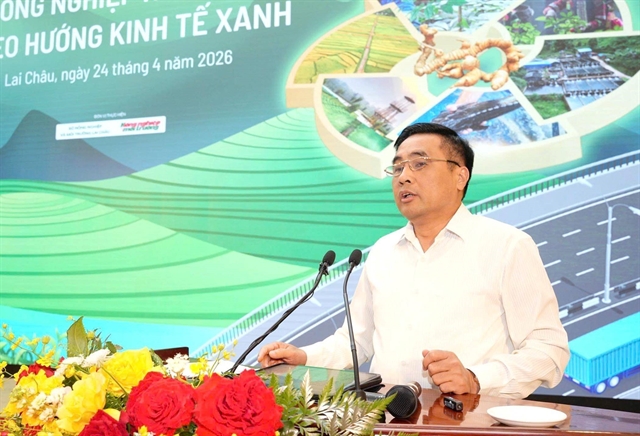
LAI CHÂU — The northern province of Lai Châu holds significant potential for green agricultural development thanks to its extensive forest cover and valuable indigenous products, including Lai Châu ginseng, according to Deputy Minister of Agriculture and Environment Nguyễn Quốc Trị.
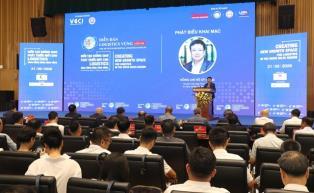
At a conference on developing agriculture and medicinal plants in Lai Châu on Friday, he said to achieve rapid and sustainable growth, Lai Châu must position commodity agriculture within the green economy, using forest resources and natural landscapes as its foundation.
The province should accelerate the development of large-scale and market-oriented commodity agriculture under value chains.
Lai Châu spans over 9,000sq.km, with terrain shaped by the Hoàng Liên Sơn mountain range and the Đà River basin, creating multiple microclimates.
With more than 500,000 hectares of forest, an extensive river system and over 16,000 hectares of hydropower reservoir surface area, the province is well suited to developing a diverse portfolio of products, including tea, rubber, specialty rice, cold-water fish, cage fish farming, valuable medicinal plants and non-timber forest products.
Trị said the province needs to review and refine planning for raw material zones, while strengthening links between businesses, cooperatives and farmers.
Trị highlighted the importance of medicinal plants, urging Lai Châu to invest in a coordinated approach – from conserving genetic resources and expanding standardised cultivation to breeding, processing, branding, geographical indications, e-commerce and experiential tourism.
He also called for a shift to a multi-value forestry economy, moving from single-use to multi-purpose forest management, including under-canopy medicinal crops, forest-based livestock, community tourism and sustainable timber processing.
With its vast forest area, Lai Châu is also well positioned to participate in the carbon credit market. If forest management and quality are improved, forests could become a key green asset, contributing to green growth and emissions reduction.
Lai Châu Province People’s Committee Chairman Hà Quang Trung said the province has established concentrated production zones for specialty rice, tea, cinnamon, macadamia, fruit, rubber, reservoir cage fish, honey, Lai Châu ginseng and under-canopy medicinal plants.
By 2025, more than 520 hectares are expected to meet safety standards, including 240 hectares certified under VietGAP.
However, green agricultural production in the province remains small, with weak value chains and largely traditional farming. Farmers still focus on output, often using inputs without strict control, while strong firms and cooperatives to lead value chains remain limited.
Nguyễn Thành Đồng said Lai Châu's Resolution 12-NQ/TU issued on March 27 targets green, low-emissions agriculture and medicinal plants, with land consolidation, technology and digitalisation.
By 2030, Lai Châu plans 2,500ha of tea, 1,500ha of rice and 2,500ha of fruit, alongside expanded livestock and 3,000ha of Lai Châu ginseng with coded growing areas and geographical indication status.
Beyond agriculture, Lai Châu also has advantages in eco- and experiential tourism, with destinations such as Ô Quy Hồ Pass, Pu Si Lung, Pu Ta Leng and Bạch Mộc Lương Tử.
The province has introduced policies to develop commodity agriculture linked with processing and markets, moving towards green and clean production, while also promoting logistics, branding and multi-value models tied to eco-tourism, forest resorts and carbon credits.
In the livestock sector, Phan Quang Minh, deputy head of the Department of Livestock Production and Animal Health, emphasised the need to strengthen links among households through groups and cooperatives, alongside the adoption of biosecure farming practices.
As part of the event, several memoranda of understanding were signed between Lai Châu People's Committee and associations and businesses to develop raw material areas, transfer technology and strengthen product distribution links.
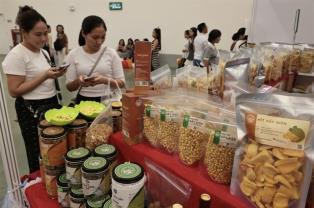
An exhibition showcasing OCOP products, key agricultural goods and green products from Lai Châu also drew considerable interest from investors and delegates. — VNS