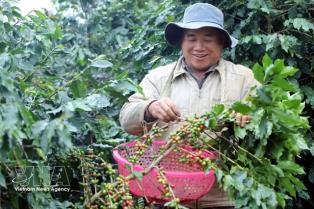
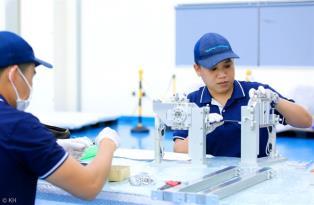
King Coffee aspires to elevate Vietnamese coffee on global market
As Việt Nam’s coffee industry faces mounting challenges, King Coffee is aiming to compete in the more demanding arena of deep processing and value-added production, while investing in brand building, market expansion and stronger connections with international consumers.
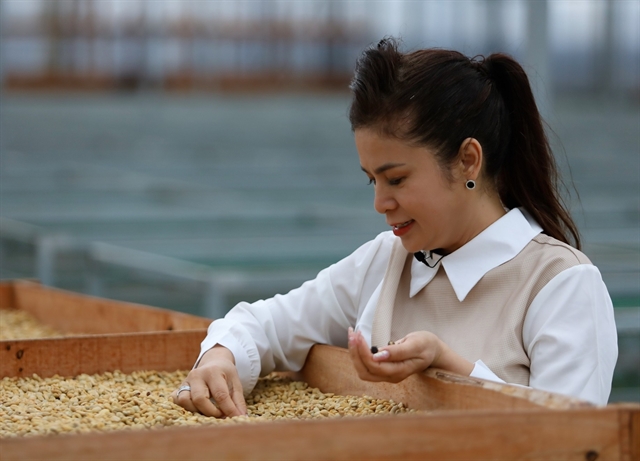
HÀ NỘI — Facing falling export revenues and growing global pressures, Việt Nam’s coffee industry is increasingly shifting its focus from raw exports to higher-value processing, with King Coffee aiming to strengthen Vietnamese brands in international markets.
The move comes as climate risks, stricter European regulations and global pricing pressures challenge one of the country’s key agricultural export sectors.
During the first four months of 2026, Việt Nam exported about 782,017 tonnes of coffee, up 11.7 per cent year-on-year. However, export turnover fell nearly 10 per cent to around US$3.57 billion.
In April alone, coffee exports reached almost 189,894 tonnes, generating about $822.5 million in revenue.
Industry observers say this is not the first time Việt Nam’s coffee sector has faced declining export value despite rising output, as much of the profit from processing, branding and distribution remains concentrated in importing markets rather than producing countries.
Long-term challenges are also mounting.
Lương Văn Tự, chairman of the Việt Nam Coffee and Cocoa Association (VICOFA), former deputy minister of industry and trade and former chief negotiator for Việt Nam’s WTO accession, warned that climate change could reduce global coffee output by 10-15 per cent while shrinking areas suitable for Arabica cultivation.
At the same time, the European Union’s anti-deforestation regulations under the EUDR framework are increasing pressure on exporters. Penalties for non-compliance may reach up to 4 per cent of corporate revenue, a significant concern given that around 40 per cent of Việt Nam’s coffee exports still rely on the EU market.
VICOFA has recommended increasing the share of deeply processed coffee products, expanding certified green and sustainable product lines and targeting promising markets such as China, Russia, South Korea, Algeria and Nordic countries.
Meanwhile, Lê Hoàng Diệp Thảo, chief executive officer of King Coffee, said Việt Nam remains the world’s largest exporter of Robusta coffee, although the variety has historically been viewed as a low-cost industrial commodity.
King Coffee is seeking to reposition Vietnamese Robusta as a higher-value product while strengthening links with international consumers through branding and value-added production.
“Vietnamese Robusta has been undervalued not because the product is inferior, but because the information structure and negotiation mechanisms within the global supply chain disadvantage producing countries," Thảo said.
"No matter how strong a company may be, it cannot change this reality alone. What is needed is a collective platform and if one does not yet exist, it must be built.”
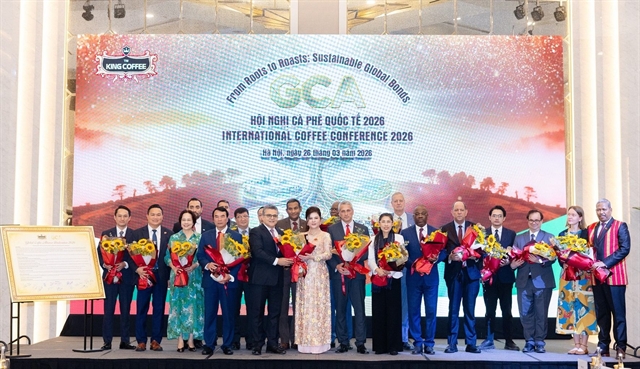
One of King Coffee’s most strategic initiatives has been the establishment of the Global Coffee Alliance (GCA), officially launched in Hà Nội in March 2026 with representatives from 21 countries.
The alliance aims to strengthen the entire coffee value chain by improving farmers’ incomes, promoting sustainable cultivation, increasing supply chain transparency and enhancing branding capabilities for producing nations.
Its vision towards 2040 is built around five pillars: ecology, livelihoods, technology, knowledge and culture.
The GCA’s development roadmap to 2040 will be implemented in three major phases. Between 2026 and 2030, the focus will be on digitalisation and connecting the first 50 million Coffee Citizens.
From 2030 to 2035, the alliance aims to transition 50 per cent of coffee-growing areas to regenerative agriculture models. From 2035 to 2040, the goal is to connect 125 million Coffee Citizens while shifting the industry towards a circular economy and net-zero targets.
King Coffee chief Thảo, said: “The journey is more important than the destination, but without a clear destination, the journey lacks direction.”
Since entering international markets in late 2016, King Coffee has exported products to more than 120 countries, focusing on higher-value segments including whole bean coffee, roasted and ground coffee, capsules and premium gift sets.
The company’s products are currently distributed through major retail channels such as Costco, Carrefour, Amazon and Alibaba, platforms known for rigorous standards on quality control and traceability.
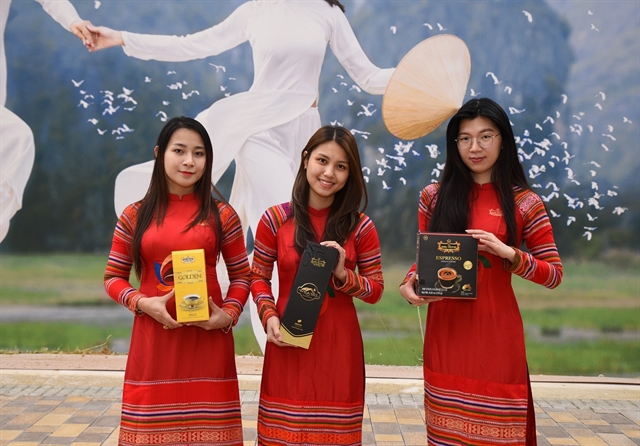
In December 2021, the World Records Union (WorldKings) recognised Việt Nam as the world’s largest producer and exporter of robusta coffee.
WorldKings also recognised the country’s local blending culture as the world’s most unique and diverse art of blending, brewing and drinking robusta coffee.
King Coffee submitted the nomination application to WorldKings for those records recognising Việt Nam’s robusta coffee.
Thảo added: “With premium Robusta and Arabica beans sourced from Việt Nam’s Central Highlands, combined with the finest ingredients from around the world, we are creating genuine value.”
The path pursued by King Coffee carries a clear message: to remain competitive in the next cycle of global competition, Việt Nam must aspire not only to be one of the world’s leading coffee exporters, but also to own coffee brands recognised worldwide. — VNS