Innovation, intellectual property key to strengthening Vietnamese brands: forum
Innovation, intellectual property, and digital transformation will be crucial to building stronger Vietnamese brands and improving the competitiveness of local businesses, the ASIA R&D CONNECT 2026 Forum heard in HCM City on July 22.
HCM CITY — Innovation, intellectual property, and digital transformation will be crucial to building stronger Vietnamese brands and improving the competitiveness of local businesses, the ASIA R&D CONNECT 2026 Forum heard in HCM City on July 22.
The "Building and Protecting Vietnamese Brands in Global Economic Integration," forum was organised by the city Departments of Industry and Trade and Science and Technology and the University of Economics HCM City.
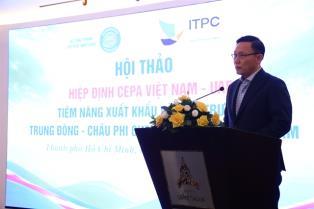
Opening the event, Lê Văn Danh, deputy director of the industry and trade department, said brands have become strategic assets as rapid technological advances, digital transformation and deeper international integration reshape the global economy.
He said a brand today represents far more than a company's name or logo, reflecting product quality, reputation, corporate responsibility, and consumer trust.
"A strong brand not only creates added value for enterprises but also enhances the country's image and the competitiveness of the economy."
He said building and protecting Vietnamese brands requires coordinated official support through better policies, a stronger innovation ecosystem, faster digital transformation, and more effective intellectual property protection.
These measures would help businesses increase value-added production, integrate more deeply into global value chains, and better capitalise on opportunities created by free trade agreements, he said.
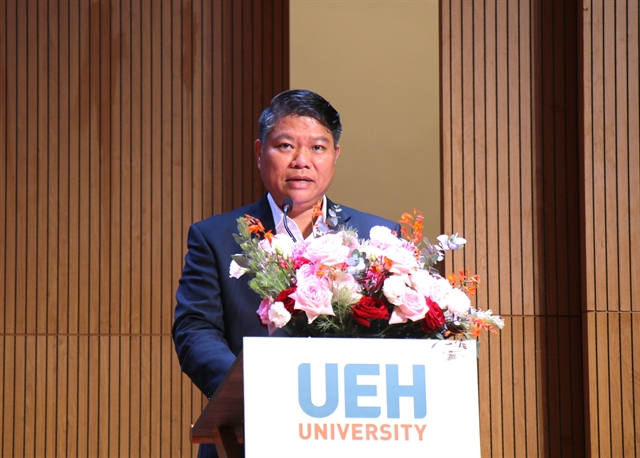
Bùi Quang Hùng, president of UEH, highlighted the importance of research and development and innovation in improving business competitiveness.
He called for closer cooperation between government agencies, universities, research institutes, and businesses to accelerate the commercialisation of research and create new economic value.
Nguyễn Lê Thiên Thanh, deputy head of the international economic affairs division at the HCM City Department of Industry and Trade, said successful brands are built on innovation, sound governance, and the ability to meet international standards.
She said HCM City is strengthening its innovation and trade ecosystem through policies promoting digital transformation, green transition, trade promotion, and international integration, providing a stronger foundation for Vietnamese brands to expand globally.

Meanwhile, Nguyễn Thị Ngọc Nhung, deputy head of the intellectual property and innovation management division at the city Department of Science and Technology, described intellectual property as a vital legal and economic asset that enables businesses to build competitive advantages.
She encouraged companies to incorporate IP management into their long-term business strategies by protecting patents, trademarks, and industrial designs while commercialising research to enhance brand value.
Nguyễn Quốc Uy, vice chairman of the Asian SME Federation in Việt Nam, speaking on behalf of businesses, said Vietnamese companies need to move beyond manufacturing capabilities and focus on building trust with international partners and consumers.
With the message "From Made in Vietnam to Trusted by the World", he said brands should be viewed as "trust assets", built on product quality, compliance with international standards, transparency, corporate social responsibility, and innovation.
A parallel session on private-sector branding examined how digital transformation, intellectual property management, and environmental, social, and governance standards are becoming increasingly important for business competitiveness.
Nguyễn Thị Huyền Trang of the Intellectual Property and Technology Transfer Centre at the Việt Nam National University-HCM City said digital transformation should go hand in hand with intellectual property management, enabling businesses to protect innovation, strengthen brand recognition, and better manage risks in the digital environment.
She added that technologies such as artificial intelligence, data analytics, and digital platforms are creating new opportunities to build and protect brands.
Sharing practical experience, Trần Quế Trang, vice chairwoman of AgriS' executive committee, outlined her company's approach to integrating environmental, social, and governance standards into its branding strategy.
She said ESG has become a prerequisite for accessing many global markets and also enhances corporate reputation, attracts investment, and increases brand value.
AgriS' experience in developing sustainable agriculture, adopting circular economy models, reducing carbon emissions, and building internationally compliant value chains demonstrates that ESG is no longer optional but essential for long-term competitiveness, she said.
Speakers agreed that in the digital era brands are no longer defined solely by product quality, but also by innovation, digital transformation, intellectual property management, and sustainable business practices.
They also stressed that brand development should be incorporated into broader national strategies on science and technology, innovation, digital transformation, intellectual property, and international economic integration.
Closer cooperation among government agencies, universities, and businesses would be essential to commercialise research, create higher-value brands, and strengthen the country's position in global value chains, they added. — VNS