Innovation, farmers’ knowledge key to driving fruit exports
Farmers are expected not only to improve cultivation skills but also to master technology and gain a deeper understanding of market demands.
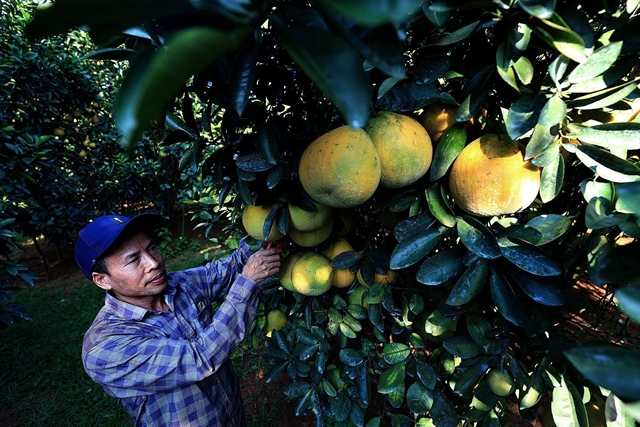
HÀ NỘI — Innovation and improving farmers’ knowledge are becoming central to Việt Nam’s efforts to expand fruit exports and build a more sustainable agricultural sector, as the country targets annual fruit and vegetable export revenues of US$9-10 billion.
A major milestone for the sector came on April 13, 2026, when the first shipments of fresh pomelos from Việt Nam were officially exported to Australia by Vina T&T Group and its partners following years of market access negotiations.
According to the Plant Production and Protection Department under the Ministry of Agriculture and Environment, the successful export to stringent market like Australia demonstrated that Vietnamese agricultural enterprises could strengthen the global position of the country’s fruit products through innovation and compliance with international standards.
Ngô Xuân Chinh, head of the Southern Fruit and Vegetable Innovation Club which has supported producers in improving productivity and adapting to climate-related challenges while strengthening cooperation between exporters and farming communities, said that stronger linkages among businesses, farmers, scientists and policymakers would be essential for developing long-term value chains and sustaining export growth.
The partnership would contribute to the development of a closed production and business ecosystem in which knowledge and technology are continuously shared to improve product quality, he said.
Former National Assembly Deputy Chairman Lê Minh Hoan has previously described improving knowledge of farmers as a key for Việt Nam’s agricultural modernisation strategy.
Farmers are expected not only to improve cultivation skills but also to master technology and gain a deeper understanding of market demands.
The application of technologies such as artificial intelligence (AI) in aquaculture and farming is becoming increasingly common as producers seek to optimise resources and reduce production risks.
Deputy Minister of Agriculture and Environment Hoàng Trung said Việt Nam aimed at increasing fruit and vegetable export turnover to between $9 billion and $10 billion, which would require efforts to strengthen environmental sustainability and promote greener agricultural models.
Low-emission farming and carbon credit initiatives are also being encouraged as part of broader efforts to develop a sustainable agricultural economy.
Innovation, better farmer education and closer cooperation across the agricultural supply chain would be critical to helping Vietnamese produce compete and maintain a foothold in premium global markets, he stressed. — VNS