Industry ministry accelerates Resolution 57 implementation
The Ministry of Industry and Trade is stepping up the implementation of Resolution 57 by accelerating digital transformation, innovation and strategic technology development to modernise the sector and deliver tangible results.
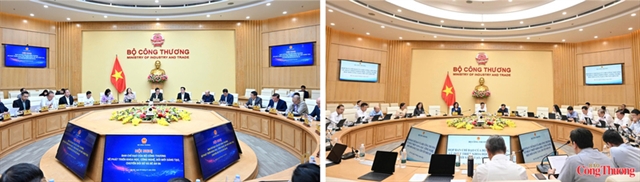
HÀ NỘI — The Ministry of Industry and Trade (MoIT) has made significant progress in implementing Resolution 57 on breakthroughs in science, technology, innovation and digital transformation, with digital government, data infrastructure and strategic technologies emerging as key priorities.
Issued by the Politburo on December 22, 2024, Resolution No. 57-NQ/TW lays the foundation for a new growth model driven by science, technology, innovation and digital transformation. The ministry has identified these areas as key drivers of productivity, industrial development, modern trade and public governance, with implementation now focused on standardisation, expansion and measurable outcomes.
As of June 16, 2026, the ministry had been assigned 287 tasks under Resolution 57. Of these, 158 had been completed, including 123 on schedule and 35 behind schedule, while 30 remained on track and 99 were classified as regular tasks. No overdue tasks remained unfinished.
The results will serve as the basis for reviewing progress, defining expected outputs and responsibilities, and setting completion milestones for the second half of 2026.
Digital transformation has delivered notable results, particularly in administrative reform and online public services.
y June 15, 2026, the ministry's centralised administrative procedure system had fully configured all 503 administrative procedures. Between January 1 and June 15, it received 67,850 applications, with about 99 per cent submitted online.
The ministry has connected its systems with the National Population Database and the National Business Registration Database to simplify application requirements, while restructuring 162 administrative procedures for end-to-end digital processing. All 511 administrative procedures under its authority have also been published on the National Public Service Portal.
It is also upgrading its administrative procedure system into a unified platform serving both central and local authorities. More than 160,000 organisations and individuals use the system regularly, while e-commerce platforms are implementing seller and buyer verification and electronic contracts through VNeID to help prevent online fraud.
It has also prioritised key databases on chemicals, industry and trade, import-export activities, e-commerce, product traceability and real-time State management. The VeriGoods product traceability system has been in operation since December 23, 2025, enabling businesses to register and update product information while supporting state management.

E-commerce remained a key driver of the sector's digital economy, with the B2C market estimated at US$13.9 billion in the first five months of 2026, up 17.9 per cent year-on-year. The ministry has approved the 2026 National E-commerce Development Plan and launched the "Vietnamese Products' Vitality" programme to help businesses promote trusted products through QR codes and digital platforms.
It is also accelerating digital transformation among mall- and medium-sized enterprises and manufacturing supply chains while working with ministries, businesses and research institutions to identify strategic technologies and products supporting the sector's long-term development.
During the second half of 2026, the ministry will focus on completing assigned tasks on schedule while shifting from planning to implementation with measurable outcomes, prioritising initiatives that deliver broad impact, involve leading enterprises and can be replicated on a wider scale. — VNS