HNX-to-HOSE transfer unlikely to lift all stock prices: experts
The transfer of 299 stocks from HNX to HOSE is expected to reshape Việt Nam’s stock market, but stronger liquidity and higher valuations will depend on company fundamentals and investor demand, experts said.
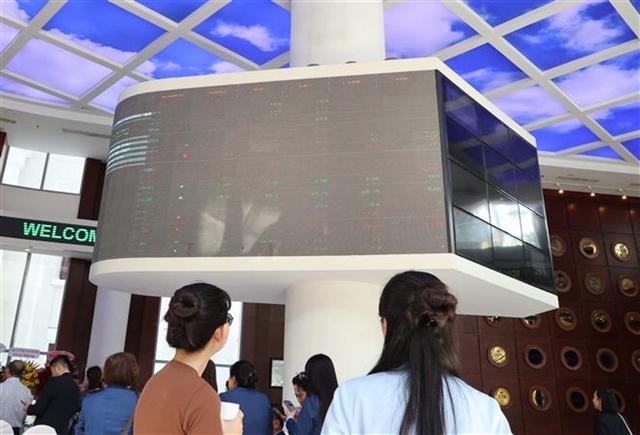
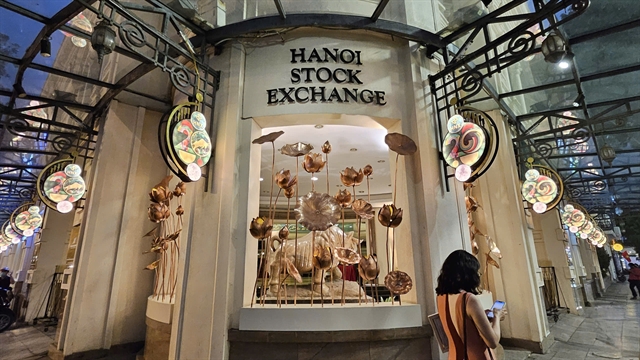
HÀ NỘI — The transfer of all listed stocks from the Hanoi Stock Exchange (HNX) to the Hochiminh Stock Exchange (HOSE) in late December is expected to simplify Việt Nam’s stock market structure, but a broad-based price rally is unlikely without stronger liquidity and better corporate earnings, according to market insiders.
Under the current plan, December 23 will be the last trading day for stocks listed on HNX. Trading will be suspended on December 24-25 before the transferred stocks begin trading on HOSE on December 28. HNX will retain its role in operating UPCoM and the government bond, corporate bond and derivatives markets.
The move will bring 299 companies onto HOSE, creating a single venue for all listed equities. However, analysts say investors should distinguish the benefits of market consolidation from the prospects for individual stocks.
At the end of September, HNX had a total market capitalisation of VNĐ463.5 trillion (roughly US$18 billion), equivalent to about 5.4 per cent of HOSE’s VNĐ8.55 quadrillion market capitalisation. Average daily trading value on HNX was VNĐ711 billion, just 4.3 per cent of the VNĐ16.4 trillion recorded on HOSE.
The figures show that although the transfer involves a large number of companies, its immediate impact on the overall market may be limited.
Prices depend on fundamentals
Đinh Quang Hinh, head of macroeconomic and market strategy at VNDirect Securities Corporation, told VTC News that the transfer had been planned for some time and was primarily an organisational change.
Listing on HOSE could help companies attract more investors, including foreign investors, while clearer listing and classification standards could improve the quality of the market. However, the move alone would not be enough to drive stock prices higher.
He said the market also needed stronger economic growth, exchange-rate stability, a positive trade balance and more favourable monetary conditions.
Nguyễn Văn Toại, investment advisory director at VPS Securities Corporation, also cautioned against expecting stocks to rise simply because they would trade on HOSE.
He said investors should focus on companies’ business prospects and profit-generating capacity. Sectors with clear growth drivers or those benefiting from an economic recovery could attract money before any broader market rally.
The transfer could nevertheless benefit companies that have solid fundamentals but receive limited investor attention on HNX.
Lê Quang Hải, head of investment advisory at Yuanta Việt Nam Securities’ Đà Nẵng branch, said concentrating listed stocks on one exchange would make it easier for investors to compare companies and could improve access to institutional capital.
However, greater visibility is only the first step towards a higher valuation, Hài told baodautu.vn. He said companies will still need sufficient free float, stable liquidity, room for foreign ownership, transparent disclosures and credible earnings growth to attract long-term investors.
A longer-term test for market accessibility
The consolidation also comes as Việt Nam moves through the phased inclusion of its equities in FTSE Russell’s Global Equity Index Series following its reclassification to Secondary Emerging Market status.
The inclusion factor is scheduled to rise from 10 per cent in September 2026 to 30 per cent in March 2027, 65 per cent in June and 100 per cent in September.
In a statement to Việt Nam News, EBC Financial Group said the transfer should be seen as a structural reform rather than a trigger for immediate foreign buying.
EBC noted that foreign investors had sold Vietnamese equities for nine consecutive months through September. Cumulative net selling reached about VNĐ102.2 trillion by October 7.
Global financial conditions remain another constraint. With US Treasury yields offering relatively attractive returns (above 5 per cent), emerging-market equities must compete harder for international capital. Consolidating listed stocks on one exchange can reduce operational friction, but it cannot offset global interest rates or remove currency and investment risks.
“A global manager does not evaluate market access in isolation from operational cost,” said Sana Ur Rehman, senior market analyst at EBC Financial Group. “A single equity venue does not solve every accessibility issue, but it removes one layer of fragmentation at a time when Việt Nam is becoming more integrated into global benchmarks.”
With an expected weight of just 0.19 per cent in the FTSE Emerging Index, Việt Nam will account for only a small share of global portfolios. Making trading easier and more efficient could help attract investors, who need to manage investments across many markets.
In addition, Việt Nam had more than 14 million domestic securities accounts at the end of September, an increase of over 2.2 million since the beginning of 2026, implicating a broader base for market participation.
According to EBC, the key question is whether consolidation will translate into deeper liquidity, broader institutional ownership and more efficient trading after the transfer.
The impact should become clearer in 2027, when investors can see whether the transferred stocks attract more trading and new investors. The key test is whether the move makes it easier to buy and sell larger amounts of shares, rather than simply changing the exchange where they trade. — VNS