HCM City’s new development landscape opens doors for investors
As HCM City enters a new phase of development, the business and investment community is facing significant opportunities to expand operations and restructure investment strategies.
HCM CITY — As HCM City enters a new phase of development, the business and investment community is facing significant opportunities to expand operations and restructure investment strategies.
However, alongside these opportunities come growing demands for stronger governance, transparency, policy adaptability, and legal compliance in an increasingly complex global business environment, speakers said at a conference held in HCM City on May 22.
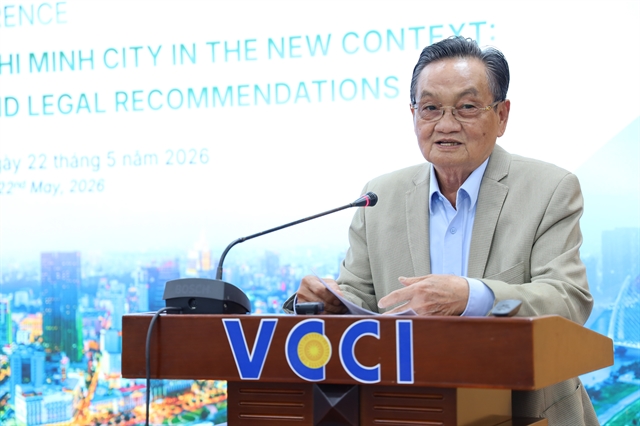
Speaking at the conference “Investment Opportunities in HCM City under the New Landscape: Comprehensive Overview and Legal Recommendations,” Dr. Trần Du Lịch, Vice President of the Vietnam International Arbitration Centre (VIAC), said HCM City was at a pivotal stage of development, driven by institutional reforms, greater decentralisation, and the strategic ambition to become Việt Nam’s international financial centre.
According to Lịch, the city now holds an unprecedented strategic position by integrating logistics infrastructure, seaports, finance, trade, industry, and innovation.
As the economy shifts toward high-tech and digital-driven growth, the city is expected to receive “specific mechanisms” to address institutional bottlenecks and improve the investment environment.
“This is also a crucial moment for the city to affirm its role as the country’s economic locomotive and a regional financial and commercial hub, creating spillover momentum for national growth in the new era,” he said.
However, Lịch stressed that while these developments create new opportunities, they would also pose fresh challenges for businesses, requiring enterprises not only to strengthen financial capacity but also to enhance legal governance, risk management, and dispute resolution capabilities.
Cao Thị Phi Vân, Deputy Director of the Investment and Trade Promotion Centre of HCM City (ITPC), said the city would maintain its competitive advantages through market scale, a strong business ecosystem, and international connectivity. With the rollout of specific mechanisms and the development of the international financial centre, HCM City was expected to remain a strategic destination for high-quality investment capital.
However, to fully capitalise on these opportunities, businesses must proactively update market information, policies, and legal regulations while improving governance capacity to adapt to the rapidly changing business environment, she said.
Đậu Anh Tuấn, Deputy Secretary General and head of the Legal Department of the Vietnam Chamber of Commerce and Industry (VCCI) and VIAC’s listed arbitrator, said Việt Nam was entering an unprecedented phase of institutional reform in both scale and speed.
He pointed to major policy initiatives such as Resolution 66 on law-making reform and Resolution 68 on private sector development. Key laws governing investment, land, taxation, e-commerce, data, artificial intelligence, and digital technology were being revised to reduce business conditions, promote decentralisation, and shift from a pre-approval to a “post-audit” approach.
Tuấn said these reforms would create new opportunities by lowering market entry costs and encouraging investment in strategic sectors such as high technology, semiconductors, renewable energy, and the green and digital economy. At the same time, businesses must proactively adapt to new requirements related to personal data protection, environmental, social and governance (ESG) standards, and extended producer responsibility (EPR).
Phan Hoài Nam, CEO of W&A Consulting Co., Ltd and a VIAC arbitrator, highlighted major tax policy and administration changes in 2025–26.
He said the new tax framework was being revised to better support businesses while improving transparency and management efficiency amid the rapid growth of the digital economy and cross-border transactions. New regulations concerning value-added tax (VAT), corporate income tax (CIT), personal income tax (PIT), and tax administration were expected to directly affect foreign-invested enterprises in Việt Nam.
Nam noted that the revised corporate income tax rules would significantly expand deductible expenses, particularly for research and development (R&D), market research, new product development, pre-sales marketing, and innovation-related activities. Tax incentives were also being adjusted to encourage investment in priority sectors and improve long-term competitiveness.
At the same time, he warned businesses and investors to proactively review their operating models, closely monitor policy changes, and strengthen compliance governance to minimise legal and financial risks.
Michael K. Lee, Partner of DILINH Legal and VIAC’s listed arbitrator, said foreign-invested enterprises in Việt Nam still faced challenges related to licensing, foreign ownership limits, compliance, corporate governance, and inconsistent legal enforcement.
Drawing from practical cases, he noted that most major disputes did not stem from a single legal issue, but rather from weak contracts, poor documentation, and regulatory risks that were not effectively managed over time.
He advised investors to conduct early legal and regulatory due diligence, strengthen contractual protections, adopt robust arbitration clauses, maintain proper documentation, closely monitor policy changes related to land, investment, and taxation, and prioritise early dispute management.
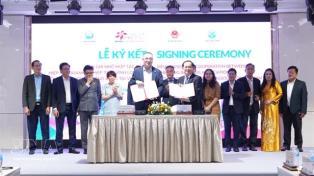
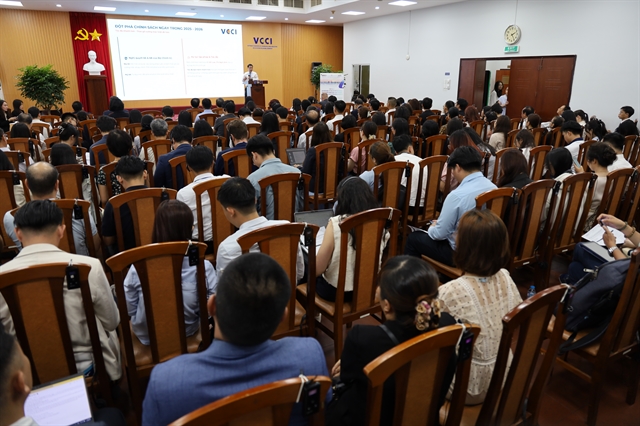
The conference was organised by the Investment and Trade Promotion Centre of HCM City in collaboration with the Vietnam International Arbitration Centre and the Vietnam Chamber of Commerce and Industry - HCM City branch, attracting more than 150 delegates, including representatives of businesses and investors operating in HCM City, as well as representatives from government agencies, and professional organisations. — VNS