HCM City steers businesses towards green manufacturing with policies
Rather than imposing rigid requirements for enterprises to “go green”, HCM City has in recent years adopted a policy approach that encourages businesses to pursue sustainable manufacturing in the most efficient way.
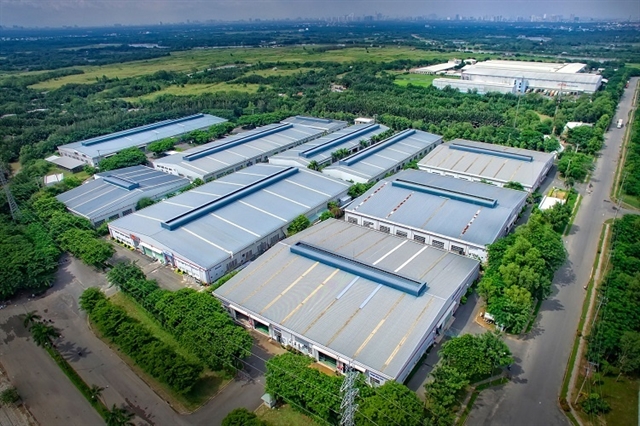
HCM CITY — Rather than imposing rigid requirements for enterprises to “go green”, HCM City has in recent years adopted a policy approach that encourages businesses to pursue sustainable manufacturing in the most efficient way.
This shift is increasingly evident, not only through rising investment in green production transformation but also in the growing number of enterprises introducing green technology products to the market.
Experts say that pilot mechanisms such as time- and consumption-based energy pricing are designed to create favourable conditions for businesses to invest in automation, smart energy management, renewable energy integration, and greener production models.
Meanwhile, the city has also been preparing the groundwork for a carbon credit market linked to industrial parks and high-tech zones, while supporting exporters in meeting the European Union’s Carbon Border Adjustment Mechanism.
These policy signals have been positively received by manufacturers across the city.
Dr Đỗ Thiên Anh Tuấn, an economist and lecturer in public policy at Fulbright University Việt Nam, said data, inventions and other intangible assets should be recognised as real economic assets, which would help form an industrial data services market and foster an artificial intelligence ecosystem capable of analysing and optimising production efficiency.
He emphasised that enterprises must move towards green and smart business models for sustainable development, rather than viewing green transformation as merely a response to administrative compliance.
Between 2021 and 2025 the city’s industrial sector recorded notable progress, focusing on foundational industries and prioritising key areas such as high-tech manufacturing, supporting industries and smart processing and manufacturing.
Green industrial models have increasingly become a core commitment.
Selective investment attraction policies have delivered tangible results, with several large-scale, high-tech projects in mechanical engineering, electronics, petrochemicals, and wind power equipment manufacturing already in operation, contributing to new industrial segments and broader sectoral breakthroughs.
The city has also attracted major projects for producing materials and fuels for downstream processing and manufacturing, generating spillover effects that draw investment into supporting industries.
Investors such as LEGO, Pandora, Nitto Denko, and Trường Hải have contributed to shaping this ecosystem.
Foreign investment continues to flow into industrial development, while the non-state sector has grown rapidly, emerging as a key driver of stable industrial growth in HCM City.
According to Hà Văn Út, deputy director of the city's Department of Industry and Trade, the internal structure of the city’s industrial sector has shifted towards increasing the share of manufacturing while reducing reliance on extractive industries.
Processing and manufacturing now account for around 25.9 per cent of its economy.
The city has more than 90 industrial parks, export processing zones, high-tech parks, and industrial clusters, whose 28,500 hectares account for nearly 32 per cent of the country’s industrial land.
This extensive infrastructure continues to attract both domestic and foreign investors, with occupancy rates in some areas such as Bình Dương reaching as high as 94 per cent.
The city has also established the Electronics and Semiconductor Centre, which has attracted a range of chip design projects from global corporations.
Despite challenges posed by the pandemic and economic volatility at home and abroad, local enterprises have demonstrated strong resilience, maintaining production and reinforcing the role of key industries as the main growth engines.
From a business perspective, a representative of Daikin Việt Nam said the company had been gradually translating its sustainability vision into concrete actions through new product lines centred on human needs. Continuous technological innovation had enabled the firm to deliver products that combine operational efficiency with green, next-generation technology.
In early 2026 Daikin introduced AIR CREATOR, a new brand aimed at expanding personalised experiences across Southeast Asia, including Việt Nam.
The FTKM Series was also launched as a clear demonstration of the company’s strategy to integrate energy efficiency with advanced green technology.
Earlier Daikin Air Tower received LEED Platinum certification from the US Green Building Council and LOTUS Platinum certification by the Việt Nam Green Building Council.
A report by the city Institute for Development Studies shows that industrial value added has increased significantly in recent years, reaffirming the sector’s role as a pillar of economic growth.
Amid global supply chain restructuring and rising demands for green and digital transformation, the institute said, industrial development must shift away from labour- and land-intensive models towards science, technology, innovation and higher value-added activities.
The city’s industrial development strategy to 2030 therefore aims to reorganise industrial space, strengthen regional linkages and build a modern, green and smart industrial ecosystem, reinforcing the city’s role as the nation’s leading industrial growth engine. — VNS