HCM City property buyers increasingly seek ‘real value’ beyond city centre
A new trend is emerging in HCM City’s property market as buyers show greater willingness to move away from the city centre in search of better living conditions and greater value for money.
HCM CITY — A new trend is emerging in HCM City’s property market as buyers show greater willingness to move away from the city centre in search of better living conditions and greater value for money.
Real estate was once widely viewed as an investment asset offering the prospect of rapid price appreciation. Buyers, however, are now paying increasing attention to practical usability, living-environment quality and a property’s ability to meet their families’ long-term needs.
The trend is particularly evident in major cities like HCM City, where population growth, traffic congestion and rising living costs are prompting residents to reassess their housing priorities.
Several surveys by market researchers have highlighted the shift.
According to a second-quarter report by Batdongsan.com.vn, 69 per cent of respondents in HCM City said they were willing to move to suburban areas or emerging urban centres in exchange for more spacious homes and more affordable prices.
By comparison, only 27 per cent continued to prioritise living near the city centre, despite having to accept smaller floor areas and higher prices.
Some 72 per cent of respondents who buy houses for living said they preferred areas with new infrastructure and strong connectivity, reflecting a clear shift in housing demand from central districts to emerging growth hubs.
CBRE said strong infrastructure development and improved regional connectivity were driving housing supply towards satellite areas.
The consultancy reported that, in the annual composition of newly launched low-rise housing supply, the share of the former HCM City area had declined significantly, from 40–70 per cent previously to 20–40 per cent since 2024.
The change indicates that housing supply is increasingly spreading to markets benefiting from infrastructure development, it said.
The shift is even more pronounced in the apartment segment. Before 2024, the former HCM City area typically accounted for about 60–85 per cent of the region’s total newly launched apartment supply. From 2024 onwards, however, its share fell to 20–50 per cent.
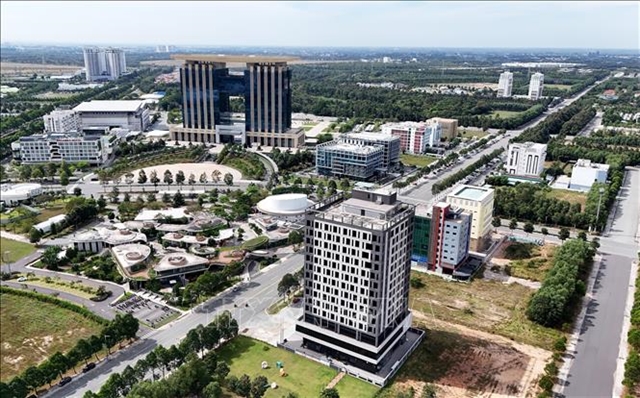
New supply is increasingly being distributed across satellite markets such as Bình Dương, Long An and Đồng Nai, reflecting the impact of regional infrastructure development, abundant land availability and urban expansion.
Dương Thuỳ Dung, a property market expert, said the market was gradually shifting from an asset-ownership mindset towards a focus on owning a better quality of life.
“Projects that meet genuine housing needs and are developed on the foundation of sound planning, integrated infrastructure, a high-quality living environment and a comprehensive ecosystem of amenities will create the most sustainable value,” she said.
As homebuyers increasingly prioritise quality of life, health and resident experience, “real value” will become an important benchmark for assessing the appeal of real estate during the next phase of Việt Nam’s market development, Dung said.
Rising prices
Rising property prices are another factor behind the shift in buyer preferences.
From 2021 to 2026, primary apartment prices in HCM City recorded average annual growth of approximately 14 per cent, while secondary-market prices increased by around 12 per cent annually.
In the coming years, primary apartment prices are estimated to rise by an average of 11 per cent per year. In the low-rise housing segment, both primary and secondary prices are forecast to increase by approximately 5–6 per cent annually during the 2026–28 period.
The figures indicate that the market is moving away from speculation-driven growth towards growth underpinned by scarce land, improved infrastructure and increasingly strong demand for housing.
At the same time, the development of integrated mega-urban areas is reshaping the way residents define a “prime location”.
Rather than focusing solely on proximity to the city centre, buyers are evaluating properties based on their ability to meet multiple needs, including living, working, education, entertainment and healthcare.
Changing working patterns are also contributing to the shift.
According to PwC’s global survey, "Remote Working: Thriving under this New Model of Work", approximately 80 per cent of businesses believe remote or hybrid working has become the new norm in the labour market.
This trend has reduced the absolute dependence on proximity to offices while increasing demand for projects offering more spacious homes, quieter surroundings and the ability to combine living, working and leisure in one place.
The shift is contributing to the development of the “15-minute city” model, in which residents can access essential services, including education, healthcare, shopping, entertainment and workplaces, within a 15-minute journey.
The model is not only an international urban-planning trend but is also becoming increasingly evident in the development of emerging mega-urban areas in Việt Nam.
As a result, the value of a property is no longer determined solely by its distance from a traditional city centre. Infrastructure quality, service connectivity, public spaces and the ability to meet residents’ daily needs are becoming increasingly important factors in determining a project’s attractiveness and long-term value. — VNS