HCM City launches maritime finance ecosystem to strengthen service revenues
To develop the maritime economy sustainably and enhance national competitiveness, Việt Nam needs to build a comprehensive maritime financial ecosystem where capital flows, financial services, and logistics operations are tightly interconnected domestically.
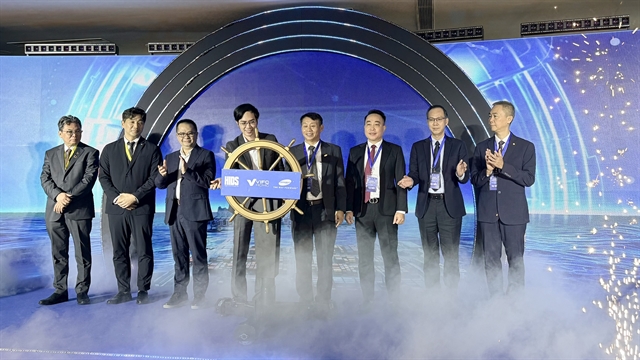
HCM CITY — To develop the maritime economy sustainably and enhance national competitiveness, Việt Nam needs to build a comprehensive maritime financial ecosystem where capital flows, financial services, and logistics operations are tightly interconnected domestically, speakers said at a forum held in HCM City on May 21.
The forum, titled “Developing the International Maritime Financial Centre Ecosystem within the Vietnam International Financial Centre in HCM City”, was hosted by the executive agency of the Vietnam International Financial Centre in HCM City (VIFC-HCMC), in collaboration with Gemadept Corporation and the HCM City Institute for Development Studies.
The event addressed existing bottlenecks in the maritime economy and discussed strategies to retain significant foreign currency flows within Việt Nam and also marked the launch of the International Maritime Financial Centre (IMFC) ecosystem initiative, one of the four strategic pillars of VIFC-HCMC.
According to the organisers, the rapid development of seaport system in the south is laying the foundation for a large-scale maritime ecosystem.
Existing ports such as Cát Lái Port – ranked among the world’s top 21 ports with annual throughput of around 7.5 million TEUs – and Gemalink International Port in the Cái Mép – Thị Vải Port Cluster, which can accommodate ultra-large container vessels, together with the planned Cần Giờ International Transshipment Port spanning 571 hectares and projected to handle 17 million TEUs annually, are positioning HCM City to integrate more deeply into global logistics and trade networks.
However, current value added by Việt Nam’s maritime sector remains relatively limited when compared to regional and international maritime hubs.
Most high-value maritime financial services, including trade finance, ship financing, marine insurance and reinsurance, international payments, and logistics risk management, continue to be processed through major international maritime centres.
Việt Nam currently retains only around 4-5 per cent of these financial transaction values domestically, leaving an estimated US$6-8 billion in potential value yet to be captured, they said.
Speaking at the forum, Nguyễn Công Vinh, deputy chairman of the HCM City People’s Committee said the southern region has emerged as one of Southeast Asia’s most critical logistics and seaport hubs.
“But Việt Nam has so far participated strongly only in the “flow of goods,” while the highest value-added segment – the “flow of finance” – remains concentrated in international financial centres such as Singapore, Hong Kong, and London. Trade finance, ship financing, marine insurance, international payments, and logistics risk management activities are still largely handled overseas.”
"To change this, Việt Nam needs to build a comprehensive maritime financial ecosystem where capital flows and financial services are closely connected right here at home," he stressed.
HCM City is pursuing a model that directly bridges seaport infrastructure with an international financial ecosystem. VIFC-HCMC is designed not only to attract global capital but also to act as a domestic transit hub, allowing local enterprises to access modern financial services without relying on foreign intermediaries.
The IMFC ecosystem will serve as a unified platform connecting banks, investment funds, insurance companies, logistics firms, and shipping lines, he added.
Assoc. Prof. Dr. Nguyễn Hữu Huân, vice chairman of the Executive Agency of VIFC-HCMC, said the IMFC ecosystem is a key pillar of the Vietnam International Finance Centre in HCM City and is expected to lead the economic restructuring process of both the city and the entire country.
“Ports such as Cần Giờ and Cái Mép – Thị Vải are transshipment hubs for cargo flows, while VIFC-HCMC must become a transshipment hub for capital flows serving Việt Nam’s maritime economy,” Huân said.
According to him, IMFC-HCMC will connect directly with international financial centres to create synchronised flows of goods, services, capital, and human resources. In addition to incentives from VIFC, it plans to introduce specialised initiatives to create momentum for breakthroughs in maritime finance.
Phạm Quốc Long, deputy director of Gemadept Corporation, said the IMFC model draws inspiration from major centres such as Singapore but differs fundamentally through the strong application of digital technologies to reduce costs, shorten transaction times, and improve transparency.
The maritime financial exchange platform will focus on three core pillars: import-export payments and cross-border digital finance; marine insurance and international logistics solutions; and digital finance platforms designed to repatriate transaction cash flows to Việt Nam and elevate HCM City into one of the region’s leading maritime hubs.
Long outlined a three-phase implementation roadmap for the initiative: In the first one to two years, the ecosystem will focus on building both hard and soft infrastructure through sandbox mechanisms and a one-stop service centre.
The second phase, spanning two to three years, will expand the ecosystem, digitalise core processes, and develop public-private maritime investment funds.
In the third phase, after three years, the ecosystem is expected to reach international scale by launching a regional maritime arbitration body and a derivatives trading platform.
The long-term vision for the IMFC ecosystem is to support cargo circulation exceeding 25 million TEUs and attract an additional $10–15 billion in new investment capital annually.
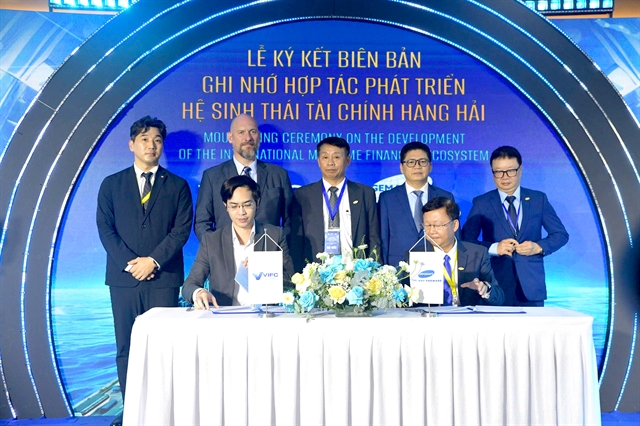
To kickstart the initiative, VIFC-HCMC and Gemadept signed a memorandum of understanding on strategic cooperation and debuted their first two core technology products: a Maritime Community System for real-time data sharing between regulators and financial institutions, and a blockchain-based maritime exchange platform designed to digitise trade documents and automate transactions via smart contracts. — VNS