Hà Nội's handicrafts seize EVFTA opportunity
Exporters of bamboo, rattan, ceramics and other traditional crafts are gaining unprecedented access to one of the world's most demanding consumer markets.
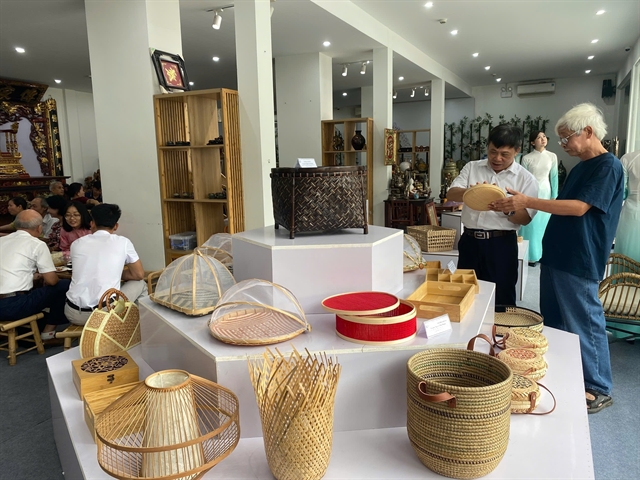
HÀ NỘI — As tariff barriers disappear under the European Union - Việt Nam Free Trade Agreement (EVFTA), Hà Nội's long-standing handicraft sector is entering a pivotal phase.
Exporters of bamboo, rattan, ceramics and other traditional crafts are gaining unprecedented access to one of the world's most demanding consumer markets, but with that opportunity comes heightened pressure to meet strict sustainability, quality and compliance standards.
Over the past three years, Indochina Creative Investment and Development JSC has seen its exports to the EU grow by some 20 per cent. The company specialises in high-end woven rattan and bamboo home goods, interior decor, handbags and hats.
Securing these orders required nearly two years of preparation, including obtaining factory certifications, product testing, design approvals and other credentials, Hoàng Thị Thanh Tâm, the firm's director, told the People's Newspaper.
Only after meeting these stringent requirements did European buyers commit, she added.
For Hà Nội's handicraft producers, the EVFTA represents a golden moment, particularly because the tariff-cutting roadmap between Việt Nam and the EU is now approaching 100 per cent, minimising export costs.
However, capitalising on this opportunity is no easy task.
According to Ngô Chung Khanh, deputy director of the Multilateral Trade Policy Department at the Ministry of Industry and Trade (MoIT), the EU market is increasingly oriented toward green, clean consumption, with high expectations on labour practices, environmental impact and traceability.
Consumers in Europe are not just evaluating prices or appearance; how a product is made matters.
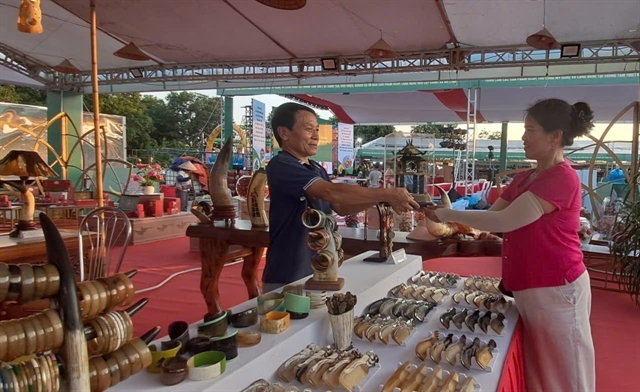
Exporters say that without meeting such sustainability demands, they will struggle to leverage tariff benefits.
Hà Thị Vinh, chairwoman of the Hanoi Handicraft and Craft Village Association, said that environmental and social responsibility certifications have become a passport to high-end markets.
In practice, this has driven significant investments. For instance, ceramic manufacturers are building sophisticated waste treatment systems, introducing clean production lines, and raising governance standards.
"EVFTA imposes many standards, from rules of origin and labour safety to product quality," Tâm said, echoing this urgency, adding that firms must continuously upgrade their technology, technical capabilities and management systems to align with European norms.
But even with strong compliance, there are other pressures.
Lê Bá Ngọc, vice chairman of the Vietnam Handicraft Exporters Association, warned that international customers increasingly demand evidence of reduced emissions over time.
"If at the start of the year a firm emits 50 tonnes of carbon, by the end it must be lower," he said.
To achieve that, companies must control every part of the chain, from raw material cultivation and transportation to energy consumption.
Still, the export potential is significant.
According to Ngọc, some Hà Nội-based handicraft companies already generate nearly US$80 million annually. But without clean input materials and a low-emissions production footprint aligned with Việt Nam's net-zero ambition by 2050, they risk losing ground.
To support these firms, the Hà Nội Department of Industry and Trade says it will intensify efforts: enhancing trade promotion programmes, helping to register trademarks, organising participation in fairs and exhibitions, and developing e-commerce platforms dedicated to handicrafts.
Firms can also seek help from the Hanoi Support Centre for Enterprises and Investment Promotion
In addition, authorities plan to closely monitor businesses to identify and resolve emerging constraints, working within their mandate to provide targeted help.
Struggle to scale, build brand identity
Hà Nội's craft villages possess a relatively stable supply capacity and significant potential to meet international demand. Yet, the ability to expand production remains constrained, particularly in segments reliant on specialised craftsmanship and complex processes.
Despite its deep cultural heritage, Hà Nội's handicraft industry has not fully unlocked its potential and still lags behind competitors in China, India, and the Philippines.
According to the Vietnam Handicraft Exporters Association, up to 90 per cent of the country's handicraft products, including those produced in Hà Nội, are manufactured based on foreign buyers' designs and carry their brands.
This reliance reflects underlying structural issues: most production facilities operate on a small scale, lack coherent brand strategies, and have yet to harness digital technology for marketing and global outreach.
While many artisans produce highly artistic and culturally rich designs, these creations often lack commercial appeal, do not match customer preferences, or prove too difficult to reproduce at scale. Other products remain simple and low in value, limiting their competitiveness.
Experts emphasise that Hà Nội's handicraft exporters and village workshops must be proactive.
They need to study technical regulations carefully, continually innovate their production techniques, and build their internal technological capacities to meet the demanding standards of the European market. — BIZHUB/VNS