Green technology, AI have become necessary: seminar
The dual transition towards green technology and digital transformations in the transportation sector has evolved from a choice to a necessity, experts emphasised.
HCM CITY — The dual transition towards green technology and digital transformations in the transportation sector has evolved from a choice to a necessity, experts emphasised.
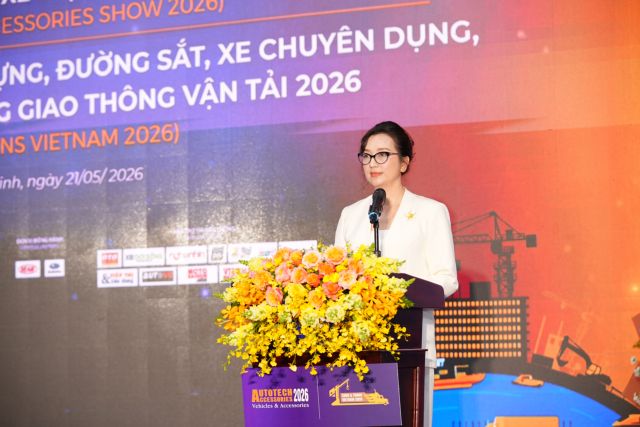
This sentiment was expressed during a seminar titled “Twin Transition in Việt Nam’s Transportation: Green Technology Developing and Artificial Intelligence Application,” which took place at the International Exhibition on Automobiles, Motorcycles, Electric Vehicles, and Supporting Industries (Autotech & Accessories 2026) in HCM City on Friday.
The seminar gathered experts, policymakers, and business representatives to discuss and share perspectives and explore practical solutions for applying technology and artificial intelligence to address environmental issues, traffic safety, operational management and supply chain efficiency.
At the seminar, the experts underscored that the rapid advancements of the fourth industrial revolution globally have necessitated significant transformation within Việt Nam's transportation sector to align with sustainable development trends.
The adoption of advanced technologies, particularly artificial intelligence, not only enhances traffic management efficiency but also enables resource optimisation, emission reduction, and promotes the transition towards an intelligent and eco-friendly transportation system.
At the seminar, Trần Đức Sự, former deputy director of the Youth Science and Technology Development Centre, highlighted the urgent need for green transformation in various aspects, from Government policies to consumer behaviour.
Sự referenced data from the IQAir World Air Quality Report 2024, indicating the increasing pressure on the transportation sector due to CO2 emissions. It was noted that total CO2 emissions were 57 million tonnes in 2023, and are projected to rise to over 89 million tonnes by 2030.
Furthermore, Sự pointed out the shift in consumer preferences towards electric vehicles, citing the significant adoption rate of electric buses in HCM City and the rise in customers using electric ride-hailing services.
For instance, approximately 65 per cent of buses in HCM City are now electric, and the percentage of customers using electric ride-hailing services surged significantly from 44 per cent in the second quarter of 2025 to 54 per cent in the third quarter.
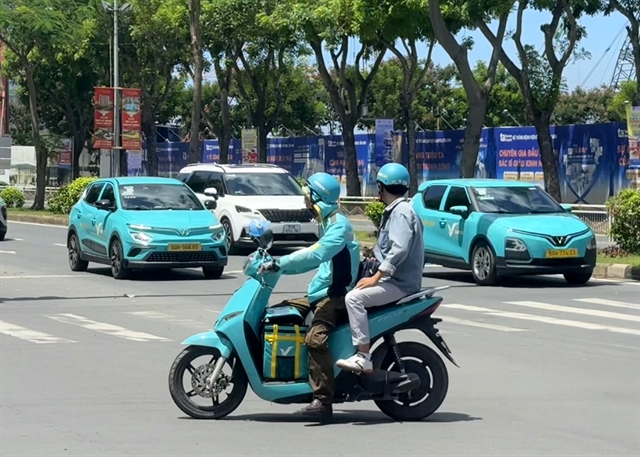
The experts emphasised that the green transformation in transportation should be seen as a competitive effort to realign the industry, with artificial intelligence playing a crucial role in driving this progress.
Discussions at the seminar covered topics such as the legal framework for intelligent transportation systems (ITS), the use of data and AI in the transportation sector, and the current situation in Việt Nam.
Bùi Thị Cẩm Tú, an expert from the Department of Science, Technology, Environment, and Building Materials of the Ministry of Construction, shared that Việt Nam has implemented several ITS services, including traffic management monitoring in highways and urban areas, electronic traffic payment for road tolls and parking fees, and vehicle load control.
AI is integrated into various tasks such as license plate recognition, vehicle classification, traffic flow measurement, violation detection, incident detection, and supporting traffic signal control. AI is also used for electronic payment, toll collection for roads, and smart parking.
However, there are discrepancies in the implementation levels across highways, major urban areas, and localities.
Major urban centres such as HCM City and Hà Nội are gradually shifting from traditional surveillance cameras to AI-enabled camera models, sensors, centralised data, and smart traffic control centres.
Urban AI not only aids in addressing violations but also supports traffic monitoring, signal control, congestion alerts, incident detection, and enhances real-time traffic management capabilities, Tú concluded.
During the seminar, experts also discussed topics on advancing dual transformation in HCM City’s public transportation with a cashless payment system as well as technical topics on saving energy. — VNS