Green Startup Competition aims to help startups move beyond product-market fit
Experts said startups need more than innovative ideas to succeed, highlighting management capacity, continuous innovation and sustainable business models as key factors for long-term growth.
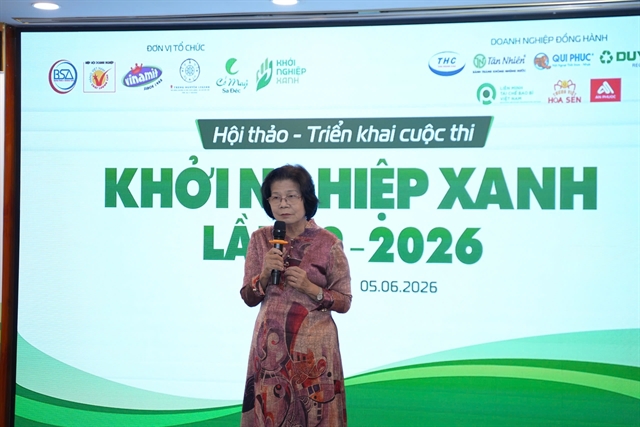
HCM CITY — In an increasingly competitive business environment, innovative ideas may help startups gain an early foothold, but only companies with strong management systems, continuous innovation capabilities, and long-term strategies can achieve sustainable growth.
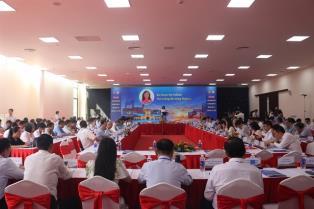
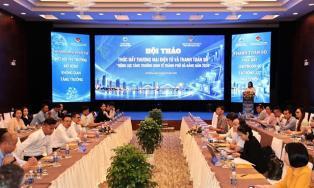
This message was highlighted at the launch of the "Green Startup Competition 2026 – The Path to Sustainable Development,” organised by the High-Quality Vietnamese Goods Business Association and the Business Studies and Assistance Centre (BSA) in HCM City on June 5.
Trần Thị Lan Anh, an advisor on M&A and international market growth strategies, said most startups focus initially on achieving “product-market fit”, ensuring their products meet market demand and attract paying customers.
However, many companies that succeed at this stage soon face new challenges, from cash-flow constraints and staff turnover to operational bottlenecks. According to Lan Anh, these issues often stem from a common problem: management systems failing to keep pace with growth.
“When a business is small, founders can oversee most activities directly. But as the company expands, a management model that relies heavily on individuals inevitably reaches its limits,” she said.
Lan Anh noted that many startups mistakenly equate growth with revenue. In reality, rapid revenue growth without stronger management capabilities can leave businesses overstretched and overly dependent on key individuals.
“Growth is not simply about generating higher revenue or attracting more customers. Sustainable growth is achieved when a company’s operational capabilities, management capacity and organisational strength develop in line with its expansion,” she said.
Green Startup Competition 2026
These challenges have prompted organisers of the Green Startup Competition to adopt a new approach for the 2026 season.
Vũ Kim Hạnh, chairwoman of the High-Quality Vietnamese Goods Business Association, said based on years of engagement with the startup community, the organisers have identified three key priorities for the 12th edition: enhancing management capabilities, fostering research and development, and expanding access to international markets.
These objectives aim to help businesses build sustainable growth models that can compete globally while remaining rooted in local values.
“We create the platform, but businesses are the real players. Their experiences, successes and challenges have helped us continuously refine the programme and support the journey toward building a sustainable green development model for Vietnamese businesses,” Hạnh said.
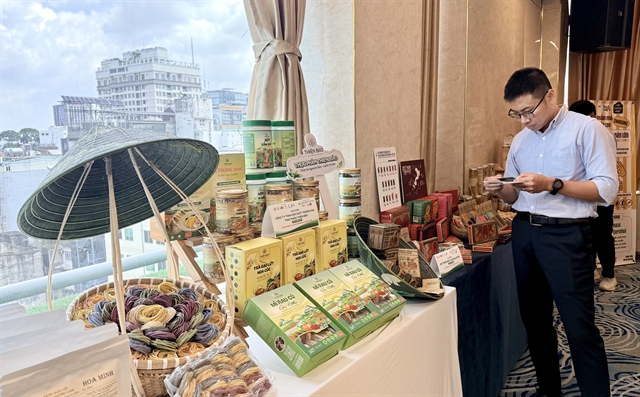
She added that the programme was originally built around combining local resources with new technologies. Today, the concept of local resources extends far beyond raw materials to include knowledge, skills, human capital and cultural values that can become long-term competitive advantages.
Vũ Kim Anh, Deputy Director of BSA and head of the Organising Committee, said the 2026 competition runs from April to October with total prizes worth nearly VNĐ1 billion (US$38,000). Beyond cash awards, participants will receive training, trade promotion support, communications assistance and investment networking opportunities.
A notable change this year is the segmentation of participants into four development stages: seed, incubation, acceleration and scale-up, enabling startups to receive tailored support aligned with their stage of development.
“Over more than a decade, the programme has developed a comprehensive startup support ecosystem encompassing training, mentoring, trade promotion, investment matchmaking, market access and communications support,” Kim Anh said.
Many projects emerging from the competition have grown into successful businesses, earning recognition under the High-Quality Vietnamese Goods certification programme and bringing local agricultural products and regional specialties into domestic and international value chains.
“What makes us most proud is not the number of participants, but the emergence of a new generation of entrepreneurs who know how to add value for agricultural products through technology, standards and sustainable business models. Many former contestants have become fully fledged businesses with established markets, export capabilities and positive impacts on local communities.”
Trần Hữu Đức, assistant to the chairman of Trung Nguyên Legend Group, said the quality of Việt Nam’s young entrepreneurs has improved significantly in recent years.
While young entrepreneurs were once recognised primarily for their creativity and willingness to take risks, they now also demonstrate far stronger capabilities in mobilising resources, accessing knowledge, and applying technology than previous generations, he said.
This progress has been driven in part by digital technologies, artificial intelligence, and, in particular, an increasingly mature startup support ecosystem. Organisations such as BSA have played an important role in connecting entrepreneurs with businesses, experts, markets, and support resources, giving young startups greater opportunities to turn their business ideas into reality, he added.
Meanwhile, sustainability expert Nguyễn Thị Xuân Yến said global consumer demand is increasingly shifting toward healthy foods, sustainable products and personalised consumption experiences, while international markets are placing greater emphasis on sustainability, traceability and local authenticity.
“Việt Nam possesses a rich diversity of local ingredients and cultural heritage. If businesses invest in quality, traceability, sustainable production and consumer trust, these local resources can become powerful competitive advantages both domestically and internationally,” Yến said. — VNS