Global supply chain shifts boost prospects for logistics industry
Global supply chains are being redrawn, creating a window of opportunity for Việt Nam to deepen its role in regional trade — provided the country can move faster on infrastructure, digitalisation and green logistics.
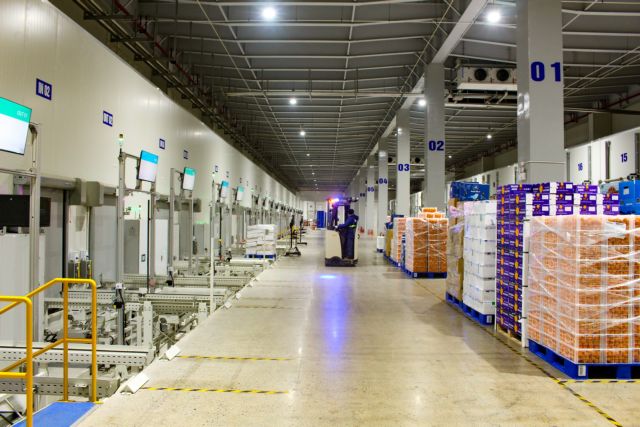
By Thu Trà
HÀ NỘI — As manufacturers diversify their supply chains across Asia, Việt Nam is well placed to capture a larger share of regional trade. But turning that opportunity into lasting advantage will depend increasingly on how quickly the country upgrades its logistics infrastructure, digital systems and green capabilities.
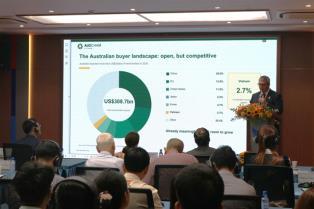
Speaking at a logistics forum in HCM City last week, Deputy Industry and Trade Minister Phan Thị Thắng said geopolitical tensions, changing investment flows, digital transformation and the transition to lower-carbon economies were reshaping global trade.
International supply chains were becoming more diversified to improve resilience against disruptions, creating opportunities for countries with strategic locations, stable investment environments and strong manufacturing sectors, she said.
For Việt Nam, the shift offered a chance to leverage its strategic location, broad network of free trade agreements and improving investment climate to attract manufacturing investment and expand exports.
Việt Nam's trade maintained solid growth in the first half of 2026 despite global economic uncertainty, underscoring the resilience of its manufacturing and export sectors, Thắng said. However, expanding trade also required greater logistics capacity to handle rising cargo volumes and improve competitiveness.
Under Việt Nam's logistics services development strategy for 2025-35, with a vision to 2050, the Government aims to raise the sector's value-added contribution to 5-7 per cent of GDP, achieve annual growth of 12-15 per cent and reduce logistics costs to 12-15 per cent of GDP from around 17 per cent.
Reducing logistics costs is seen as key to improving the competitiveness of Vietnamese exporters and strengthening the country's position in regional supply chains.
Rising logistics demand
According to Cushman & Wakefield, Việt Nam, Indonesia and Thailand are seeing rising demand for logistics facilities as manufacturers expand production and distribution operations across Southeast Asia.
Việt Nam is among the markets expected to benefit from supply-chain diversification, supported by its strategic location, extensive network of free trade agreements, expanding manufacturing base and growth in the electronics, high-tech and export-oriented manufacturing sectors.
Nguyễn Phước Thuận, director of Commercial Leasing at Cushman & Wakefield Việt Nam, said the consultancy had seen growing investment from electronics and high-tech manufacturers, reinforcing Việt Nam's role in regional production networks.
Thuận said Việt Nam was gradually moving beyond its role as a manufacturing base to become a regional hub for goods transit and distribution.
Demand for warehouse and factory space was increasingly concentrated in locations with access to seaports, airports, expressways and major manufacturing clusters, he added.
According to DHL Global Connectedness Report 2026, Việt Nam ranked ninth globally in trade connectedness and was projected to record the world's fourth-largest absolute increase in merchandise trade between 2026 and 2030.
Steve Walker, CEO of DHL Supply Chain's Thailand–Vietnam Cluster, told Việt Nam News that Việt Nam's growing appeal was supported by manufacturing expansion, stronger global trade connectivity and its strategic position within regional supply chains.
The strong demand for modern logistics facilities in Việt Nam had been recorded across a broad range of industries, reflecting the continued evolution of the country's economy and supply chains, Walker said.
He said manufacturers remained the main driver of demand for modern logistics facilities, particularly in the electronics, automotive and industrial sectors, while demand was also increasing from retail, fast-moving consumer goods and healthcare companies.
"Businesses are looking beyond production capacity," Walker said.
"They need reliable logistics infrastructure that enables faster, more resilient and more connected supply chains."
Walker said businesses were increasingly seeking automation-ready warehouses, integrated distribution networks and lower-carbon logistics solutions that improve operational efficiency while supporting domestic distribution and regional connectivity.
He added that Việt Nam's long-term competitiveness would increasingly depend on the quality of its logistics infrastructure rather than manufacturing capacity alone.
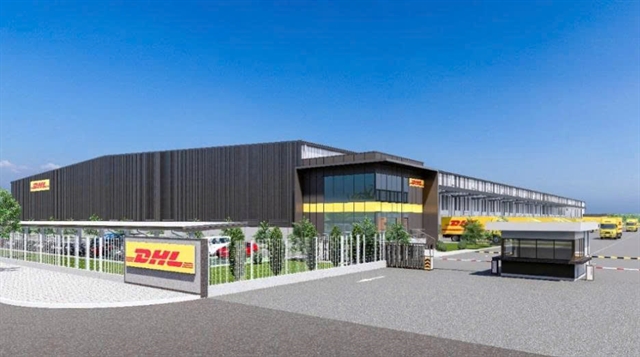
Closing the infrastructure gap
Despite the favourable outlook, challenges remain.
Industry executives say logistics costs in Việt Nam remain higher than in many developed economies in the region, while infrastructure gaps in some areas and shortages of skilled logistics and supply chain workers continue to constrain growth.
They say demand for modern logistics facilities is rising faster than supply, requiring developers to accelerate investment in higher-quality assets, technology and large-scale logistics centres.
According to Nguyễn Thị Thu Hằng, vice president of Regional Government and Public Affairs, Mekong Area, at Maersk Group, multinational corporations increasingly evaluate investment destinations based on the quality of logistics ecosystems rather than labour costs or geographic location alone.
In her speech at the logistics forum in HCM City, Hằng said what mattered was an integrated logistics ecosystem where seaports, inland waterways, airports, railways, highways, digital customs and free trade zones were connected to optimise costs and improve supply chain efficiency.
She also called for further improvements to Việt Nam's regulatory framework for green logistics, stronger financial incentives for smart logistics infrastructure and faster digitalisation across transport and customs systems.
DHL said Việt Nam's future competitiveness would increasingly depend on the quality of its logistics ecosystem as the country deepens its role in regional and global supply chains. — VNS