Global island, coastal biosphere reserve network meets in HCM City
HCM Cty aims to develop its Cần Giờ Mangrove Biosphere Reserve into a green, smart coastal urban area focused on ecosystem conservation and ecotourism.
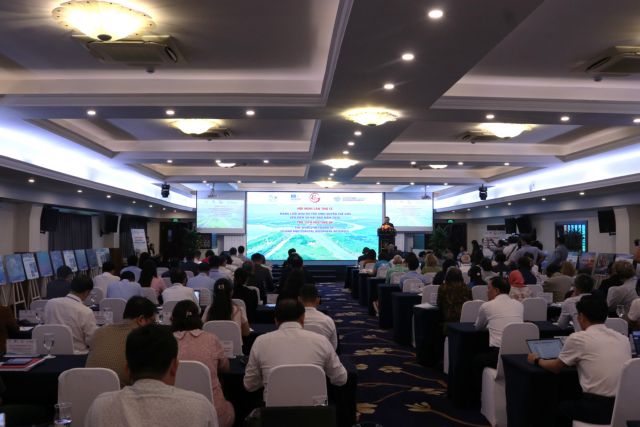
HCM CITY — The 13th meeting of the World Network of Island and Coastal Biosphere Reserves (WNICBR) opened in HCM City on November 6, serving as an opportunity for scientists, experts, and member representatives to share research, management experience, and practical solutions for balancing conservation, socio-economic growth, and local livelihoods.
Themed “Balancing Urban Development with Environmental Sustainability in Coastal and Island Biosphere Reserves”, the event is organised by the HCM City People’s Committee in coordination with the Việt Nam National Commission for UNESCO, the Việt Nam National Committee for the Man and the Biosphere (MAB) Programme, and the WNICBR Secretariat.
It features three days of activities from November 6 to 8, including thematic sessions and a field trip to the Cần Giờ Mangrove Biosphere Reserve.
Bùi Minh Thạnh, vice chairman of the HCM City People’s Committee, said the World Biosphere Reserves exemplify a development approach in which nature conservation serves as the foundation for sustainable economic prosperity amid growing challenges from climate change, sea-level rise, biodiversity loss and rapid urbanisation.
He noted that these reserves allow people and nature to coexist and thrive while bringing together scientific knowledge, governance policies and community participation.
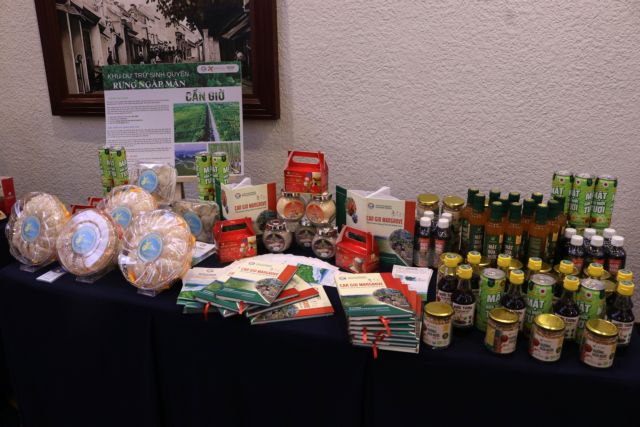
Highlighting the city’s UNESCO-designated Cần Giờ Mangrove Biosphere Reserve as an invaluable asset for biodiversity, climate regulation, coastal protection and local livelihoods, Thạnh said the city aims to develop this biosphere reserve into a green, smart coastal urban area focused on ecosystem conservation and ecotourism.
“HCM City remains firmly committed to the principle that environmental protection must never be sacrificed for economic growth. Instead, nature conservation must serve as the foundation for building a green, responsible, and sustainable development model,” Thạnh added.
He said that the city stands ready to strengthen cooperation, share experiences and jointly explore and implement initiatives in ecosystem restoration, data-driven management, green livelihood development and climate change adaptation.
Jonathan Wallace Baker, Head of Office and UNESCO Representative to Vietnam, said that since 2012, WNICBR has brought island and coastal biosphere reserves together as part of UNESCO's wider world network of biosphere reserves, and it has an incredible role to address key priorities of the MAB programme and of Hangzhou (China) Strategic Action Plan.
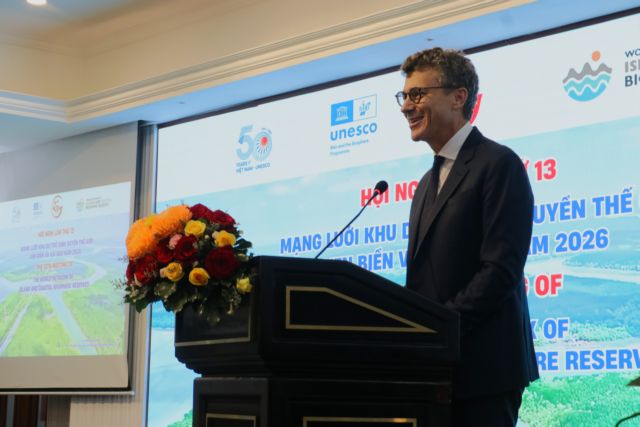
He noted that the network facilitates joint research, peer-to-peer exchanges and the sharing of scientific evidence and local knowledge to translate policies into concrete results on the ground.
For instance, to support the Vietnamese Government's target of expanding marine and coastal protected areas to cover at least 6 per cent of the country's total marine area by 2030, the network can support this ambition by sharing good practices in ecosystem restoration and coastal and island management, he said
It also fosters partnerships among members, allowing Vietnamese reserves to learn from international counterparts, with UNESCO committed to supporting both the global and this networks.
He mentioned that Việt Nam currently has 12 biosphere reserves, the second-highest number in Southeast Asia, including seven coastal and island sites.
At the meeting, the UNESCO Office in Vietnam also launched a photo exhibition titled "Việt Nam Biosphere Reserves - Living in Harmony with Nature" to mark 50 years of UNESCO-Việt Nam cooperation.
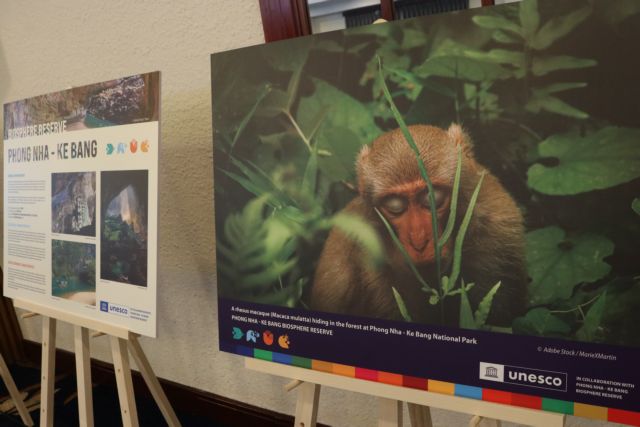
Trần Lan Hương, a representative of the UNESCO Office in Việt Nam, said the exhibition takes visitors across the country's 12 UNESCO-recognised biosphere reserves, from the northern mountains to the southern coast, including the Phong Nha-Kẻ Bàng Biosphere Reserve, which joined the network earlier this year.
Featuring images of limestone lagoons in the Cát Bà Biosphere Reserve, fishermen working along rivers and coasts, and local communities preserving their traditions, the exhibition serves as a reminder that protecting ecosystems is essential to securing a beautiful future ahead. — VNS