From trade to technology, Việt Nam and Australia broaden cooperation
Trade between the two countries recorded average annual growth of 13.1 per cent during 2021–25, reflecting the strengthening of their economic relationship.
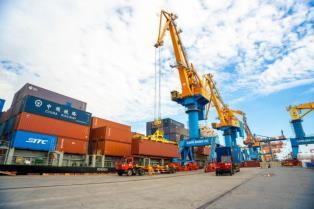
HÀ NỘI — Economic and trade ties between Việt Nam and Australia continued to expand, with bilateral trade reaching US$13.9 billion in the first ten months of 2026, up 20.1 per cent year-on-year.
Trade between the two countries recorded average annual growth of 13.1 per cent during 2021–25, reflecting the strengthening of their economic relationship. Australia also maintained an investment presence in Việt Nam, with 759 valid projects and a total registered capital of more than US$1.92 billion as of the end of October 2026.
These figures were announced on Monday at the second Việt Nam-Australia Annual Development Dialogue 2026, which reviewed progress in development cooperation and discussed priorities for the next stage.
The dialogue, themed 'Strengthening Partnership for Việt Nam's New Era of Development: Promoting Sustainable and Inclusive Economic Transformation through Human Resource Development, Innovation and Inclusive Development', also provided a platform for the two sides to address obstacles affecting the implementation of cooperation programmes and projects.
Nguyễn Quốc Phương, director general of the Department of Debt Management and External Finance under the Ministry of Finance (MoF), said 2026 was a particularly significant year for bilateral relations.
From August 9 to 12, General Secretary and State President Tô Lâm paid a State visit to Australia. It was the first visit by Việt Nam's highest-ranking leader since the two countries upgraded their relationship to a Comprehensive Strategic Partnership in March 2024.
During the visit, the two sides adopted three joint statements covering the deepening of their Comprehensive Strategic Partnership, economic resilience cooperation, and stronger connectivity in science, technology and innovation. They also witnessed the exchange of seven cooperation documents in areas including the digital economy, agriculture and sustainable development, healthcare, education and vocational training.
Phương said these outcomes had provided important directions for expanding development cooperation and improving its effectiveness.
Việt Nam aims to achieve average annual GDP growth of around 10 per cent during 2026–30, with the goal of becoming a developing country with modern industry and upper-middle income by 2030, and a developed, high-income country by 2045.
To support these ambitions, the country has identified science and technology, innovation, digital transformation, private-sector development and high-quality human resources linked to the green transition as important growth drivers. These priorities are closely aligned with the pillars of the Australia-Vietnam Development Partnership Plan (DPP) for 2025–30, Phương said.
He also acknowledged Australia's long-standing development assistance. Since 1973, Australia has provided more than A$3 billion in development assistance to Việt Nam. Its total development assistance to the country is expected to reach approximately A$98 million in the 2026–27 financial year.
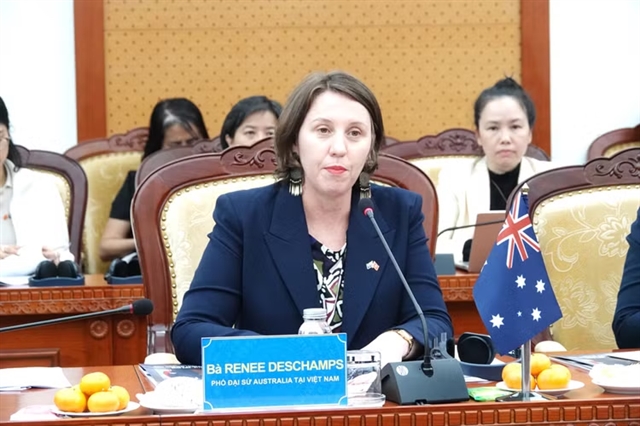
Australian Deputy Ambassador to Vietnam Renee Deschamps said Australia remained a trusted partner, committed to accompanying Việt Nam through its next phase of development and transformation.
She described development cooperation as an important instrument for translating shared commitments and strategic directions into practical outcomes benefiting people, communities and businesses.
Deschamps said progress had been made across the four pillars of the bilateral development partnership: promoting economic growth and innovation; investing in skills and leadership capacity; strengthening climate resilience and adaptation; and advancing gender equality and inclusive development. She stressed the need to address implementation bottlenecks and turn high-level commitments into tangible results.
Australia also stood ready to support Việt Nam in successfully hosting APEC 2027 by sharing policy expertise, research and experience in organising APEC activities, she said.
Cooperation across four pillars
At the dialogue, representatives of ministries and localities reviewed cooperation under the four pillars of the DPP.
Under the first pillar, Australia disbursed A$14.5 million during the reporting period to support improvements to the business environment, private-sector development and innovation. The cooperation also helped mobilise approximately US$1.3 billion in private capital for green growth.
The MoF completed preparations for the economic component of the Aus4Growth programme, while the Ministry of Industry and Trade continued work on its energy component. The Ministry of Science and Technology worked with Australian partners on Aus4Innovation projects and digital economy cooperation, including preparations for digital technology and artificial intelligence activities during APEC 2027.
Under the second pillar, Aus4Skills, the Việt Nam-Australia Centre and the Provincial Governance and Public Administration Performance Index (PAPI) contributed to human resource development, public-sector leadership and evidence-based governance. The Ministry of Education and Training had approved the third phase of Aus4Skills for 2026–2035, integrating higher education and vocational training.
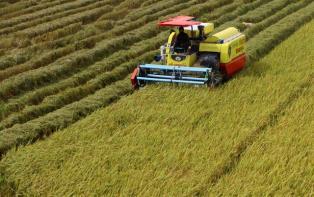
The third pillar focuses on climate change adaptation and emissions reduction through programmes including Aus4Adaptation and the Climate Resilient Rice Value Chain Transformation Project (TRVC). The TRVC project has supported low-emission rice cultivation across more than 240,000 hectares, reducing over 320,000 tonnes of carbon dioxide equivalent emissions and increasing profits for more than 20,000 farming households.
Under the fourth pillar, the GREAT programme in Lào Cai and Sơn La has supported women's economic empowerment, agricultural value chains, community-based tourism and digital transformation. The two localities and the project on Ending Violence Against Women and Children are developing exit strategies to sustain their models after the programme ends in mid-2027.
The dialogue also identified obstacles involving project approval procedures, administrative restructuring and regulations on international conferences. Both sides agreed to strengthen coordination, improve technical exchanges and consider refining the legal framework for managing and using official development assistance (ODA) to accelerate disbursement.
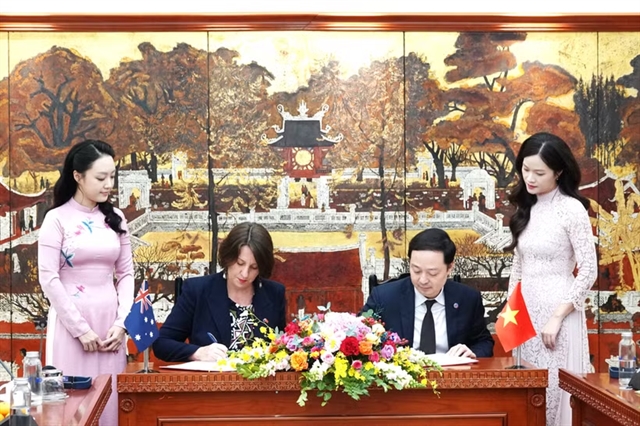
The two countries approved the 2026 Việt Nam-Australia Development Cooperation Report and signed a joint communiqué, reaffirming development cooperation as an important driver of their Comprehensive Strategic Partnership.
The communiqué identified priorities including economic reform and sustainable growth, science and technology, innovation and digital transformation, education and workforce skills, climate resilience and clean energy, gender equality and social inclusion.
The third Vietnam-Australia Annual Development Dialogue is expected to take place in the third quarter of 2027. — BIZHUB/VNS