Việt Nam seeks investment in high-quality, low-emission rice value chain
Investment should cover the entire value chain to help reduce production costs, improve product quality, increase added value and raise farmers' incomes.
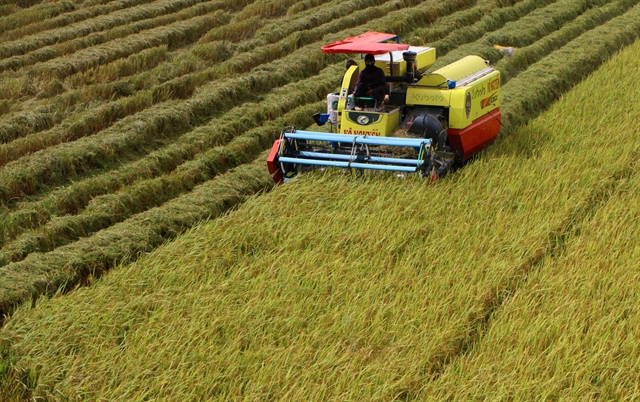
CẦN THƠ — Việt Nam is seeking to attract more foreign investment to develop high-quality, low-emission rice value chain which is expected to support the country’s transition towards greener and more sustainable agriculture.
The push is highlighted at a forum on foreign direct investment (FDI) promotion in agriculture and rural development held in Cần Thơ City on November 23, as part of the second Vietnam International Rice Industry Festival 2026 organised by the Ministry of Agriculture and Environment and the Cần Thơ People's Committee.
Speaking at the opening, Nguyễn Đỗ Anh Tuấn, director of the ministry's Department of International Cooperation, said the green transition in rice production is not only inevitable but also offer opportunities to attract investment, introduce new technologies and increase the value of the sector.
He said investment promotion needs to move towards preparing concrete projects with clearly defined locations, scales, capital requirements, infrastructure and implementation conditions.
Investment should cover the entire value chain to help reduce production costs, improve product quality, increase added value and raise farmers' incomes, he said.
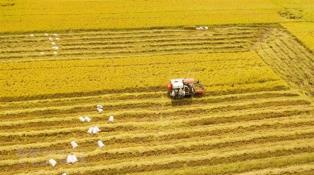
Data of the Department of Crop Production and Plant Protection showed that more than 420,000ha in the Mekong Delta applied all or part of sustainable farming practices under the one-million-ha programme for high-quality, low-emission rice production by August 2026.
Of this total, nearly 68,000ha had met all programme criteria, while more than 200,000 tonnes of rice had been labelled “Vietnamese Green, Low-Emission Rice”.
Lê Công Lý, deputy chairman of the municipal People's Committee, said the sector needed to shift from agricultural production towards an agricultural economy, from expanding output to increasing value, and from fragmented farming towards standardised, data-driven value chains linked to markets.
The city is estimated to have planted 708,000ha of rice in 2026, with output of around 4.66 million tonnes, which provides a strong foundation for linking regional raw-material production with research, processing, logistics and markets, he said.
Cần Thơ was looking to attract investment in high-quality rice varieties, mechanisation, precision agriculture, digitalisation, traceability, water management, storage, deep processing and the utilisation of rice by-products.
The city would continue improving its investment climate, information transparency as well as effort to connect investors with raw-material areas, cooperatives, research institutions and infrastructure, Lý said.
Nguyễn Văn Bé Hai, general director of Vietnam Rice Co Ltd (Vinarice), said the development of rice value chain continues to face challenges, including inadequate water management infrastructure, limited cooperative capacity and the costs of measuring emissions. Meanwhile, markets has yet to establish stable price premiums for low-emission rice, he said.
These bottlenecks needed to be addressed to ensure existing models could be sustained and replicated on a larger scale.
Within the framework of the forum, the Partnership for Sustainable Agriculture in Vietnam (PSAV) and the Philanthropy Asia Alliance (PAA) signed a memorandum of understanding to strengthen partnerships, share knowledge, promote public-private cooperation and mobilise resources for sustainable rice value chains. — VNS