Foreign digital service providers pay nearly $480 million in taxes
259 overseas suppliers have registered, declared and paid taxes through the portal.
HÀ NỘI — Foreign digital service providers paid more than VNĐ12.5 trillion (US$479.5 million) in taxes through Việt Nam's foreign supplier portal during the first six months of this year, underscoring the rapid growth of cross-border digital tax collections.
According to the General Department of Taxation, 259 overseas suppliers have registered, declared and paid taxes through the portal.
Tax revenue from the group reached 78.1 per cent of the full-year target, surging 119 per cent from a year earlier and making foreign suppliers the fastest-growing source of tax revenue in Việt Nam's digital economy.
The increase far outpaced the broader e-commerce sector, where tax revenue rose 44.2 per cent to nearly VNĐ167.9 trillion during the same period.
The growth also highlights the rapid expansion of Việt Nam's digital tax system. Only 176 foreign suppliers had registered through the portal by September 30 last year, contributing VNĐ8.73 trillion over the first nine months of that year.
Within less than a year, the number of registered suppliers increased by 83, while tax revenue collected in just six months surpassed the previous nine-month total.
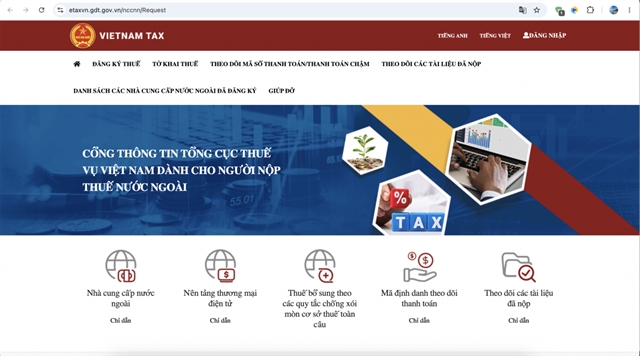
Việt Nam launched its foreign supplier portal in March 2022, allowing overseas companies without a permanent establishment in the country to register, declare and pay taxes directly instead of relying on local intermediaries.
The list of registered foreign suppliers includes major global technology companies such as Google, Meta, Microsoft, TikTok, Netflix and Apple.
According to the tax authority, these six companies account for around 90 per cent of Việt Nam's cross-border digital services revenue, making them the primary contributors to tax collections through the portal.
Cross-border e-commerce platforms including Temu, Shein and 1688 are also required to register and pay taxes under the same framework. Their business models, based on millions of low-value transactions, require closer data verification by tax authorities.
Authorities compare self-declared revenue with information from banks, payment intermediaries and logistics providers before conducting audits where discrepancies or signs of tax evasion are identified. — VNS