Energy security a top priority in PDP8: forum
Despite these efforts, power source and grid projects under the adjusted Power Development Plan VIII still face obstacles, raising the risk of power shortages in the coming period if timely and decisive solutions are not applied.
HÀ NỘI — Việt Nam is stepping up efforts to turn high-level energy strategy into concrete action as authorities, experts and businesses gather to chart a path towards long-term national energy security.
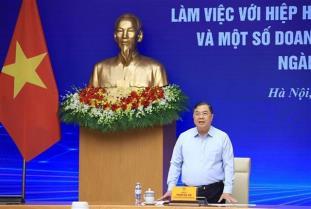
The Electricity Authority of Việt Nam under the Ministry of Industry and Trade, in coordination with the Việt Nam Energy Association, yesterday organised a forum on translating the objectives of the Politburo’s Resolution No 70 into action to ensure national energy security.
Speaking at the event, Phạm Nguyên Hùng, Director General of the Electricity Authority, said Resolution No 70-NQ/TW on national energy security to 2030, with a vision to 2045, is a document of major strategic importance. It reflects the Party’s long-term vision, renewed thinking and strong political determination in safeguarding energy security, a key pillar of economic security, national security and sustainable development.
The resolution sets out a consistent approach that energy development must go one step ahead, meeting demand for socio-economic growth while ensuring independence, self-reliance, safety, efficiency and environmental sustainability, in line with global trends towards green and clean energy.
In recent years, the energy sector has maintained stable growth and largely met national energy security requirements. The power system has expanded rapidly in both scale and technology, while the energy mix has gradually diversified, reducing reliance on a single fuel source. Renewable energy has recorded strong growth, the electricity market has taken shape step by step, and energy efficiency has continued to improve, contributing significantly to overall socio-economic development.
However, Hùng noted that fully achieving the targets set out in Resolution 70 remains challenging. Energy demand, particularly for electricity, continues to rise sharply alongside the goal of double-digit economic growth in the coming period. Pressure on the supply-demand balance, especially during peak periods, constraints in transmission and energy storage infrastructure and policy and regulatory frameworks that have yet to keep pace with technological and market developments all present difficulties. Balancing energy security, affordable energy prices and greenhouse gas emission reduction targets remains a complex task.
The ministry has identified effective implementation of Resolution 70, alongside the double-digit growth target, as a core political task for the next phase. Shortly after the resolution was issued, the ministry submitted to the Government Resolution No.328 dated October 13, 2025, approving an action programme to implement Resolution 70. It also issued Decision No.3035/QĐ-BCT on October 17, 2025, detailing the ministry’s action plan.
Highlighting the forum’s practical significance, Hùng said it serves as an open policy dialogue among state agencies, experts, scientists, financial institutions and the business community. Discussions focus on clarifying key aspects of Resolution 70, reviewing implementation progress, identifying bottlenecks in institutions, planning, investment, technology and resources, and proposing coordinated and feasible solutions.
He urged participants to focus on priorities including building a stable, transparent and predictable energy policy framework, accelerating renewable energy development alongside investment in smart grids, energy storage systems and digital transformation, diversifying capital sources and effectively mobilising domestic and foreign resources, promoting the role of the private sector, and strengthening the responsibility of local authorities in project implementation.
The forum featured two discussion sessions focusing on capital mobilisation mechanisms and investor selection for large-scale energy projects under the adjusted Power Development Plan VIII, as well as renewable energy development, offshore wind power and national marine spatial planning. Participants also put forward short- and long-term solutions to ensure national energy security amid deeper international integration and Việt Nam’s commitment to achieving net-zero emissions by 2050. — VNS