Electrification paves the way for Việt Nam’s energy security future: Hitachi Energy
Comprehensive electrification could help Việt Nam achieve the dual goals of ensuring energy security and reaching net-zero emissions by 2050, Hitachi Energy Vietnam CEO said.
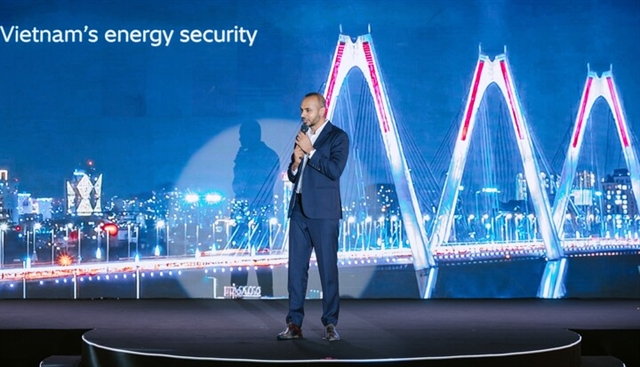
HÀ NỘI — Electrification could be key to strengthening Việt Nam’s energy security and advancing its net-zero goals, as global uncertainties and geopolitical tensions accelerate the energy transition, according to Chandan Singh, general director of Hitachi Energy Vietnam.
Assessing Việt Nam’s trajectory, Singh noted that the country’s energy transition is gathering pace, driven by the rapid expansion of renewable energy sources and the growing need for a more resilient power grid.
“It is impossible to achieve net-zero emissions without electrifying not only power generation but also transport and industry,” he said.
“In Việt Nam, much of the railway system still relies on fossil fuels. However, major government initiatives, such as high-speed rail development and the expansion of metro systems in Hà Nội and HCM City, will be powered by electricity.”
A range of solutions are emerging to shape Việt Nam’s energy future, including more efficient and sustainable power systems for data centres, a sector expanding rapidly alongside the country’s digital economy.
Infrastructure development was identified as a critical enabler, including investments in digital substations and battery energy storage systems, which are essential to integrate renewable energy into the grid without compromising reliability.
Singh told Việt Nam News that Việt Nam has made notable progress in attracting high-quality foreign direct investment, positioning itself among the leading economies in ASEAN.
At the same time, he stressed that electrification remains paramount in safeguarding the country’s long-term energy security.
“Việt Nam is growing at a very rapid pace. As a rule of thumb, if GDP grows by 10 per cent, electricity demand can rise by 15 per cent or more,” he said. “Such demand cannot be met by expensive sources like liquefied natural gas alone. It must come from sustainable and affordable energy, primarily renewables.”
As renewable energy expands, the role of the power grid becomes even more critical than traditional fossil fuel-based generation, he added.
Singh expressed confidence in the Government’s strategic direction, particularly the revised draft of the National Power Development Plan VIII (PDP8).
“I believe policymakers, including the Ministry of Industry and Trade, are moving in the right direction. If the revised PDP8 is implemented on schedule, Việt Nam should be able to secure sufficient electricity supply for its future growth,” he said. — BIZHUB