Economic, trade, investment seen as pillars of Việt Nam-EU ties
Speaking to Vietnam News Agency correspondents in France, Professor Nguyễn Văn Phú of Paris Nanterre University noted that a key driver of Việt Nam – EU economic ties today is the shift toward reducing excessive dependence on any single major market.
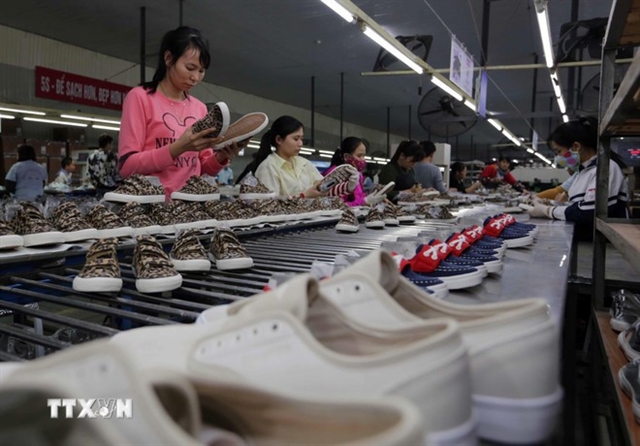
PARIS — Economic, trade and investment cooperation forms the core pillar of the EU-Việt Nam Comprehensive Strategic Partnership, reflecting a growing convergence of long-term economic interests and development strategies between the two sides.
According to Professor Nguyễn Văn Phú of Paris Nanterre University, the significance of the upgraded relationship lies less in political symbolism than in its solid economic foundations and strategic complementarities.
For Việt Nam, diversifying trade and investment partners has become a risk-mitigation strategy amid unpredictable policy shocks and trade tensions. From the EU’s perspective, expanding economic links beyond the US is equally critical to safeguarding supply chain security and maintaining Europe’s economic competitiveness.
In this context, economic, trade and investment cooperation has emerged as the central pillar of the Comprehensive Strategic Partnership, shaping and guiding the overall bilateral relationship. The two sides have reaffirmed their commitment to fully and effectively implementing the EU – Việt Nam Free Trade Agreement (EVFTA) while intensifying dialogue to remove technical barriers and expand market access for each other’s goods and services.
Against a backdrop of global trade uncertainties, rising protectionism and increasingly fierce geoeconomic competition, he said the EVFTA had evolved beyond a conventional free trade agreement. It was increasingly viewed as a strategic instrument that helps both Việt Nam and the EU secure a safe, stable and predictable economic space.
Phú emphasised that Việt Nam – EU economic collaboration was rapidly expanding beyond traditional goods trade into strategic sectors such as energy, critical raw materials, high technology, semiconductors, artificial intelligence, digital transformation and supply chain restructuring. The EU was positioning itself as a partner in supporting Việt Nam’s economic modernisation and its gradual alignment with green, sustainable and responsible trade standards – criteria that are becoming mandatory for access to the European market.
At the heart of the partnership lies strong complementarity, according to the professor. Việt Nam needs long-term capital, advanced technology, governance expertise and high standards from Europe, home to many of the world’s most developed economies. Conversely, the EU sees Việt Nam as an attractive investment destination, a dynamic market and a vital link in its Asia-Pacific supply chain diversification strategy. This strategic compatibility underpins the durability of bilateral cooperation.
However, Phú cautioned that fully capitalising on the upgraded partnership will require deeper and more consistent institutional reforms in Việt Nam. Meeting EU standards is not merely a partner obligation, but an internal necessity for sustainable development. Exports to Europe must comply with strict requirements on safety, quality, origin, the carbon border adjustment mechanism (CBAM), labour, gender equality and sustainability. Similarly, EU-funded investment projects in Việt Nam are expected to meet high environmental, social and governance (ESG) standards.
In this broader picture, developing a transparent, stable and internationally compliant financial market is seen as a decisive condition for attracting European capital. The legal framework must be clear, predictable and resistant to abrupt policy changes. EU investors place particular importance on the rule of law, property rights protection, contract enforcement and effective, independent dispute resolution.
Enhancing transparency and governance standards in capital markets is essential. Businesses and financial institutions must adhere to international accounting and auditing standards and ensure accurate, timely disclosure of information to reduce risks and strengthen investor confidence. Promoting green and sustainable finance – through green bonds, green credit and ESG-linked instruments – also needs to align closely with EU strategic priorities, according to him.
Overall, the upgrade of Việt Nam – EU relations to a Comprehensive Strategic Partnership opens a new phase of cooperation, with economic, trade and investment ties serving as the main pillar and driving force.
While opportunities would be substantial, they would be accompanied by demanding and long-term reform requirements, Phú said, adding that how Việt Nam responds to these expectations would ultimately determine the substance of the partnership in the years ahead. — VNS