E10 biofuel rolled out nationwide
According to Circular 50/2025/TT-BCT of the Ministry of Industry and Trade, from June 1, all unleaded gasoline circulating in the market must be blended with ethanol to become E10 biofuel before being sold.
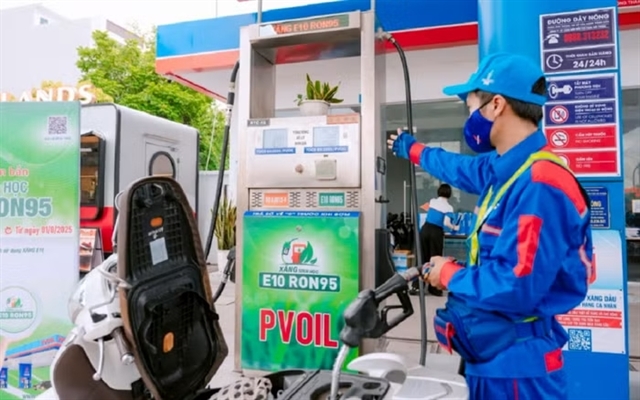
HÀ NỘI — A mandatory sale of E10 biofuel was rolled out nationwide on June 1, 2026, marking a new step in the roadmap for using clean fuels, reducing emissions and ensuring national energy security.
According to Circular 50/2025/TT-BCT of the Ministry of Industry and Trade, from June 1, all unleaded gasoline circulating in the market must be blended with ethanol to become E10 biofuel before being sold. This means that RON95 gasoline sold on the market will now be blended with 10 per cent ethanol according to the new regulation.
The MoIT says the switch to E10 fuel stems from several strategic targets. First, it's a solution to diversify fuel sources and reduce dependence on conventional gasoline. In particular, the rollout of E10 is also expected to create momentum for the domestic biofuel industry, expand markets for agricultural products such as cassava and corn, and promote the development of a circular and green economy.
To meet market demand, the petroleum industry has proactively prepared a supply of ethanol (E100). According to the MOIT's calculations, the nationwide demand for E100 for blending into E10 is approximately 92,000-100,000cu.m per month. In the initial phase, domestic supply is expected to meet about 25,000cu.m per month, with the remainder supplemented by imports to ensure there is no shortage.
Currently, domestic ethanol plants such as Tùng Lâm, Bình Phước and Dung Quất are being mobilised to meet the demand for fuel blending. Major petroleum businesses and their distribution networks have also basically completed preparations regarding storage facilities, blending, transportation, and distribution to ensure a stable supply from the very first day of implementation.
Regarding consumer concerns about the compatibility of E10 gasoline with currently operating vehicles, the MoIT said that most motorcycles and cars can use this type of fuel.
According to the Vietnam Motorcycle Manufacturers Association (VAMA), Honda, Yamaha, Piaggio, SYM, and most Suzuki models have confirmed compatibility with E10. The association also said that most car models currently in circulation in Việt Nam can use E10 fuel without requiring technical adjustments.
The Ministry of Industry and Trade affirms that the transition to E10 is not coercive but a step in the green energy transition roadmap. Domestic tests and experience in many countries show that E10 does not commonly affect engines if the fuel meets standards and vehicles are maintained according to the manufacturer's recommendations.
This is particularly important in the context of an unpredictable global energy market. Besides, increasing the ethanol content in fuel contributes to reducing greenhouse gas emissions, aligning with Việt Nam's commitments at COP26 regarding the goal of net zero emissions by 2050. — BIZHUB/VNS