Đồng Nai’s future drivers take shape amid city status plan
The Party Central Committee has agreed in principle to establish Đồng Nai Province as a centrally governed city, a move that reflects a long-term vision grounded in historical continuity and forward looking development strategy.
ĐỒNG NAI — Đồng Nai Province has been agreed to be elevated into a centrally governed city, a move that reflects a long-term vision grounded in historical continuity and forward looking development strategy.
The decision signals confidence in one of Việt Nam’s most dynamic economic hubs, where industrial strength, strategic infrastructure and human capital are converging to form a new growth pole in the southern region.
Industrial legacy anchors future growth
Đồng Nai’s development story is deeply rooted in history. Between 1679 and 1698, pioneers such as Trần Thượng Xuyên and Nguyễn Hữu Cảnh laid the foundations of Cù Lao Phố, now part of Trấn Biên Ward, establishing one of the earliest administrative and commercial centres in the South.
By the 18th century, the area had become the region’s leading trading port. Centuries later, this spirit of openness evolved into industrial dynamism with the establishment of Biên Hòa Industrial Zone No.1 in 1963, widely regarded as the cradle of modern industry and the working class in Việt Nam.
From this base, locally manufactured goods began reaching both domestic and international markets.
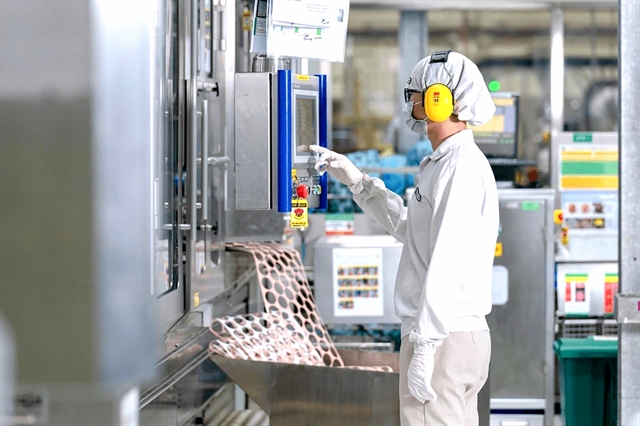
Today, global corporations including Nestlé, Bosch and Pouchen have established major production facilities in the province.
Nestlé’s presence illustrates this trajectory. Since setting up its first factory in Biên Hòa Industrial Zone No.2 in 1995, the company has expanded to six factories nationwide with total investment exceeding US$900 million.
Company representatives have described Đồng Nai as a strategic manufacturing hub, noting that city status could further strengthen investor confidence and regional linkages, particularly with HCM City.
Local historians emphasise that beyond infrastructure and capital, the province’s enduring advantage lies in its people.
The province has long been a destination for migrants from across Việt Nam and abroad, fostering a diverse and cohesive social fabric.
Preserving cultural identity, especially along the Đồng Nai River, is seen as essential to sustaining long-term development.
Strategic infrastructure reshaping connectivity
Đồng Nai is now at the centre of a nationwide infrastructure transformation, with multiple large-scale projects underway.
At the heart of this network is Long Thành International Airport, a US$16 billion project covering 5,000 hectares.
Once fully completed, the airport is expected to handle 100 million passengers and five million tonnes of cargo annually, positioning it as a major international transit hub.
Economists view the airport not as a standalone project but as the nucleus of a broader economic complex integrating aviation, logistics, industry and urban development.
It is expected to work in tandem with regional seaports to create a powerful multimodal transport system.
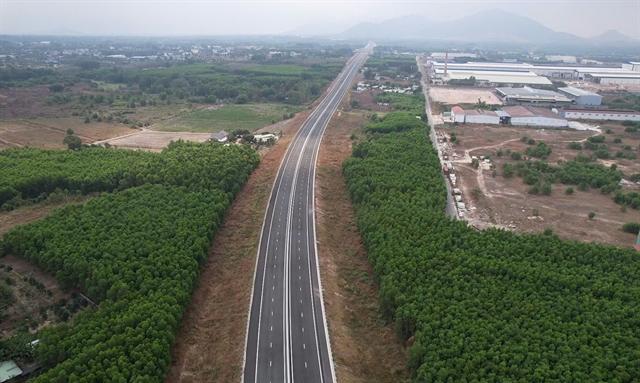
The province is also developing an extensive expressway network, including routes linking Phan Thiết, Biên Hòa and Vũng Tàu, as well as Ring Road 4 connecting the wider metropolitan region.
In Nhơn Trạch – an emerging industrial and urban zone, authorities are planning a development model that combines high-tech industry, innovation, services and river-based urban spaces.
The area is being integrated into logistics chains connecting Phước An Port, Long Thành Airport and the Cái Mép Thị Vải port system.
Meanwhile, Long Thành itself is set to evolve into a smart urban centre, with upgraded transport infrastructure and high-quality commercial and service facilities aligned with the aviation economy.
Leveraging strategic position and scale
With a population of nearly 4.5 million and one of the largest economies in the country, Đồng Nai is uniquely positioned within the southern key economic region.
The province serves as a critical gateway linking HCM City with the Central Highlands, the south central coast and the Mekong Delta.
It is also one of the few localities in Việt Nam that integrates all five modes of transport: road, rail, inland waterways, maritime and air.
Planning efforts are now focused on maximising these advantages. Authorities are prioritising high-tech industries, renewable energy and large-scale industrial zones such as Bàu Cạn Tân Hiệp and Xuân Quế Sông Nhạn, covering around 2,000 hectares with investment exceeding VNĐ18 trillion ($720 million).
A major highlight is the planned airport city, spanning 43,000 hectares, alongside a 23,000 hectare core urban area in Nhơn Trạch.
In addition, a proposed free trade zone of over 8,000 hectares with investment of around $16 billion will connect directly to Phước An Port, forming a strategic logistics hub for the southern region.
Human capital at the centre of development
Beyond physical infrastructure, Đồng Nai is placing strong emphasis on human development.
Investments in healthcare, education and culture are being prioritised to improve quality of life and support a skilled workforce.
Officials stress that people remain the decisive factor in development.
Efforts are underway to train high-quality human resources while reforming administrative procedures and accelerating digital transformation to better serve citizens and businesses.
With these advantages, Đồng Nai’s transition to a centrally governed city is expected to unlock new development space and strengthen its role as a regional engine.
With its industrial heritage, strategic infrastructure and forward looking planning, Đồng Nai is positioning itself not only as a key economic centre but as a catalyst for a more connected and competitive southern region. — VNS