Đồng Nai steps up efforts to attract high-tech investment
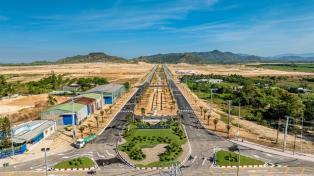
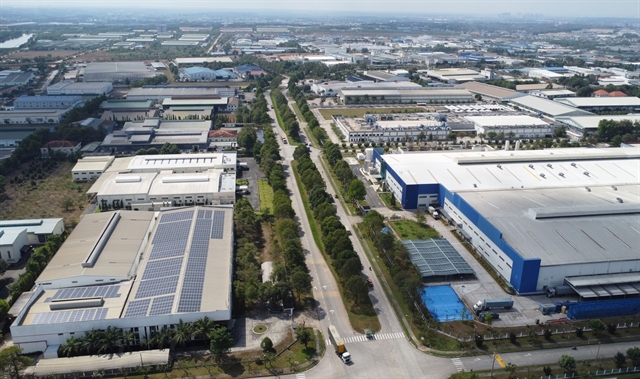
Đồng Nai is gradually building a competitive investment environment with focus are on upgrading industrial park infrastructure, transport networks, electricity and water supply, domestic supplier networks and a fast, transparent investment administration system to strengthen the city’s competitiveness.
ĐỒNG NAI — Đồng Nai City is stepping up efforts to attract high-quality foreign direct investment (FDI) in semiconductors, artificial intelligence (AI) and other advanced technologies, as it seeks to turn science, technology, innovation and digital transformation into new drivers of economic growth.
Phạm Việt Phương, deputy head of the city's Management Board of Industrial Parks and Economic Zones, said Đồng Nai was prioritising sectors including electronic components, semiconductor chips, digital equipment, AI, big data, cloud computing, advanced materials, clean energy and modern logistics.
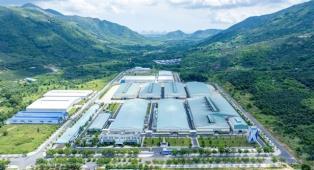
With an established industrial base and an extensive network of industrial parks, Đồng Nai aims to strengthen its position in high-tech manufacturing while increasing the participation of domestic companies in global value chains.
The strategy is in line with the Politburo’s Resolution 57-NQ/TW which identifies breakthroughs in science and technology, innovation and national digital transformation as key drivers of the country's development.
To attract investment, the city is gradually building a competitive investment environment with focus on upgrading industrial park infrastructure, transport networks, electricity and water supply, domestic supplier networks and a fast, transparent investment administration system.
The city is also stepping up cooperation with businesses and training institutions to develop a workforce capable of meeting the requirements of the semiconductor and high-tech industries.
Nguyễn Hữu Đức, acting director of the managemetn board’s Technical Labour Training and Supply Centre, said high-tech companies considered several factors when assessing Đồng Nai's investment environment, with skilled labour and supporting industries among their top priorities.
The centre was therefore strengthening coordination with businesses, training organisations and relevant institutions to develop a skilled workforce capable of meeting the needs of a new generation of investors, he said.
It recently signed a memorandum of understanding with Coherent Vietnam, based at Nhơn Trạch 1 Industrial Park, to develop semiconductor integrated-circuit training programmes.
Nguyễn Minh Quang, deputy director of the municipal Department of Science and Technology, said efforts are being hastened to translate Resolution 57 into practical programmes and long-term development policies as the city aims to establish itself as a science, technology, innovation and digital transformation hub in the southeastern region, capitalising on its industrial base and connectivity with Long Thành International Airport.
He cited statistics that Đồng Nai's digital economy accounted for 7.88 per cent of its gross regional domestic product (GRDP) in 2025, equivalent to approximately VNĐ53.42 trillion.
The city is targeting a digital economy contribution of 30 per cent by 2030, in line with the national direction set out under Resolution 57, while pursuing annual GRDP growth of 10-12 per cent during the 2026-30 period.
In the immediate term, the Department of Science and Technology plans to complete a digital economy development scheme for the 2026-30 period and establish a common framework for measuring the sector's contribution.
The city also plans to pilot smart factory models at between 10 and 20 major industrial enterprises, using automation, robotics and artificial intelligence to improve production efficiency.
The city attracted nearly US$2.4 billion in registered foreign direct investment (FDI) in the first nine months of 2026, equivalent to almost 80 per cent of its annual target, with investment concentrated in manufacturing, supporting industries and logistics.
Đồng Nai is also implementing a semiconductor industry development plan towards 2030, with a vision to 2050.
The city aims to establish semiconductors as one of its key high-tech industries, with the Long Thành concentrated information technology park expected to serve as a hub for businesses across the semiconductor value chain.
Priority areas include chip design, packaging and testing, micro-electromechanical systems (MEMS), Internet of Things (IoT) technologies, sensors and smart devices.
By 2050, the city aims to develop a more self-reliant semiconductor ecosystem encompassing research and development, training institutions, start-up incubators and a network of high-tech enterprises. — VNS