HCM City welcomes Chinese investments in logistics
Vietnamese and Chinese companies have a great deal of collaboration opportunities in logistics and infrastructure.
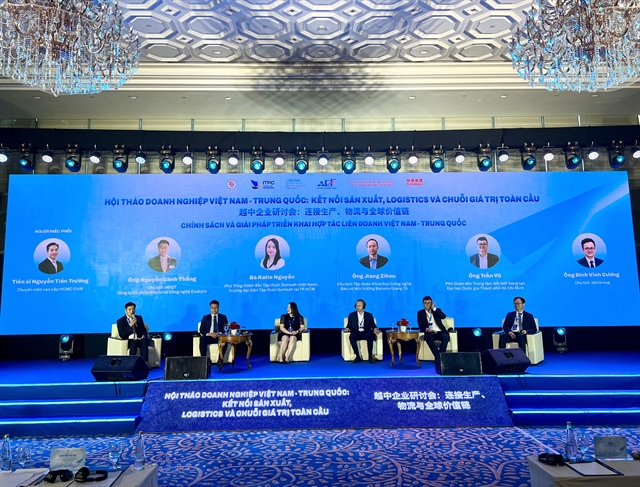
HCM CITY — HCM City sought greater cooperation between Vietnamese and Chinese businesses in logistics, infrastructure, and technology to improve connectivity, reduce transport costs, and strengthen supply chains at a conference on October 29.
The event, held as part of the city's Autumn Economic Forum, brought together experts and businesses from both countries to explore opportunities for cooperation and new partnerships.
Nguyễn Lộc Hà, vice chairman of the HCM City People’s Committee, highlighted the substantial investments being made in the city’s seaports, transport network, and urban railway system.
“HCM City wants to foster cooperation between Vietnamese and Chinese businesses in industrial development, enhancing supplier capabilities and the application of technology so that Vietnamese firms can integrate more deeply into high value-added stages of global value chains.”
Xu Zhou, acting consul general of China in HCM City, said the two neighbouring countries had highly complementary industrial structures and supply chains.
“Chinese businesses have accumulated extensive experience in areas such as smart manufacturing, modern logistics, infrastructure development, financial services and the operation of innovation platforms. They are keen to strengthen connectivity and deepen cooperation with their Vietnamese partners.”
Đặng Minh Phương, chairwoman of the HCM City Logistics and Port Association, said Việt Nam is seeking to reduce logistics costs, which remain above the global average.
Improving infrastructure and strengthening cooperation with major trading partners such as China are important to achieving this goal, she said.
She highlighted the US$11 billion Lào Cai – Hà Nội – Hải Phòng railway project, which would connect China's railway network directly with ports in northern Việt Nam.
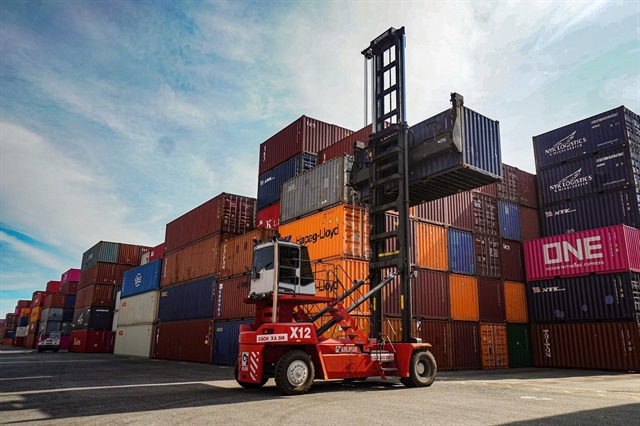
HCM City is a major container cargo hub, handling 65–70 per cent of the country's total container throughput, equivalent to around 18 million twenty-foot equivalent units (TEUs) annually, she said.
Its deep-water port system, including the Cái Mép – Thị Vải complex, could accommodate vessels carrying up to 24,000 TEUs and offers direct shipping services to the US west and east coasts and Europe, she said.
“HCM City possesses a dual advantage: it functions simultaneously as an international transshipment hub and a gateway for import-export activities, all while being seamlessly integrated with a vast industrial production hinterland.”
She outlined several areas in which Vietnamese and Chinese businesses could strengthen cooperation, including improving multimodal transport links and establishing express shipping services connecting major Chinese trade hubs such as Ningbo, Shanghai, and Shenzhen with ports in southern Việt Nam.
Her association also proposed greater sharing of logistics data to help businesses forecast demand, plan production, and improve delivery schedules.
Other priorities include joint investment in specialised warehouses, particularly large-scale cold storage facilities to support Vietnamese agricultural exports to China, she said.
Businesses could also develop smart warehouses to meet growing demand from cross-border e-commerce, she said.
Cooperation in smart ports, artificial intelligence, and green technologies should also be strengthened, drawing on China's experience in port automation, electric transport vehicles, and the use of AI in supply chains, she added.
Ngô Thị Thanh Vy, general director of QTM International Port, said seaports need more than substantial investment and the capacity to accommodate large vessels.
They also need reliable cargo flows and good connections with industrial parks and logistics facilities, she said.
She said Chinese agricultural suppliers, Vietnamese importers, seaports, and logistics companies could establish long-term partnerships to improve efficiency and reduce cargo handling times.
She called on authorities in both countries to facilitate business cooperation, improve transport connections beyond ports, and simplify import-export procedures.
Zhang Qiang, general director of China Railway Sixth Group Viet Nam Company Limited, said his company had participated in the Cát Linh – Hà Đông urban railway project, Việt Nam's first urban rail line, under an engineering, procurement, and construction contract.
"It serves as clear proof that Chinese rail transit technology, construction standards, and equipment are fully capable of adapting to the complex urban environment of Việt Nam."
He described how the company had adapted the project to Việt Nam's climate, environmental conditions, and urban landscape.
It had also worked closely with Hanoi Metro Company to provide operational and maintenance support and job-specific training for its personnel, he said.
He said a well-developed railway network could reduce logistics costs, improve transport efficiency, and connect industrial parks with seaports, supporting closer manufacturing cooperation between Việt Nam and China.
Yang Wen Bin, acting chairman of the HCM City branch of the Business Association of China in Việt Nam, also stressed the importance of developing smart cross-border transport systems, including railways, seaports, and logistics facilities, while simplifying administrative procedures.
He said the association would continue to connect authorities, industry associations, and businesses from both countries, promote cooperation, and help resolve difficulties faced by Chinese companies seeking to establish long-term operations in Việt Nam. — VNS