Domestic carbon exchange opens new opportunities for businesses
The domestic carbon exchange is expected to improve transparency, facilitate carbon transactions and support the implementation of Việt Nam's roadmap towards achieving net-zero greenhouse gas emissions by 2050.
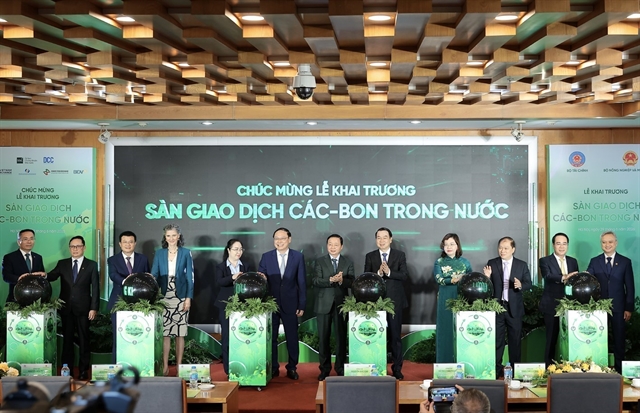
HCM CITY — Việt Nam's launching of its domestic carbon exchange on June 29 has marked a significant step in developing a market-based mechanism to support the country's climate commitments and transition towards a low-carbon economy.
For businesses in Hồ Chí Minh City, the nation's largest manufacturing and export centre, the new platform presents opportunities to turn emissions reductions into economic value while improving competitiveness in increasingly carbon-conscious international markets.
However, industry experts warn that companies must invest in emissions management, cleaner production and transparent reporting systems if they are to fully benefit from the emerging market.
The domestic carbon exchange was launched following years of preparation by the Department of Climate Change under the Ministry of Agriculture and Environment, in collaboration with the Việt Nam Exchange (VNX), the Hà Nội Stock Exchange (HNX), the Việt Nam Securities Depository and Clearing Corporation (VSDC), and the Bank for Investment and Development of Việt Nam (BIDV).
According to Nguyễn Tuấn Quang, deputy director general of the Department of Climate Change, the exchange establishes a unified platform for the registration, custody, trading and settlement of emissions allowances and carbon credits.
The platform is expected to improve transparency, facilitate carbon transactions and support the implementation of Việt Nam's roadmap towards achieving net-zero greenhouse gas emissions by 2050.
The launch also marks the beginning of a domestic carbon market, which is expected to operate on a pilot basis before expanding as the country's legal framework continues to develop.
Experts say the timing is significant as climate-related regulations increasingly influence international trade.
Carbon as an asset
Carbon emissions are no longer viewed solely as an environmental issue but have become an important indicator of product competitiveness.
Importing countries are introducing stricter environmental requirements through mechanisms such as carbon border adjustment measures, forcing exporters to demonstrate lower emissions throughout their production processes.
As a result, businesses that invest early in emissions reduction and carbon management are expected to enjoy stronger access to global markets and greater resilience against future trade barriers.
The establishment of the exchange creates a new economic mechanism in which carbon can become a tradable asset rather than merely an environmental obligation.
Companies that successfully implement qualified emissions reduction projects may generate carbon credits, which can be traded to organisations seeking to offset their emissions or comply with regulatory requirements.
This creates new revenue opportunities while encouraging businesses to invest in cleaner technologies and more efficient production systems.
Industry specialists note that carbon credits should not be viewed as a short-term source of profit. Instead, they represent the outcome of long-term investments in sustainability, technological innovation and resource efficiency.
Businesses that improve energy efficiency, adopt renewable energy, optimise manufacturing processes or implement circular economy models are likely to reduce operating costs while strengthening their environmental credentials.
These improvements also enhance corporate reputation among investors, financial institutions and international buyers, who are placing greater emphasis on environmental, social and governance (ESG) performance.
Preparing businesses
Despite growing interest in the carbon market, experts believe a large proportion of Vietnamese businesses are still at an early stage of preparation.
Lê Châu Hải Vũ, sustainability expert and director of business consultancy ConsulTech, said many small and medium-sized enterprises (SMEs), including businesses participating in the One Commune One Product (OCOP) programme, recognised the importance of the carbon market but remained uncertain about where to begin.
According to Vũ, three major challenges continue to limit participation.
The first is the lack of reliable emissions data. Many businesses have never conducted greenhouse gas inventories and therefore have little understanding of their emissions profiles.
The second challenge is the relatively high cost of conducting emissions inventories and obtaining independent verification, particularly for SMEs with limited financial resources.
The third obstacle lies in the evolving regulatory framework.
Although Việt Nam has established the legal foundation for a domestic carbon market, technical guidelines covering measurement, reporting and verification (MRV) continue to be refined across different sectors.
Misconceptions about carbon credits also remain widespread.
"Some businesses believe that planting trees or reducing electricity consumption alone is sufficient to create carbon credits," Vũ said.
"In reality, companies must establish comprehensive measurement, reporting and verification systems, develop emissions baselines and obtain certification from independent organisations under internationally recognised standards before carbon credits can be issued."
Without these technical foundations, businesses cannot effectively participate in the market regardless of their environmental initiatives.

Building competitiveness
For many exporters, market pressure has arrived even before domestic regulations become mandatory.
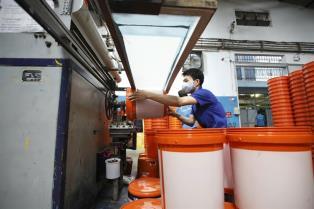
Ngô Thị Thu Thủy, general director of Fujiwa Co Ltd in Củ Chi Commune, said overseas customers had increasingly requested information on greenhouse gas emissions and carbon certification as part of supplier assessments.
Although Fujiwa is not yet among the businesses required to participate in the domestic carbon market, the company has identified green production as a strategic investment rather than simply a compliance exercise, according to Thuỷ.
Maintaining access to demanding markets such as Australia requires continuous improvements in both product quality and environmental performance.
After seven years of development, Fujiwa has gradually upgraded its manufacturing processes to comply with stricter environmental standards.
However, Thủy said many businesses still needed clearer guidance from government agencies regarding greenhouse gas inventories, documentation requirements and procedures for obtaining carbon certification.
She added that Fujiwa intended to continue investing in emissions reduction technologies and would participate in the carbon market once it satisfies the necessary conditions.
According to Vũ, businesses should avoid approaching the carbon market solely with the objective of selling carbon credits.
Instead, carbon management should be incorporated into long-term business strategies aimed at improving productivity, reducing costs and strengthening international competitiveness.
The first priority should be establishing greenhouse gas inventories to accurately identify emissions sources.
Businesses can then develop practical emissions reduction plans through energy-saving measures, cleaner fuels, production optimisation and circular economy practices.
For SMEs, collaboration within industrial clusters, cooperatives and supply chains could help reduce implementation costs while generating projects of sufficient scale to participate in carbon trading.
Such cooperation would also allow businesses to share technical expertise and improve access to consulting services and green finance.
Policy support needed
Experts believe the success of Việt Nam's carbon market will depend not only on the trading platform itself but also on supporting policies that encourage broader business participation.
They recommend accelerating the development of sector-specific technical guidance on emissions measurement, reporting and verification while expanding domestic consulting capacity to reduce dependence on foreign experts.
Additional financial support for greenhouse gas inventories, preferential green credit packages and incentives for businesses investing in low-carbon technologies are also considered necessary, particularly for SMEs.
With a transparent regulatory framework and adequate technical support, the domestic carbon market could become an important driver of industrial modernisation while helping Việt Nam fulfil its international climate commitments.
For HCM City, where manufacturing, innovation and exports remain central to economic growth, the launch of the domestic carbon exchange presents an opportunity to reinforce its position as the country's leading green economic hub.
As carbon increasingly becomes a prerequisite for international trade, businesses that move early to build transparent emissions data, modernise production and embrace low-carbon development are expected to enjoy a decisive competitive advantage in the years ahead. — VNS