Digital technology propels Đắk Lắk’s agro products onto global market
The farmers’ access to comprehensive digital data has facilitated the effective management of production standards such as VietGAP and GlobalGAP as well as compliance with export market requirements.
HÀ NỘI — Farmers in Đắk Lắk Province are increasingly turning to science, technology and digital tools to improve agricultural production, in line with the Politburo’s Resolution No. 57-NQ/TW on breakthroughs in science, technology, innovation and national digital transformation.
The digital transformation, which has been seen from establishing growing area codes to integrating artificial intelligence (AI) into production, is paving the way for the province’s agricultural products to reach international markets.
Across the rice fields and orchards of the province’s Ea Súp Commune, digital technology is gradually transforming local agricultural production methods.
At the Ea Súp Organic Cooperative, production processes are managed and monitored via a digital data system. Farmers can update every stage of production from sowing and tending to harvesting, ensuring that all information regarding the process is comprehensively recorded and transparent.
The farmers’ access to comprehensive digital data has facilitated the effective management of production standards such as VietGAP and GlobalGAP as well as compliance with export market requirements.
According to Võ Anh Dương, technical manager at the Ea Súp Organic Cooperative, before agricultural digitalisation was introduced, it was difficult to document and verify production processes, creating barriers to export.
Digitalisation has brought transparency to production processes, thereby smoothing the path for exports. By scanning a code, consumers can gain insight into the production and deep-processing stages of the agricultural products.
"This transparency is a crucial factor in enabling products to access e-commerce platforms, major distribution chains and export partners," Dương said.
Recognising digital transformation as key to sustainable agricultural development, many communes and wards in Đắk Lắk Province have worked with agricultural cooperatives on support activities, from training and technology transfer to connecting them with buyers and developing traceable raw material zones.
Provincial authorities are also working to improve information transparency and develop digital agricultural maps, helping local agricultural products gain greater access to global markets.
Đặng Thị Thanh Nhung, vice chairwoman of the Ea Súp Commune People’s Committee, said digitising agricultural zones had increased product value and improved traceability, while helping farmers grow crops more safely and efficiently.
As a result, businesses have approached the locality to develop partnerships combining the digitisation of fruit-growing areas with product distribution.
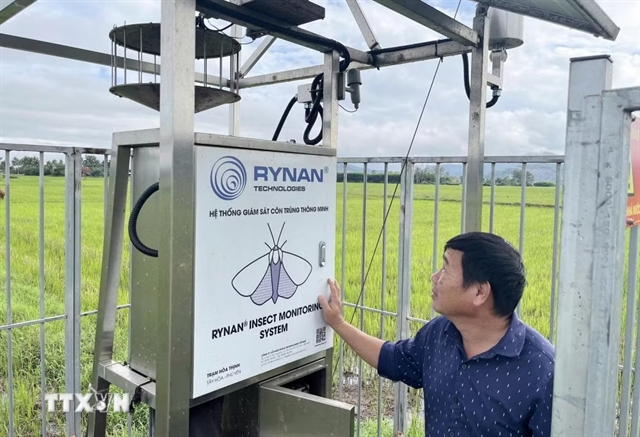
In Đắk Lắk Province, digital technologies are increasingly being applied across farms and production zones, from automated irrigation systems and environmental sensors to drones and electronic farming logs.
In rice and fruit-growing areas in Hòa Thịnh, Bình Kiến, Ea Ly and Phú Hòa 2 communes, an AI-based insect monitoring model is being piloted to build a database for pest forecasting and control in line with integrated pest management principles.
Hà Văn Lam, chairman of the Farmers’ Association in Tuy Hòa Ward, said training, outreach and demonstration models had encouraged more farmers to adopt digital technologies. Automated irrigation systems, for example, allow farmers to water vegetable and flower beds evenly at the push of a button while adjusting water use to conserve resources.
Growing area codes ease exports
Đắk Lắk Province has large, concentrated raw material zones for key commodities including coffee, durian, black pepper, rubber, rice and fruit. This provides a basis for building production databases, managing growing areas and improving traceability from production and processing to consumption and export.
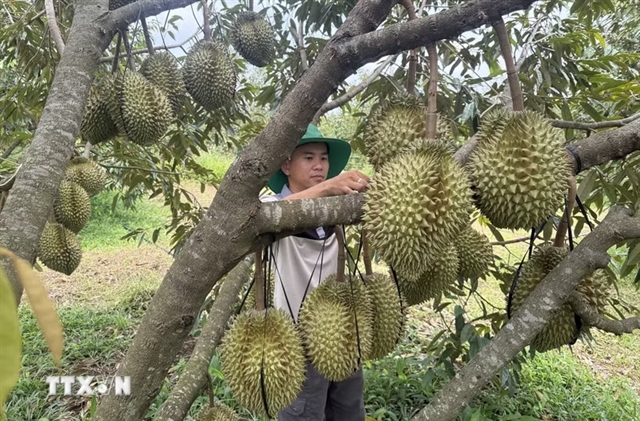
The province is the country’s largest durian producer, with nearly 45,000 hectares and an estimated output of about 500,000 tonnes this year. As export markets impose stricter requirements on transparency, origin and technical standards, local durian growers are actively registering growing area codes to meet traceability requirements.
In Ea Bá Commune, farmer Lê Trọng Lư is working with 10 other farmers to form a production group. The group has expanded the cultivation area, synchronised harvests and agreed on traders, while working to obtain an official growing area code. This would allow the farmers to work directly with companies, secure market outlets and support official exports.
Lư, head of the group, said the model helps ensure product quality and obtain growing area codes, enabling farmers to work directly with exporters rather than through intermediaries.
Đắk Lắk now has more than 400 growing area codes covering nearly 11,000 hectares, of which over 320 are for export. The province is also integrating growing area data into its agricultural and rural development value chain. Digital records tracking produce from farms to processing facilities have helped local products access markets in Europe, Japan, the United States and China.
Digital transformation is thus providing a new foundation for agriculture in Đắk Lắk, from production and traceability to market access. Standardised data and wider use of technology are helping farmers meet international standards while improving the quality and value of local products. — VNS