Development map redrawn to drive double-digit growth
Việt Nam’s revised national master plan aims to create new growth hubs, strengthen regional connectivity and accelerate technology-driven development as the country targets annual economic growth of at least 10 per cent in the coming years.
HÀ NỘI — Việt Nam has revised its national and regional development plans through 2030, betting on technology, innovation and new growth hubs to achieve double-digit economic expansion in the second half of the decade.
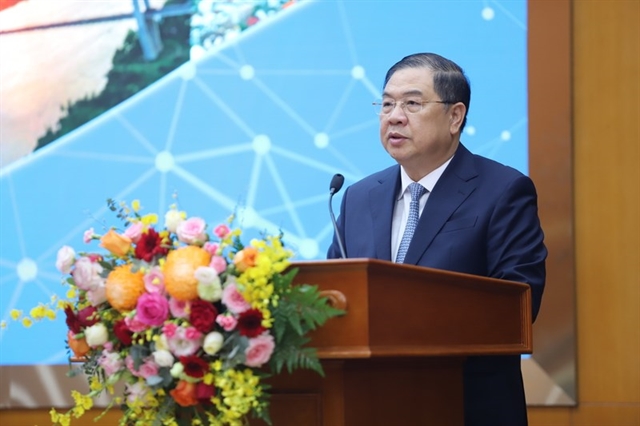
The revised plans, with a vision to 2050, were announced at a conference in Hà Nội on Wednesday by the Ministry of Finance after receiving approval from competent authorities.
Speaking at the event, Deputy Prime Minister Phạm Gia Túc said ministries, sectors and localities must remain committed to the goal of double-digit growth while accelerating reforms to create a more efficient development model.
“Planning must create a more efficient development structure, better regional connectivity and larger room for future growth,” Túc said.
The revised national master plan aims to reorganise the country’s development space in line with administrative restructuring and the implementation of a two-tier local government model. Authorities said the adjustments are also intended to create new growth poles, strengthen regional connectivity and improve the allocation of resources.
Under the revised framework, Việt Nam targets becoming a developing country with a modern industry and upper-middle-income status by 2030.
GDP per capita is projected to reach around US$8,500 by then, while labour productivity growth is expected to exceed 8.5 per cent annually. Total factor productivity is expected to contribute more than 55 per cent of economic growth.
Deputy Minister of Finance Trần Quốc Phương described planning as a “development roadmap” that would help unlock the country’s potential, remove bottlenecks in resource allocation and support more sustainable growth.
“Each region, sector and field must be clearly positioned within the country’s overall development strategy,” Phương said.
The revised plan places stronger emphasis on the development of strategic industries with international competitiveness and deeper participation in global supply chains. Priority sectors include electronics, digital technology, automobiles, railways, shipbuilding and manufacturing industries supporting agriculture.
Việt Nam also plans to gradually master emerging technologies such as semiconductors, robotics and automation, artificial intelligence, advanced materials, biotechnology, environmental industries, renewable energy and new energy industries.
The Government intends to develop specialised industrial clusters and large-scale industrial complexes while expanding the role of the services sector in the economy. Major urban centres are expected to become regional and global hubs for finance, banking and trade, linked to key economic corridors and growth regions.
Large logistics centres connected to seaports, airports and international border gates will also be developed, alongside national and regional tourism hubs.
Six economic centres
Under the revised framework, the country will comprise the Northern Midlands and Mountainous Region, the Red River Delta, the North Central Region, the Central Coastal and Central Highlands Region, the Southeast Region, and the Mekong Delta.
The Southeast and Red River Delta regions will remain the country’s two largest economic centres and key drivers of international integration and competitiveness.
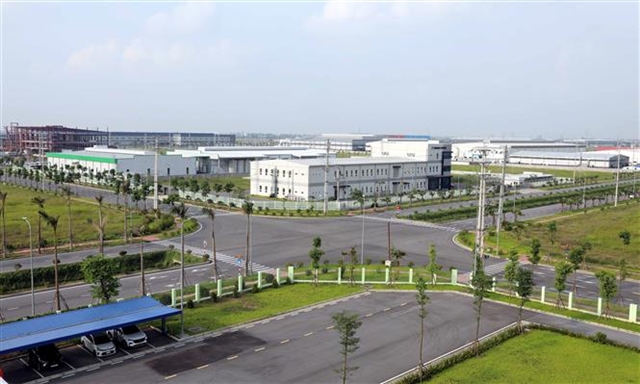
Authorities said the new regional framework is designed to improve inter-regional connectivity and maximise local advantages.
Several localities and urban centres with strong advantages are expected to be developed into international financial and economic hubs or special administrative-economic zones with more competitive policy mechanisms.
Key economic corridors will continue to be developed along the North–South and East–West axes and coastal economic belts. Priority projects include the Lào Cai–Hà Nội–Hải Phòng–Quảng Ninh corridor and the Mộc Bài–HCM City–Biên Hòa–Vũng Tàu corridor.
The Government also plans to accelerate the development of industrial–urban–service belts linked to ring roads in the Hà Nội Capital Region and HCM City.
Infrastructure development remains another priority. Authorities said the country would focus on building a national infrastructure framework covering transport, energy, digital infrastructure, urban systems, irrigation and disaster prevention.
In agriculture, the revised strategy promotes digital, green and circular farming models while encouraging the application of advanced technologies to develop high-tech agricultural zones.
Officials said the Ministry of Finance would continue refining financial and investment policies to mobilise resources and ensure consistency between planning, public investment and budget allocation. The ministry will also coordinate with ministries and localities to turn the plans into practical programmes and projects.
The National Assembly approved amendments to the national master plan in December 2025, while the Prime Minister signed revised regional plans for six socio-economic regions in April this year. —VNS