Deputy PM urged review of railway industrial complex to prevent waste of resources
At a meeting on November 16 with ministries, Hà Nội authorities, Vietnam National Railway Group and Vingroup to discuss investment plans for the complex, Depty PM Túc said developing a domestic railway industry is essential to modernising the country's railway system and gradually achieving national self-reliance in railway technology, equipment and maintenance.
HÀ NỘI — Permanent Deputy Prime Minister Phạm Gia Túc urged review of plans for a railway industrial complex in Hà Nội to be carried out to prevent overlapping investments and ensure efficient use of public and private resources as the country is seeking to develop domestic capabilities to support its expanding railway network.
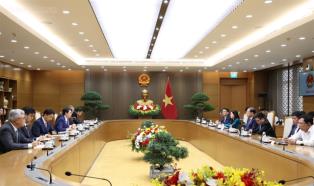
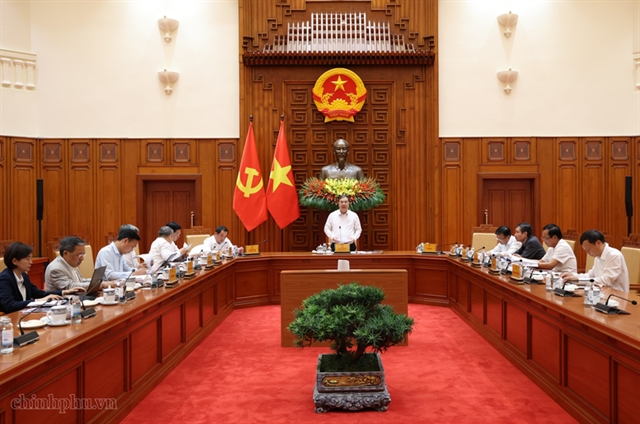
At a meeting on November 16 with ministries, Hà Nội authorities, Vietnam National Railway Group and Vingroup to discuss investment plans for the complex, Depty PM Túc said developing a domestic railway industry is essential to modernising the country's railway system and gradually achieving national self-reliance in railway technology, equipment and maintenance.
The Government has assigned the Ministry of Construction to study the development of a railway industrial complex. However, Hà Nội has separately proposed establishing a railway industrial park near the site being studied by the ministry, with similar functions.
Deputy PM Túc warned that developing multiple industrial facilities with overlapping functions could result in duplicated investment, excess production capacity and waste of resources.
Given the scale of Việt Nam's railway network, investment plans must be based on actual demand and long-term operational requirements, he said, adding that private and foreign capital should be encouraged while the state budget resources should be directed towards other essential priorities.
Deputy Minister of Construction Bùi Xuân Dũng said that Prime Minister’s Decision No. 2404/QĐ-TTg, issued on October 29, 2025, had identified a site of approximately 250ha in Chuyên Mỹ and Ứng Hòa communes in Hà Nội for the proposed railway industrial complex.
The ministry is preparing a detailed plan as a basis for investment procedures, with the complex expected to cover research, design, testing, manufacturing, assembly, maintenance and the supply of industrial products for national, urban and high-speed railways.
The ministry supported establishing only one railway industrial complex in the area to avoid building two facilities with similar functions close to each other, Dũng said.
However, the ministry's proposal is being developed under public investment procedures, while Hà Nội’s proposal is being considered under investment legislation, which requires further clarifications in the investment structure, funding sources and implementation arrangements to accelerate the project, he added.
Hà Nội Party Committee Secretary Trần Đức Thắng said the capital city had proactively reported the issue to central authorities to seek a unified approach and avoid wasting national resources, including public investment, state-owned enterprise capital and private funding.
Participants at the meeting also stressed that the complex's scale should reflect market demand and long-term operational needs, rather than create production capacity exceeding actual requirements.
Besides manufacturing and assembling rolling stock in the initial phase, the project should take into account long-term demand for maintenance, repair, testing and inspection, while ensuring connectivity with the railway network.
Technology selection and transfer should be aligned with market scale and the domestic industry's capacity to absorb, master, maintain and upgrade technologies after their transfer.
Concluding the meeting, Deputy PM Túc highly appreciated the coordination among ministries, Hà Nội authorities and businesses in seeking an effective and timely investment approach.
He said there was broad agreement on the need to avoid establishing multiple railway industrial complexes with similar functions, which could fragment resources and lead to unnecessary investment.
The complex should be designed to meet demand for manufacturing, assembly, maintenance, repair and inspection of railway equipment and rolling stock, ensuring long-term operational efficiency.
Deputy PM Túc stressed that the ultimate objective was to build domestic railway industry regardless of whether investment came from private businesses, state-owned enterprises or other economic sectors.
Regarding Hà Nội's proposal, he called for swift implementation to meet the development timeline of the city's urban railway system. The investment plan must comply with the Railway Law, national railway development orientations and relevant technical standards.
The complex should be capable of serving urban railways, existing national railway lines and high-speed railways, rather than catering solely to Hà Nội's urban railway requirements, he said.
Deputy PM Túc asked the Ministry of Construction to review investment plans for the railway industrial complex and report to the Prime Minister for consideration. — VNS