Data-driven fisheries management strengthens anti-IUU efforts
Digital transformation is reshaping fisheries management in Việt Nam, as authorities deploy data-driven systems to tighten vessel management, improve traceability and combat illegal, unreported and unregulated fishing.
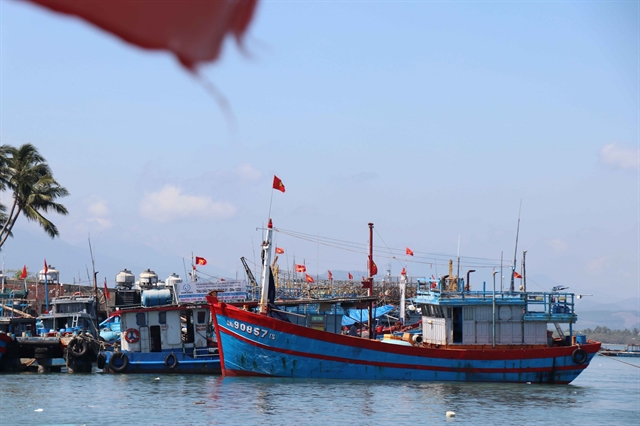
HÀ NỘI — Digital technology is increasingly at the centre of Việt Nam’s efforts to lift the European Commission’s yellow card warning on illegal, unreported and unregulated (IUU) fishing, as authorities move to modernise fisheries management and tighten oversight of fishing activities nationwide.
The shift towards data-driven governance marks a clear departure from traditional manual practices, replacing fragmented records with integrated digital systems designed to ensure transparency, legality and traceability in seafood exploitation.
At the heart of this transformation is a suite of specialised databases and software platforms developed by the Directorate of Fisheries and Fisheries Surveillance. To date, 12 sector-specific applications have been deployed, with four key systems playing a pivotal role in combating IUU fishing, including the national fisheries database (Vnfishbase), the vessel monitoring system (VMS), the database on administrative sanctions in fisheries exploitation and the electronic catch documentation and traceability system (e-CDT).
Vnfishbase is widely regarded as the backbone of the modern fisheries management framework. Operational since 2019, the system provides a unified platform for managing fishing vessel registration and licensing data, with a particular focus on vessels measuring fifteen metres or longer, the primary group subject to IUU monitoring requirements.
Nguyễn Duy Thành, deputy director of the Fisheries and Fisheries Surveillance Centre, said Vnfishbase has now been rolled out across all provinces and cities with marine fishing fleets. Vessel data have been standardised and are regularly updated by local authorities, enabling timely access to information and more effective direction and management by the Ministry of Agriculture and Environment and provincial administrations.
Nationwide registration of all fishing vessels has been completed, creating a single standardised data platform for effective management of the fishing fleet.
To further strengthen vessel identification and data accuracy, Vnfishbase has been linked with the National Population Database under the Government’s programme on population data application, electronic identification and authentication for national digital transformation in the 2022–2025 period, with a vision to 2030.
The interconnection, implemented in coordination with the Ministry of Public Security and the Department of Digital Transformation, supports more precise vessel management and directly contributes to IUU enforcement efforts.
Authorities are continuing to review, clean and update data to ensure accuracy, completeness and timeliness.
In HCM City, all fishing vessels have been fully registered and updated on Vnfishbase. Lists of deregistered vessels have been made public and synchronised with the VMS, improving vessel identification and strengthening inspection and control activities at sea.
Phạm Thị Na, deputy director of the HCM City Department of Agriculture and Environment, said the department had proposed adding new data fields to Vnfishbase, including information on food safety certification for fishing vessels, while requiring inspection units to update records consistently to maintain data integrity.
Alongside fleet management, electronic traceability of seafood from capture has emerged as a decisive factor in meeting export market requirements. The e-CDT system, which is mandatory for vessels measuring 15m or longer, has also attracted voluntary participation from thousands of vessels measuring 6m or more.
Local authorities have directed relevant agencies to guide fishermen in fully implementing electronic procedures for port departure and arrival declarations.
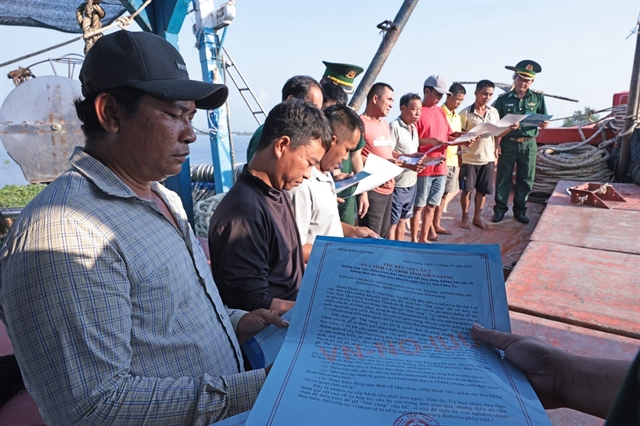
In Đồng Tháp Province, the e-CDT system has been applied in a synchronised manner, ensuring that 100 per cent of vessels entering and leaving ports are declared electronically and that all receipt issuance dossiers are processed online.
The move has significantly improved transparency and legal compliance in harvested seafood products. Fishermen now need to only submit electronic declarations about one hour before arriving at port, rather than completing paperwork in person.
Lê Hoài Thương, a fisherman from Cảng Hamlet in Trần Đề Commune, Cần Thơ City, said the system integrated essential information such as catch volumes and fishing grounds, reducing administrative burdens for fishermen while enabling more effective monitoring by management agencies.
According to Lư Tấn Hòa, deputy head of the sub-Department of Fisheries and Fisheries Surveillance of Cần Thơ City, digital tools have enhanced fleet management capacity, enabled earlier detection of potential IUU violations and strengthened transparency in seafood traceability for export markets.
Despite these advances, challenges remain.
Technical infrastructure limitations and uneven system operation capacity at the grassroots level continue to pose obstacles to comprehensive digital transformation.
Thành said further investment would be needed to upgrade and expand Vnfishbase and related platforms, alongside increased training for officials at all levels to ensure systems are effectively operated and data fully utilised. — VNS