SMEs seize domestic market opportunities at Glorious Spring Fair 2026
For many participating businesses, the fair represents more than a seasonal trade event. It is a venue for learning, networking and reaching consumers at scale, particularly as companies increasingly turn toward local demand.
By Ly Ly Cao
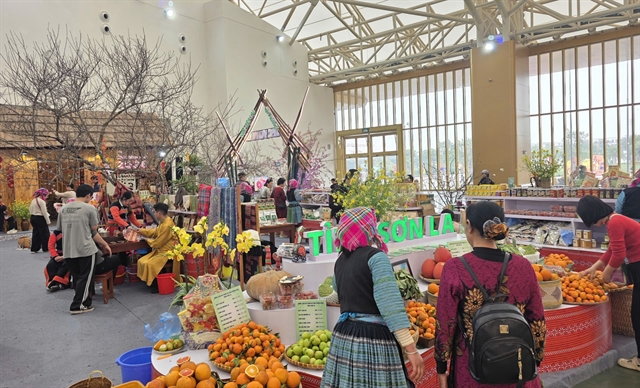
HÀ NỘI — Small and medium-sized enterprises (SMEs) from across Việt Nam are turning to the first Glorious Spring Fair 2026 as a strategic platform to introduce products, expand distribution networks and strengthen their presence in the domestic market.
For many participating businesses, the fair represents more than a seasonal trade event. It is a venue for learning, networking and reaching consumers at scale, particularly as companies increasingly turn toward local demand.
Expanding reach through large-scale trade promotion
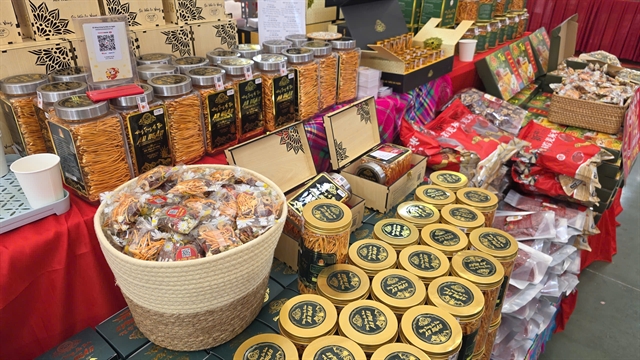
Phạm Thị Hà, director of An Ngân Cooperative in Lai Châu Province, said the cooperative currently consists of seven member households, with cordyceps as its flagship product.
"At present, we have 30 full-time employees and 20 seasonal workers," she said, noting that the cooperative distributes products nationwide through an established dealer network.
The cooperative transitioned from an individual household business model to a cooperative structure after 2024, a move Hà said improved customer access.
"After converting to the cooperative model, we found that we could reach larger and better customer segments compared to operating as an individual household business," she said.
Participating in trade fairs has long been part of the cooperative's strategy. "First, we attend to learn, then to network, and after that, to connect with partners. We travel from the South to the North quite often," she added.
However, the Spring Fair's scale really stood out.
"This Spring Fair 2026 is quite large, almost the biggest nationwide," Hà said.
"The number of customers we can reach is also significant and we have learned from other units, especially in product packaging and design."
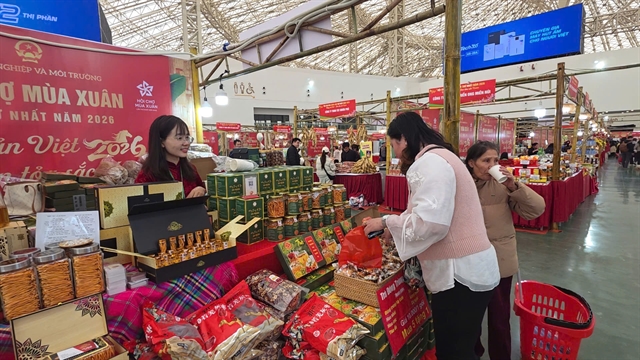
It is also the cooperative's first appearance at an event of this magnitude. While expectations were initially modest, the experience has shifted outlooks.
Hà added: "We didn't set overly high expectations when attending events like this, but after arriving, we hope to have a prosperous Tết (Lunar New Year) and bonuses for employees who are working hard packing orders at home."
Hà also highlighted institutional support, saying the cooperative received a well-organised booth from ministries, while provincial authorities assisted with logistics, including transporting goods and facilitating on-site sales.
Growing confidence
From the perspective of distributors, the fair offers a consolidated marketplace for domestic goods.
Trần Thị Diệu Thuý, a partner specialising in Vietnamese product distribution, said she was surprised by the diversity and quality on display.
"We have organised many events for Vietnamese products before, but a fair like this is truly a place of convergence," she said.
"For example, in Lai Châu there is cordyceps that looks perfect - even more beautiful than products from South Korea."
Thuý noted that the strong presence of Vietnamese enterprises boosted her confidence in local goods.
"This year, what I like most is that they are all Vietnamese businesses. I feel confident and truly appreciate Vietnamese products. Packaging and designs are increasingly attractive."
She added that her purchasing habits have changed accordingly.
"In previous years, I thought of buying imported goods as gifts," Thuý said.
"But this year, I haven't bought a single foreign product, only Vietnamese ones, from food and beverages to agricultural products, all with very beautiful packaging."
Nevertheless, she pointed to pricing as an area for improvement. "Vietnamese products are still not very competitive in price, so something needs to be done to make costs better," she said.
Operating an online store that sells exclusively Vietnamese goods, Thuý reported growing demand.
"Each day we have more than 100 orders, and the number of customers keeps increasing. After they purchase products that have been carefully filtered through us, they really like them."
She also uses such events to source products for export as gifts.
Looking ahead, Thuý expressed support for making such fairs more frequent, adding that younger entrepreneurs are bringing notable creativity to the market.
Riding the wave of green consumption
Environmental products are also gaining attention from domestic consumers, according to exhibitors.
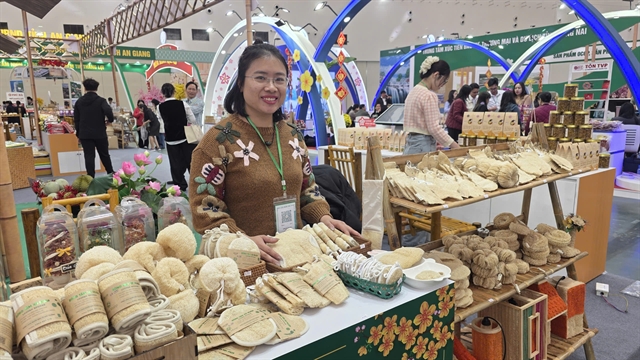
Hà Việt Nga, a distributor for Làng Mướp products in Hà Nội, showcased natural loofah-based household items such as dishwashing pads, bath sponges and facial cleansers.
"The products are very simple and pure," she said, adding that even small design details can make routine chores more enjoyable for users.
The company has exported to Japan for a decade but only began focusing on the Vietnamese market about two years ago.
Nga observed a shift in consumer preferences.
"In Việt Nam, people are paying more attention to green products, environmental protection and user-friendly items," she said.
The loofah materials are cultivated in Đồng Tháp, with harvesting timed according to maturity to ensure suitability for different uses.
"So customers don't have to worry about scratches or discomfort when using these products on their skin," she added.
Having sold out at a previous Autumn Fair, the distributor is optimistic about the current event.
"We were out of stock at the Autumn Fair, so we very much hope the Spring Fair will bring similar expectations," Nga said.
For some companies, the fair marks a strategic shift from export dependence toward strengthening local sales.
Nguyễn Đức Minh is an agent for Van Phong Tea Company which operates a tea production facility in Hoàng Su Phì, Hà Giang Province.
"Today we are here to promote our tea products to the domestic market," he said, explaining that the company's snow tea has yet to gain widespread recognition among local consumers compared to traditional green tea.
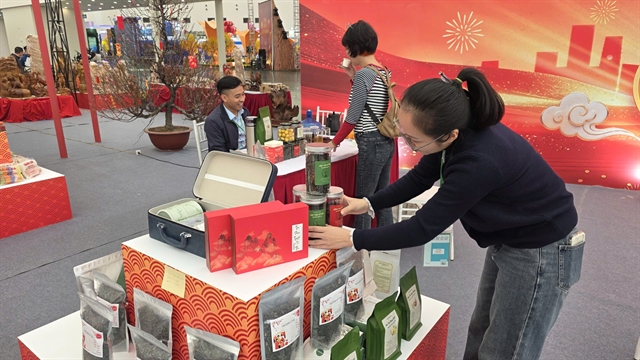
Minh expressed confidence that younger consumers could become a key customer segment.
"We expect that in the future customers, especially young people, will have more access to and appreciate this tea," he said, noting that its taste is less bitter than conventional varieties.
The tea is sourced from centuries-old wild tea trees growing naturally in Hà Giang.
"It is completely natural and free from pesticide use," he added.
Historically, the company focused primarily on exports, with Taiwan among its main markets. Now, it aims to increase domestic revenue.
"Previously we didn't pay much attention to the local market, so fairs like this are opportunities to introduce our tea to consumers," Minh said.
The company initially joined earlier fairs mainly to survey the market and build connections but ended up achieving sales that met expectations, an outcome that encouraged it to return.
"If we keep making efforts like this, we believe our market share will gradually expand," he added. — BIZHUB/VNS