Đà Nẵng set to become a national centre for digital industries
The central city has assigned the digital industries sector as a key driving force in becoming a national centre of start-up innovation focused on the core industries of unmanned aerial vehicles (UAVs) and aerospace engineering in its master plan.
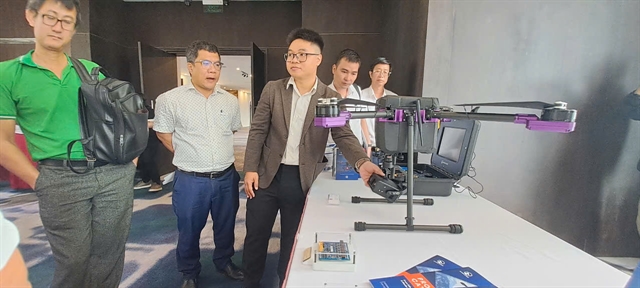
ĐÀ NẲNG — In its master plan, Đà Nẵng has designated the digital industries sector as a key strategic force in driving its development into a national centre of start-up innovation, with a focus on the core industries of unmanned aerial vehicles (UAVs) and aerospace engineering.
Deputy director of Đà Nẵng’s Department of Science and Technology Lê Thị Thục revealed the plans at a conference on developing UAVs in line with the low altitude economy.
Thục noted that authorities hope to promote the central city as a leading hub for logistics, start-up innovation, finance, free trade and marine-based economic growth, with a further goal of developing it into a global eco-city and more desirable destination.
She said the digital industries would help Đà Nẵng improve its competitiveness and sustainable development in the decades to come.
Đinh Hữu Tuyến, a member of the department’s Technology Development and Innovation section, said the plan has set a target of earning VNĐ73.4 trillion (US$2.8 billion) in revenue from the digital economy, with 4,200 businesses operating in key digital industries and employing 70,000 skilled workers from 2030 to 2045.
“We have plans to build at least one high-quality global digital product, five strong firms, an institute, four labs and R&D centres in the next few decades. The city’s digital industries could earn $200 million from exporting key products,” Tuyến said.
“Đà Nẵng will reserve at least 15 per cent of its budget spending for digital industries development, and at least three world class digital firms would be developed under the master plan,” he added.
Tuyến explained that 99 per cent of the city’s population has access to a 5G network, with 6G network access planned for the near future.
Đà Nẵng has boosted partnerships with tech giants Nvidia and Marvel, mapping out key digital industries such as AI, he said.
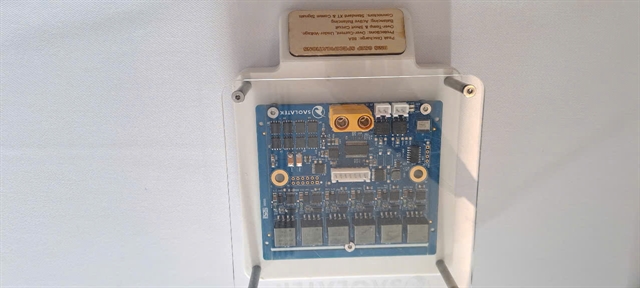
Trần Anh Tuấn, chairman of Việt Nam's Low Altitude Economy Partnership and CEO and founder of Saola Tek, a UAV start-up firm, said at least 2,000 students have been training in UAV technology with support from the company.
He said global applications of UAV technology have been growing rapidly, with an expected value estimated at $9 trillion in 2050.
There are plenty of useful applications for UAVs in agriculture, rescue services, smart logistics, infrastructure supervision, tourism and promotion, and defence and security, he noted.
Also the chairman of the Việt Nam Aerospace and Unmanned Aerial Vehicle Systems Network, Tuấn said 10,000 drones with 30,000 pilots have been used in agriculture production in the Mekong Delta. These UAVs could be dual-use, aiding in disaster rescue services or early warnings of wildfires or other natural disasters, he added.
According to Tuấn, Gia Lai Province has reserved a budget of VNĐ7 trillion ($266 million) to develop UAVs.
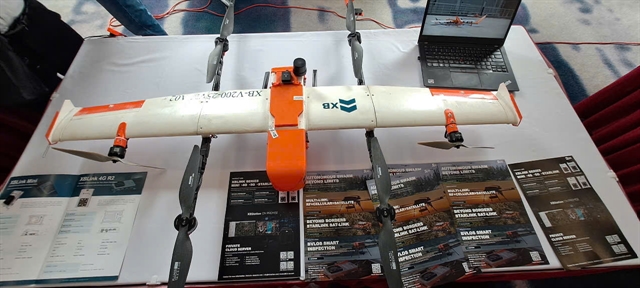
Tuấn said a Đà Nẵng-based start-up, XBStation, has been a local trailblazer in UAV development since 2018.
Nguyễn Quang Hào from XBStation said the company has been building UAV devices for logistics services using 4G and 5G networks within an operating distance of 30km.
He said Starlink satellite-based networks will help expand the manufacture of multi-functional UAVs in different sectors and services.
Đà Nẵng has previously used UAVs for urban planning and data recording purposes.
The Đà Nẵng Semiconductor and AI Centre aims to train 3,000 AI engineers and developers in Đà Nẵng and central Việt Nam starting this year. — VNS