Đà Nẵng seeks bigger role in global Halal supply chains
Đà Nẵng is looking to expand its presence in the global Halal market, which serves more than two billion consumers worldwide.
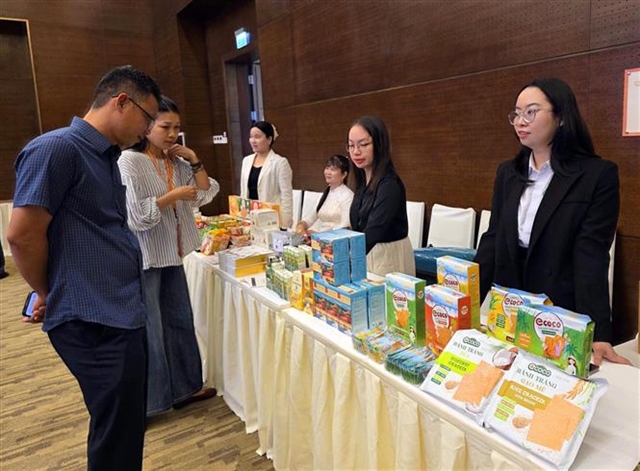
HÀ NỘI — Businesses need a long-term strategy and stronger compliance with international standards to tap into the rapidly growing global Halal market, speakers said at a seminar held in Đà Nẵng on Thursday.
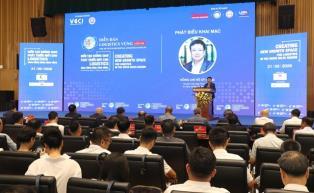
The seminar, titled 'Halal – A Gateway to the Global Market for Businesses', was jointly organised by the Vietnam Halal Certification Authority and the Đà Nẵng Department of Industry and Trade.
It brought together policymakers, certification experts, distributors and local enterprises to discuss opportunities and challenges in accessing Halal markets.
Halal is an Arabic term meaning 'permissible' or 'lawful' under Islamic law and refers to products and services that comply with religious requirements.
According to organisers, the global Halal economy now serves more than two billion consumers across over 110 countries and territories. Beyond food products, the sector has expanded into cosmetics, pharmaceuticals, logistics, tourism, hospitality, finance and other services.
Huỳnh Xuân Sơn, deputy director of the Đà Nẵng Department of Industry and Trade, said the market offered significant export opportunities as Vietnamese businesses seek to diversify destinations amid global economic uncertainties.
He said Đà Nẵng had advantages in agricultural and seafood processing, manufacturing, logistics and tourism, which could help local firms integrate more deeply into global Halal supply chains.
However, businesses would need to improve production processes, strengthen quality management systems and build links with certification bodies and international distributors to meet market requirements.
Nguyễn Thị Trà My from the Vietnam Halal Certification Authority (a unit under the Vietnam Certification Centre) said the Halal economy had evolved into a global consumer market that extended far beyond Muslim consumers.
She noted that many Vietnamese firms remained unfamiliar with certification requirements, traceability standards and regulatory frameworks in different countries.
Businesses should first identify their target markets before pursuing certification, as standards and recognition systems vary between destinations such as Malaysia, Indonesia and the Middle East.
My added that obtaining Halal certification was only one step in market development. Companies also needed to invest in supply chains, staff training, production controls and market research to build sustainable export operations.
Representatives from businesses shared practical experiences in entering Halal markets.
Mai Thị Ý Nhi, director of My Phuong Food, said her company spent several years developing Halal-compliant systems before securing its first Halal export orders.
“Halal certification does not automatically bring orders, but without it, it is difficult to begin discussions with importers in many Muslim markets,” she said.
Mirash Basheer, director of Lulu Vietnam, said Vietnamese products such as coconuts, packaged fruit, coffee and rice had gained traction in Muslim-majority markets.
He added that products from Đà Nẵng, particularly seafood and processed foods, also showed strong export potential.
Participants said demand for Halal-certified products continued to grow across Southeast Asia, the Middle East and South Asia, creating new opportunities for Vietnamese exporters.
They stressed that businesses should view Halal certification as part of a long-term market strategy rather than a short-term commercial opportunity. — VNS