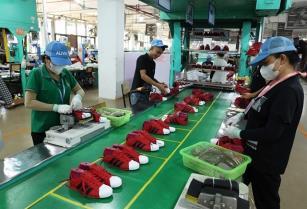
Việt Nam becomes top Asian magnet for long-term manufacturing: Malaysian economist
The story of Việt Nam’s economy in 2026 is not just one of faster GDP growth; it is about higher productivity, industrial upgrading, stronger capital formation, and a more prominent role in Asia’s strategic economic landscape.

KUALA LUMPUR — Việt Nam entered the second half of 2026 with one of Asia’s most attractive macroeconomic outlooks, evolving from a supply-chain diversification play into one of the region’s most powerful structural investment stories, Chief Economist at IQI Global Malaysia Shan Saeed told the Việt Nam News Agency (VNA).
Việt Nam’s real GDP expanded by 8.18 per cent in the first half, up from 7.63 per cent a year earlier. Growth quickened from a revised 7.94 per cent in the first quarter to 8.39 per cent in the second, reflecting powerful economic momentum, Saeed said.
More importantly, the composition of growth points to structural transformation. Industrial added value surged 9.86 per cent year-on-year in the first half, while services advanced 8.09 per cent. Manufacturing and processing, the backbone of Việt Nam’s export- and investment-led model, grew 10.23 per cent.
The economy is moving beyond a competitive advantage built primarily on cheap labour. Việt Nam is climbing the regional value chain through greater industrial sophistication, higher capital intensity, and deeper integration into electronics, machinery, components, and technology production networks.
According to him, Việt Nam's total trade turnover neared US$549.7 billion in the first half, up 27.1 per cent annually. Exports hiked 21 per cent to $266.5 billion, while imports jumped 33.4 per cent to $283.2 billion.
The import surge was driven overwhelmingly by machinery, production equipment, components, raw materials, and intermediate goods, pointing to industrial expansion, inventory rebuilding and supply-chain investment rather than a consumption-led import binge.
A prolonged trade deficit, however, would stoke foreign currency demand and place greater weight on export earnings, sustainable capital inflows, and disciplined exchange rate management, he cautioned.
By late June, newly registered foreign investment pledges hit $34.65 billion, up 61 per cent year-on-year, while realised FDI rose 11.2 per cent to $13.03 billion, the strongest first-half performance since 2022.
Global investors aren’t just chasing Việt Nam’s current growth, he argued; they are positioning for the next industrial cycle. Electronics, semiconductors, advanced manufacturing, logistics, infrastructure, and clean energy are emerging as the key channels through which investment commitments can be converted into long-term productive capacity.
The gap between registered and realsed investment remains critical. Việt Nam’s ability to accelerate the transformation of pledges into actual projects will be among the most important factors for second-half performance, he said.
Việt Nam’s inflation outlook improved in June. The consumer price index slipped 0.39 per cent from May while rising 4.69 per cent from a year earlier. Average first-half inflation stood at 4.38 per cent, with core inflation up 4.12 per cent from the same period last year.
With both headline and core inflation still above 4 per cent, Việt Nam must carefully balance credit support with monetary stability, financial system resilience and the risk of renewed price pressures, he said, warning that monetary conditions can keep supporting growth, but easing beyond planned levels would raise macro-financial costs.
The optimal policy mix, he added, will require tight coordination among credit management, public investment disbursement, infrastructure upgrades, and exchange rate stability.
On the World Bank’s decision to reclassify Việt Nam as an upper-middle-income economy, Saeed called the move strategically significant. The milestone caps a long-term process of industrialisation, export expansion, foreign investment attraction, and integration into global manufacturing networks.
It also signals a shift in Việt Nam’s development model, from one driven primarily by cost competitiveness to one increasingly shaped by productivity, technology, infrastructure, and institutional effectiveness. As incomes rise, Việt Nam will need stronger productivity gains, more efficient capital allocation, a skilled workforce, and greater domestic value creation within global supply chains, he added.

2026 GDP outlook
Saeed forecast Việt Nam’s real GDP growth for 2026 at 8.7-9.0 per cent under the baseline scenario.
Growth approaching 9.4 per cent remains achievable but should be seen as an upside case, not the central forecast. With first-half GDP growth at 8.18 per cent, hitting even the lower end of the projection range would require a major second-half acceleration.
The baseline 8.7-9 per cent projection assumes sustained manufacturing strength, stable export orders, faster public investment disbursement, and resilient domestic demand, partially offset by inflationary constraints and softer conditions in parts of the global economy.
Growth near 9 per cent would demand more efficient infrastructure rollout, continued industrial expansion, and faster conversion of approved foreign investment into operational assets.
Reaching close to 9.4 per cent would depend on several favourable factors lining up all at once, including stronger public investment disbursement, faster FDI realisation, stable energy costs, resilient household consumption, and supportive external demand.
It is an execution-dependent forecast, built on the economy’s ability to accelerate manufacturing, infrastructure, and investment activity during the second half, Saeed said.
He identified four major risks.
First, as a highly open economy, Việt Nam remains vulnerable to weaker global demand, trade policy fragmentation, currency volatility and energy price shocks.
Second, while robust lending and investment can expand productive capacity, inefficient capital allocation could fuel excessive leverage, real estate distortions and deterioration in banking sector asset quality, making careful oversight of rapid credit expansion essential.
Third, even though the current investment structure is fundamentally positive, a prolonged current account deficit would increase dependence on sustained FDI disbursement and remittance inflows while leaving the economy more sensitive to volatile portfolio flows and exchange rate swings.
Fourth, average first-half inflation of 4.38 per cent leaves limited room for aggressive macroeconomic stimulus.
Ultimately, he concluded that the quality of public investment, the pace of infrastructure development, the resilience of banking system, and the capacity to convert investment pledges into productive assets will determine whether Việt Nam lands inside the core forecast range or moves closer to the upper bound.
The story of Việt Nam’s economy in 2026 is not just one of faster GDP growth. It is about higher productivity, industrial upgrading, stronger capital formation, and a more prominent role in Asia’s strategic economic landscape.
Việt Nam is no longer simply joining Asia's next investment cycle or serving as a recipient of global capital. Instead, it is emerging as one of the region's major destinations for long-term manufacturing, underpinned by growing industrial depth, effective policy enforcement, and increasingly integrated supply chains. VNA/VNS