CPTPP drives Việt Nam’s agro–fisheries exports
The 12-member CPTPP saw two-way trade with Việt Nam reach US$102.8 billion in the first 10 months of 2025, up 20.6 per cent from a year earlier.
HÀ NỘI — More than six years after the Comprehensive and Progressive Agreement for Trans-Pacific Partnership (CPTPP) entered into force, the trade pact is driving robust export growth for Việt Nam’s agriculture sector, particularly in aquatic products, rice and fruits, to the bloc’s high-value markets.
The 12-member CPTPP – covering Australia, Brunei, Canada, Chile, Japan, Malaysia, Mexico, New Zealand, Peru, Singapore, the UK and Việt Nam – saw two-way trade with Việt Nam reach US$102.8 billion in the first 10 months of 2025, up 20.6 per cent from a year earlier. Vietnamese exports to the group rose 26 per cent to $58.3 billion, with the UK counted after the deal took effect there on December 15, 2024.
In Singapore, Việt Nam has strengthened its position as the city-state’s third-largest rice supplier after India and Thailand, holding dominant shares in the white and fragrant rice segments.
A new bilateral rice trade agreement signed on October 30 is expected to further deepen ties under the two countries’ comprehensive strategic partnership, according to Vietnamese Trade Counsellor in Singapore Cao Xuân Thắng.
Vietnamese goods are also gaining ground in Australia, where cashew nuts now account for 90 per cent of total imports and pepper nearly 30 per cent. Shrimp, tra fish and processed seafood have become leading items, a representative of the Vietnam Trade Office in Canberra said.
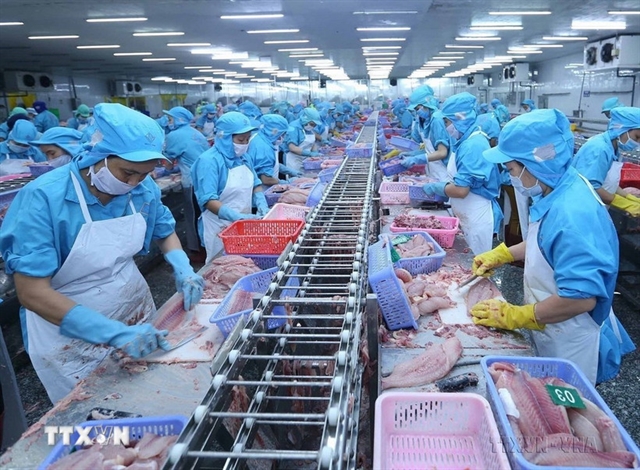
Across the CPTPP bloc, Việt Nam’s tra fish exports climbed 36 per cent year-on-year to $305 million during January-October, representing 17 per cent of its global tra fish sales. Shipments to Mexico reached $63 million (up 1 per cent), Japan US$39 million (up 14 per cent), while Malaysia posted a 37 per cent surge, underscoring rising regional demand.
The Vietnam Association of Seafood Exporters and Producers (VASEP) attributed the sharp increase to CPTPP tariff preferences. Despite stringent requirements on quality and traceability, many exporters have complied, raising average shipment values. VASEP forecast a strong recovery and sustained growth for the sector in 2026 if companies continue to capitalise on the deal’s advantages.
In Canada, Vietnamese agricultural shipments are expanding across fruits, vegetables, pepper and coffee, with cashew exports rebounding in September after months of declines. Canada now imports more from Việt Nam than from any other ASEAN country, enabling Vietnamese agribusinesses to gain a stronger foothold, said Trade Counsellor Trần Thu Quỳnh.
Nguyễn Đình Tùng, CEO of major fruit exporter Vina T&T Group, highlighted Canada’s rigorous food safety and phytosanitary rules, noting that it requires Global GAP, HACCP and SMETA certifications. He described the market as promising due to its purchasing power, diverse demand and its role as a gateway to North America’s supply chains.
Vietnamese farm produce exports to CPTPP markets are maintaining strong momentum thanks to improved competitiveness and stricter compliance with international standards.
Beyond market access, the pact is driving structural transformation – with greater traceability, deeper processing and brand building – creating both pressure and growth opportunities for companies able to upgrade processing capacity and integrate into global supply chains. — VNA/VNS