China spends nearly $1b on Vietnamese durian in first half
China spent nearly US$988 million on Vietnamese durian in the first half of this year, up 43.4 per cent from a year earlier, accounting for almost half of the country's fruit and vegetable exports to the market, customs data showed.
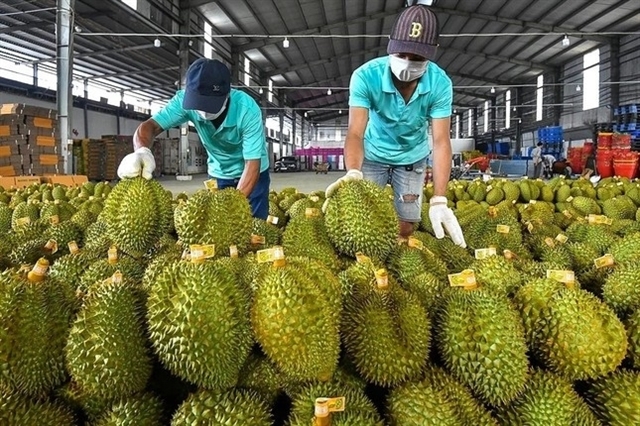
HCM CITY — China imported nearly US$988 million worth of Vietnamese durian in the first half of this year, up 43.4 per cent from a year earlier, accounting for almost half of Việt Nam's fruit and vegetable exports to the market, customs data showed.
Việt Nam exported $2.04 billion worth of fruits and vegetables to China in the first six months, up nearly 25 per cent year on year, according to data from the General Department of Customs.
Durian accounted for $988 million, or 48.45 per cent of the total, with its export value exceeding the combined value of dragon fruit, bananas, jackfruit, coconut and mango.
Dragon fruit exports to China were worth $168.3 million, while bananas and jackfruit generated $150.3 million and $126.6 million, respectively. Coconut exports nearly doubled, while shipments of dragon fruit, bananas and mangoes declined.
Đặng Phúc Nguyên, secretary-general of the Vietnam Fruit and Vegetable Association, said durian shipments could continue to increase as supplies rise in the coming months.
The Central Highlands, Việt Nam's largest durian-growing region, has only recently entered its peak harvest season, he said.
“If the current pace is maintained, durian exports for the full year could post stronger growth than last year,” he said.
Việt Nam's durian industry is also expanding into markets beyond China. In late July, India approved imports of fresh Vietnamese durian, opening the door to a market of more than 1.4 billion people.
However, a large population does not necessarily mean durian will sell well in India, he said. The fruit remains unfamiliar to many Indian consumers, while import tariffs, customer taste and distribution networks will take time to adapt.
Initially, Vietnamese exporters could target consumers in major cities through imported-fruit stores, premium retail chains, hotels, restaurants and e-commerce platforms, he added.
Frozen, dried and processed durian products could also help exporters test the market and reduce pressure on fresh-fruit consumption during the peak harvest season.
But access to new markets alone will not be enough to boost sales, according to Nguyên. Quality control and traceability remain major challenges for Việt Nam’s durian industry, he noted. — VNS