Central Retail Vietnam to launch 8 more community livelihood projects in 2027
Central Retail Vietnam will launch eight Livelihood for Communities projects in 2027, expanding economic opportunities for local communities and helping farmers in various localities improve their incomes.
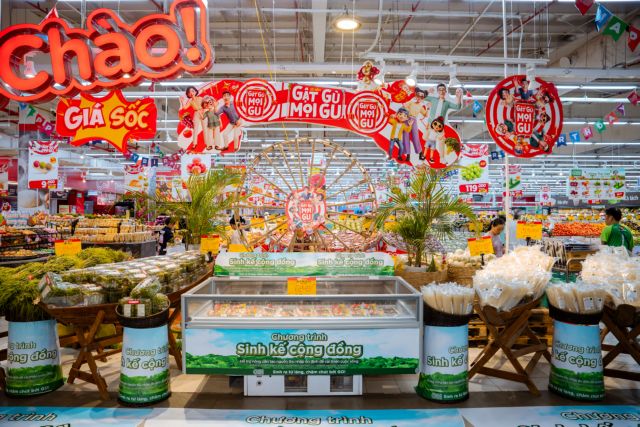
HCM CITY — Central Retail Vietnam will launch eight Livelihood for Communities projects in 2027, expanding economic opportunities for local communities and helping farmers in various localities improve their incomes.
This was announced at a meeting of the programme’s steering committee held to review progress and set priorities for the next phase.
Launched in late 2017, the Livelihood for Communities programme supports production and diversification of livelihoods by farmers, fishermen, and low-income households earning less than VNĐ7 million (US$271) a month in rural, remote, disadvantaged, and coastal areas.
The eight new projects include five in the north, one in the central region, and two in the south.
The five northern projects, which will benefit 190 farming households, include the Võ Nhai project to produce forest bamboo shoots (92 households), Toàn Liễu project to raise green tea-fed pigs (10), Cường Diễm project to make thiểu fish cakes (10), Cường Đạt project to produce dried bamboo shoots (38), and Tâm Hương project to grow off-season vegetables (40).
In the central region, the Bảo Phương project will develop Xã Đoài oranges and benefit 14 households.
In the south, the Lại Ngọc Ẩn project will focus on sweet pomelos and the Đầm Dơi project in Cà Mau on three-striped salted crab products.Together, they are expected to benefit 54 households.
According to Olivier Langlet, CEO of Central Retail Vietnam, the programme currently supports 10 active projects.
Since the beginning of 2026, the group has sourced 232 tonnes of agricultural produce and other products from participating communities for more than VNĐ3.1 billion (US$121,000), he said.
He added that bringing local products to modern supermarket shelves requires considerable effort, particularly for producers accessing this distribution channel for the first time.
Through the programme, the retailer helps local communities develop economic models based on their strengths and make distinctive regional products.
It also supports the development of brands for clean and safe products, helping households secure stable and higher incomes and improve their living standards through their own production.— VNS