Canadian businesses explore opportunities in Việt Nam
Canadian businesses could provide food processing and preservation solutions, consultancy and design services for energy transition projects, software, artificial intelligence and cybersecurity solutions, as well as diagnostic and digital healthcare technologies.
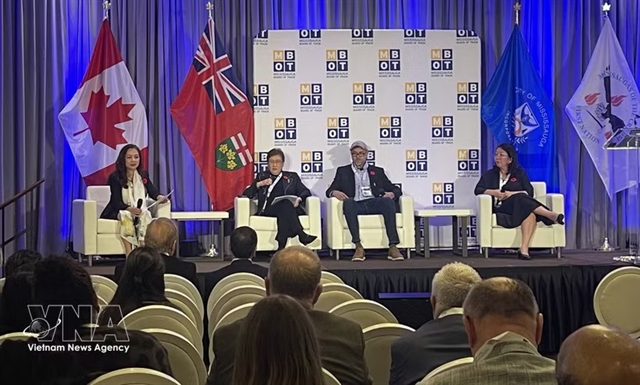
TORONTO — Canadian businesses are showing growing interest in exploring cooperation opportunities in the Indo-Pacific, including Việt Nam, as they seek to diversify international markets. However, turning this interest into concrete projects and contracts requires a better understanding of local markets, suitable partners and stronger business connections.
The issue was highlighted at the Mississauga International Trade Summit 2026, organised by the Mississauga Board of Trade (MBOT) in Toronto. The event discussed global trade prospects and market diversification, with a focus on business opportunities, logistics, customs and business networking.
Dr Julie Nguyen, chair of the Canada-ASEAN Initiatives at York University, who moderated a session on the Indo-Pacific, stressed the region’s importance to Canada’s efforts to diversify trade, expand exports and secure long-term economic growth.
Two-way merchandise trade between Canada and the region reached C$281.4 billion (US$198) in 2025, making it Canada’s second-largest trading partner and export market after the US, she said.
The Asian-origin community in Canada, with their family, cultural and business ties with the region, also provides an advantage for Canadian companies seeking to understand markets, build trust and explore partnerships.
However, gaps in information and market awareness remain major barriers.
Peter Hawkins, co-owner of MELLOHAWK Logistics, said many Canadian businesses lack access to up-to-date information about international markets.
He noted that some business decisions are still based on perceptions and assumptions formed decades ago, despite major changes in the development levels, innovation capacity and cooperation needs of many economies.
Việt Nam, for instance, has long been viewed mainly as a low-cost source of goods. A deeper understanding of its culture, business practices and increasingly diverse market demand could help Canadian companies identify broader opportunities, particularly in services and consultancy, Hawkins said.
Julie identified agriculture, food processing, clean energy, environmental technology, information technology, infrastructure, logistics and healthcare as sectors with strong potential for cooperation between the two countries.
Beyond merchandise trade, opportunities also exist in technology, technical services and human resource training. Canadian businesses could provide food processing and preservation solutions, consultancy and design services for energy transition projects, software, artificial intelligence and cybersecurity solutions, as well as diagnostic and digital healthcare technologies. Their experience in planning, project management and automation could also support Việt Nam’s infrastructure and logistics development.
To translate these opportunities into results, Julie stressed the need to simplify licensing procedures, make regulations more transparent, protect intellectual property rights and ensure contract enforcement. Canadian companies also need better access to information on tariffs, rules of origin and business conditions to make effective use of the Comprehensive and Progressive Agreement for Trans-Pacific Partnership (CPTPP).
She called for more direct business-matching programmes and better preparations for market visits. Short, affordable business missions with convenient procedures would help Canadian companies explore Việt Nam more effectively.
Hawkins advised companies to begin with market research, use available information to assess opportunities and develop business plans. They should then build contacts through chambers of commerce, Canadian trade representatives and business networks, while joining trade promotion missions to gain first-hand market experience.
The Vietnamese business and professional community in Canada can serve as an important bridge, Julie said, noting that its understanding of the languages, cultures and working practices of both countries could help companies find suitable partners and build trust. — VNA/VNS