Businesses propose solutions to achieve export growth targets
Amid mounting challenges to exports, industry associations have proposed several measures aimed at easing business difficulties and creating new momentum for export growth in the coming years.
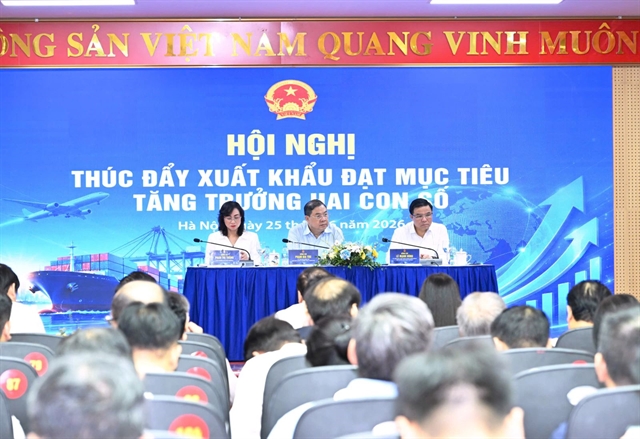
HÀ NỘI — Amid mounting challenges to exports, industry associations have proposed several measures to ease business difficulties and create new momentum for growth in the coming years.
Speaking at a conference on promoting double-digit export growth, organised by the Ministry of Industry and Trade (MoIT) on June 25, Nguyễn Hoài Nam, secretary general of the Vietnam Association of Seafood Exporters and Producers (VASEP), noted that one of the key challenges facing exporters today is the persistently high cost of international transportation. Although tensions in the Middle East have shown signs of easing, freight rates remain elevated, placing significant pressure on export activities.
According to Nam, the second and third quarters of each year represent the peak season for seafood exports, with monthly export turnover typically ranging from US$1 billion to $1.2 billion. In this period, there are abundant raw material supplies from fishermen. However, many companies are struggling to access and expand credit lines needed to purchase raw materials for export orders.
“Businesses report that if they are accessed greater capital, they would be able to procure more raw materials, increase export orders, and strengthen their competitiveness against international rivals,” Nam said.
VASEP also urged the Government to continue streamlining and simplifying administrative procedures to enhance competitiveness of Vietnamese businesses.
Regarding foreign markets, VASEP called on the MoIT to review the Vietnam–South Korea Free Trade Agreement (VKFTA), particularly with respect to shrimp exports. Currently, Việt Nam enjoys a duty-free quota of 15,000 tonnes of shrimp annually, while exports exceeding the quota are subject to a 20 per cent tariff.
In addition, VASEP proposed the early implementation of support mechanisms under the National Assembly's Resolution 250 on international economic integration. Such measures would help strengthen the capacity of industry associations and businesses to respond to trade remedy cases, commercial disputes, and technical barriers imposed by foreign markets.
Meanwhile, Đinh Quốc Thái, vice chairman and secretary general of the Vietnam Steel Association (VSA), reported that steel production in the first six months of 2026 is projected to reach about 14.8 million tonnes, up 21.2 per cent year-on-year. Steel consumption is estimated at around 17.9 million tonnes, representing a 13.1 per cent increase.
In contrast, steel exports during the same period are expected to total about 1.79 million tonnes, down 4.8 per cent compared with the previous year.
The outlook for the steel industry remains relatively positive. Total crude steel output in 2026 is forecast to reach around 27 million tonnes, up 10 per cent from 2025. Finished steel production is expected to reach approximately 33 million tonnes, while domestic consumption could total around 28 million tonnes. Steel exports are projected to reach roughly 6 million tonnes, while imports are expected to decline compared with the previous year.
However, Thái also highlighted several challenges facing Việt Nam’s steel industry in the second half of 2026. Continued global overcapacity has fueled a growing trend toward protectionist measures in many export markets.
For example, the US has imposed tariffs of up to 50 per cent on certain steel products under Section 232 of the Trade Expansion Act. At the same time, additional trade remedy investigations involving Vietnamese steel products continue to be launched.
Another challenge stems from increasingly stringent greenhouse gas emission reduction requirements and the gradual adoption of carbon border adjustment mechanisms across major markets. These developments pose significant pressure on the steel industry, particularly as it remains partly dependent on imported raw materials.
To support the sustainable development of the sector, the Việt Nam Steel Association identified two key priorities. First, protecting the domestic market from an influx of low-priced imported steel. Second, accelerating green and digital transformation efforts to better meet market requirements, expand access to high-value export markets, and reduce trade barriers.
Therefore, the association called for the early issuance of regulations governing the quality management of imported steel, including requirements that imported products obtain certification demonstrating compliance with Vietnamese standards before entering the market.
Furthermore, the association proposed strengthening investigations and applying trade remedy measures to address unfair competition, while providing greater support for steel producers in responding to trade defense cases and maintaining export market access.
It also recommended further research and development of national standards and technical regulations for steel products, alongside enhanced market monitoring and forecasting systems to help businesses respond more effectively to market developments.
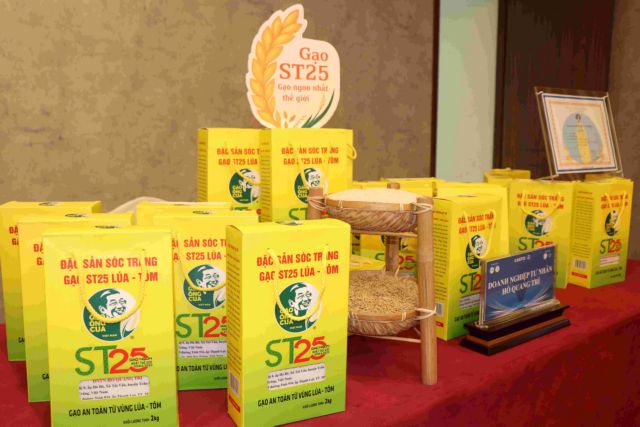
Building stronger brands
Addressing the conference, Nguyễn Thanh Bình, a representative of the Vietnam Food Association, said that Việt Nam’s rice industry is well-positioned for further growth if it can effectively leverage free trade agreements, diversify export markets, and increase product value.
According to Bình, Việt Nam exported more than 4 million tonnes of rice in the first five months of 2026, generating over $2.2 billion in export revenue. Export volume increased by 1.8 per cent year-on-year, while export value declined by 7.38 per cent, reflecting continued pricing pressure amid intensifying global competition.
She noted that businesses remain particularly concerned about the relatively small share of Vietnamese rice exports entering the European Union, despite the market’s significant potential. While the EU offers high-value-added opportunities, it also imposes strict requirements related to quality, traceability, sustainability, and environmental standards.
To strengthen the rice sector’s contribution to export growth, the VFA proposed a number of policy recommendations. One notable proposal is to allow the association to participate in developing Việt Nam’s national rice brand, according to Bình.
Under the proposal, the association plans to launch a pilot project to develop a Mekong Delta rice brand centered on the ST24 and ST25 rice varieties. The initiative would also establish export-oriented raw material zones that meet EU and Japanese standards through cooperative models connected with enterprises and overseen by government authorities.
“The association is confident in proposing this model because its member companies already possess standardised storage facilities, processing plants, export capabilities, and strong reputations in international markets," Bình said.
"However, the initiative also carries certain risks and therefore requires consistent support from the Government. If approved, we will promptly develop a detailed proposal for submission to relevant ministries and the Government.”
The association also proposed that the Government permit the development of a project restructuring the export rice trading industry in line with the strategy for developing Việt Nam’s rice export market by 2030.
According to the association, such restructuring would help increase value addition, build sustainable brands, enhance competitiveness, and establish a stronger foundation for the rice industry to contribute to double-digit export growth in the years ahead. VNS